Get Full Government Meeting Transcripts, Videos, & Alerts Forever!
Get email alerts on the Immigration Detention topic
No spam. Unsubscribe anytime.
Billings residents denounce county letter proposing use of Metropark for detained immigrants; commissioners schedule special meeting
Summary
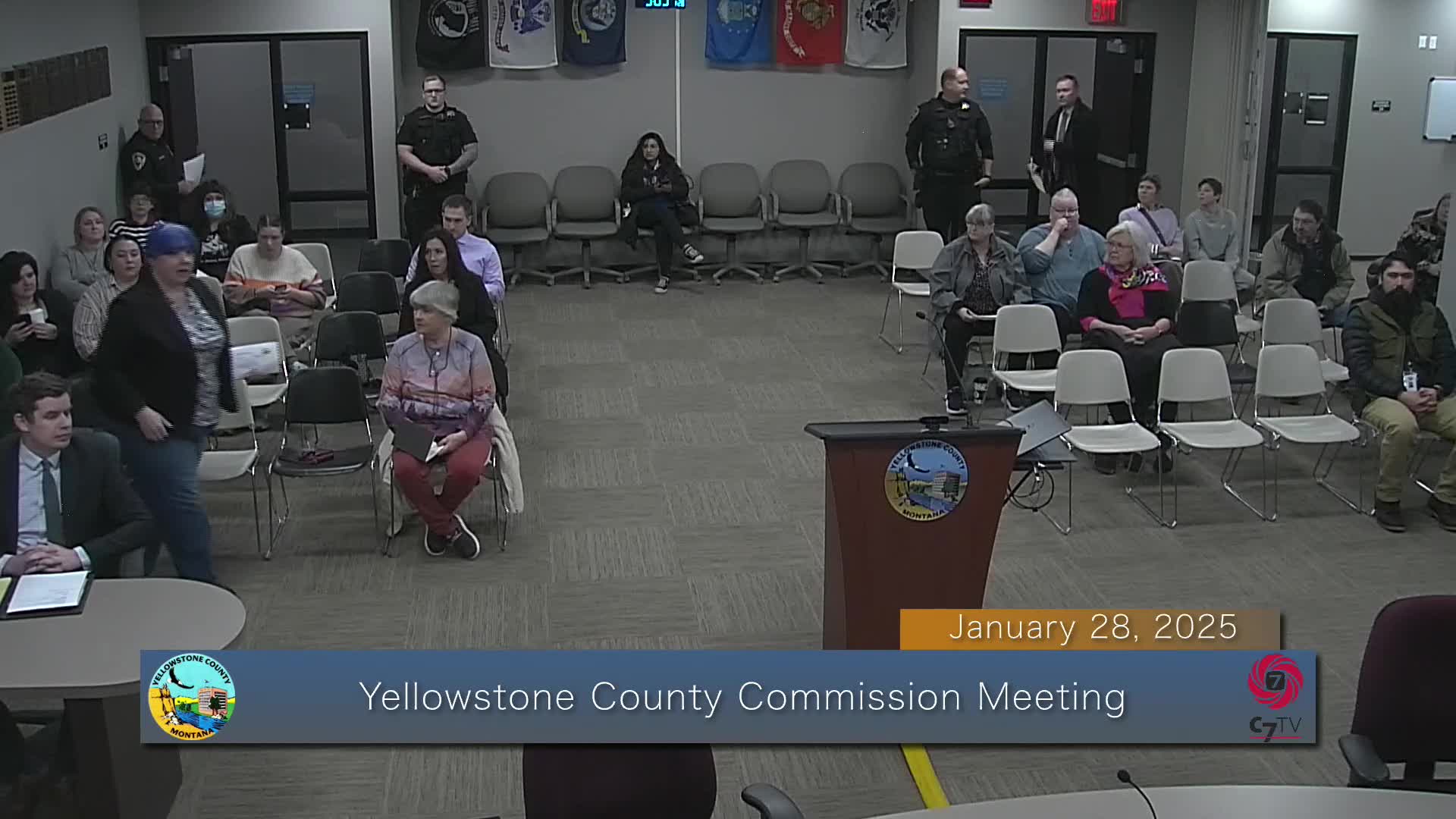
Billings residents turned out on Jan. 28 to sharply criticize a chairman’s letter that, commenters said, invited use of the Metropark facility to house detained immigrants.
Billings residents turned out on Jan. 28 to sharply criticize a chairman’s letter that, commenters said, invited use of the Metropark facility to house detained immigrants.
Melissa Smith, a Billings resident, told the Board of County Commissioners, “The letter reads very clearly that the commissioners feel that we have a crime problem in Yellowstone County,” and said the document “egregiously misrepresents the needs of Yellowstone County.”
The public outcry came during the meeting’s public-comment period, where more than a dozen residents urged the commissioners not to offer Metropark — the county’s major event venue — as a site for detaining people in federal custody. Several speakers characterized the idea as harmful to community safety and local businesses and said the proposal would stigmatize immigrants who live and work in the county.
“Start with Ellis Island, not rounding up our neighbors,” said Ashley Woodward, who identified herself as an enrolled member of the Little Shell Chippewa Tribe. Norma Buchanan told the board, “I object completely to your letter inviting detention people to be housed at the metro.” Ayesha Lopez said the venue brings people from across the region to Billings and warned that converting it “into a prison camp” would harm the city’s events and reputation.
Some speakers questioned the underlying assumptions in the chairman’s letter about crime and immigration. Katie Harrison, a local resident who said she has researched prosecution data, warned against conflating immigration status with criminality and said documentation is “a civil matter, not a criminal matter.” Others pressed for alternatives, including investing in legal pathways and services to help people regularize status.
In response to public concern, a county commissioner told the meeting there is “no use of Yellowstone County tax money being proposed here” and said the county would seek full federal reimbursement if facilities were used. The commissioner also said the county would not supply sheriff or jail personnel for any such federal use and that “no events are currently affected nor events are being canceled at Metropark.” The commissioner added context for the chairman’s letter, saying it was written amid broader concerns about drug trafficking and human smuggling in the region and referenced recent federal action, noting, “Congress just passed the Lake and Riley Act.”
Speakers raised practical and reputational concerns. Violet Mentor, a local business owner, asked about logistics, food, sanitation and safety, and worried that performers or attendees might avoid events at the Metropark. Several residents said they feared aggressive enforcement actions and urged the commissioners to use county influence to pursue humanitarian or administrative solutions rather than detention.
A younger commenter asked the room to avoid hyperbole: Ezra Brown said he did not believe the Metropark proposal equated to historical concentration camps, and cautioned listeners to avoid comparing the two without knowing operational details.
The board took several routine actions during the meeting. Commissioners approved the minutes from the Jan. 21 meeting, passed Resolution 25-13 to set a special meeting for Jan. 31 at 9 a.m. in Room 3107, approved multiple claims batches, and approved the consent agenda. Each of those motions passed by voice vote.
The public-comment period and the statements from county officials made clear the issue is unresolved; residents demanded more information about what, if any, steps the county will take and about the federal role and protections for people who might be involved. The board set a special meeting on Jan. 31, where the subject may be discussed further.
Votes at a glance
- Approval of minutes for Jan. 21, 2025 — motion moved and seconded; passed by voice vote. - Resolution 25-13 (establish special meeting date: Jan. 31, 2025, 9 a.m., Room 3107) — motion moved and seconded; passed by voice vote. - Approval of claims batches (listed in meeting) — motion moved and seconded; passed by voice vote. - Approval of consent agenda and file items — motion moved and seconded; passed by voice vote.
The meeting adjourned after public comments ended; the Jan. 31 special meeting will confirm next steps and any formal direction to staff or changes to facility use policy.