Get Full Government Meeting Transcripts, Videos, & Alerts Forever!
Get email alerts on the Hospital Abatement Demolition topic
No spam. Unsubscribe anytime.
Mexico council pauses abatement for cancer wing, directs stabilization while abatement proceeds on rest of hospital site
Summary
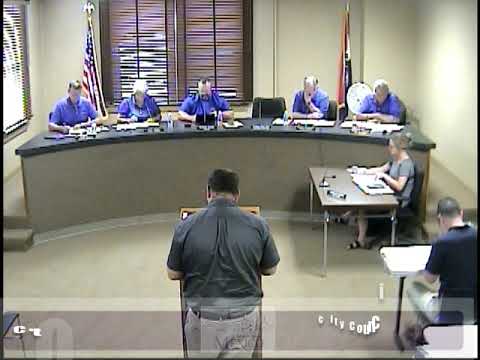
The Mexico City Council voted July 28 to remove the former hospital cancer wing from current abatement and demolition work and to direct staff to secure and stabilize that portion while abatement proceeds on other buildings.
The Mexico City Council voted July 28 to remove the former hospitalcancer wing from current abatement and demolition work and to direct staff to secure and stabilize that portion of the complex while abatement proceeds on other buildings. The decision came after staff described a phased abatement and demolition plan for the entire site and presented cost estimates and a procurement schedule.
City staff told the council the project would be done in phases: abatement (asbestos, hazardous materials, universal waste and infectious medical waste), then demolition in stages. “We believe the abatement process is, you know, dollars 741,000 is our estimate,” a staff member said. The same presentation said demolition of the Cornerstone building was estimated at about a quarter of a million dollars.
Why it matters: the site carries multiple hazardous‑materials categories that must be removed before demolition; the city has budgeted money to support the work with Audrain County and the public health department and must decide now which parts to abate and when so contractors can bid accurately.
What council decided and why: Councilmember (first motion maker) moved to "save the Cancer Wing from demolition, and secure and stabilize it for future City Hall." After discussion and a failed earlier motion to keep it as part of abatement, council later passed a motion to remove the cancer wing from the abatement phase and to secure the building. In discussion, members who supported removal said the cancer wing showed little asbestos in the staff report, could be stabilized at relatively low near‑term cost, and that leaving it in the abatement package could mean unnecessary expense should the council later choose to preserve it. Opponents had argued the abatement bid structure made it efficient to keep everything together.
Scope and timetable: staff said abatement bids had already been advertised and a pre‑bid site walkthrough for abatement had been scheduled; staff expected abatement contractor bids in August and possible demolition contracting starting in October or November. A staff member said, "we put out the abatement... we sent out an email to I think 12 to 15 contractors... Pre bid meeting... August 13. And then the actual bid opening... 20 seventh" (sic in transcript). Staff later said demolition contracting for the larger complex could occur by autumn, and that the council would need to know whether items would be included as bid alternates or removed before advertisement.
Costs and budget: staff described a budgeted contribution of $750,000 from the city's economic development/reserve funds to assist with project costs shared with the county. Staff presented an estimated abatement total of about $741,000 for the site and said Cornerstone demolition was roughly $250,000; staff also noted small abatement line items for the cancer wing (about $16,500 across hazardous/universal waste lines in the presentation) and said removing the cancer wing from the current abatement package would not be a large expense to abate later.
Next steps and reporting: the council directed staff to remove the cancer wing from the active abatement package, to secure and stabilize the cancer wing (staff estimated modest stabilization costs and said city crews could perform perimeter securing and basic maintenance), and to return with a plan and timing for any future decisions about reuse or demolition. Staff said they would scope security and stabilization work and follow up on bidding logistics and timing.
Context: the city and Audrain County previously agreed to cooperate on the site; personnel said the county had purchased the building. Staff described prior unknowns uncovered during initial work, including leftover records, equipment and underground storage tanks, which have driven additional steps and costs.
Council members emphasized the decision was to preserve the option of reusing the cancer wing, not a final decision on adaptive reuse; they asked staff to scope stabilization so the portion does not deteriorate while the council considers longer‑term uses.