Get Full Government Meeting Transcripts, Videos, & Alerts Forever!
Get email alerts on the Appointments topic
No spam. Unsubscribe anytime.
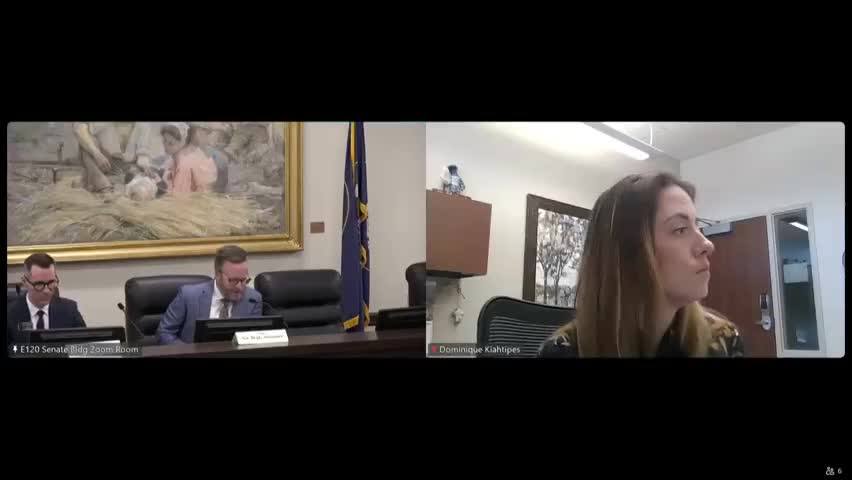
Senate committee favorably recommends Dominique Katipas to Utah Victim Services Commission
Summary
A Senate committee voted to recommend Dominique Katipas, chief deputy county attorney in Carbon County, to the Utah Victim Services Commission to fill a prosecutorial seat; discussion focused on trauma‑informed practice and balancing victims' rights with defendants' constitutional protections.
A Senate committee voted to favorably recommend Dominique Katipas, chief deputy county attorney in Carbon County, to the Utah Victim Services Commission, filling the prosecutorial seat vacated by Matthew Hanson. The committee recorded the recommendation and will forward it to the full Senate; Katipas's term is set to expire Jan. 1, 2028.
Katipas opened with a summary of her experience and her priorities if confirmed. “My name is Dominique Katipas, and I serve as the chief deputy, county attorney in Carbon. I've been prosecuting for around 7 years, and I've served as a special prosecutor for our office for the majority of that time,” she said. She told the committee her office previously received a grant from the Utah Office for Victims of Crime to focus prosecution and services on domestic violence, sexual assault, dating violence and stalking cases.
Committee members asked how Katipas would approach the commission's work, especially the commission's effort to promote trauma‑informed practices for victims across the state. Katipas said she is still learning the commission’s processes after attending a couple of meetings and that she would prioritize educating victims about court procedures and asking victims about their needs during the judicial process. “If I'm confirmed as the prosecution representative for the victim services commission, I really hope to participate in providing a level of quality of service to the whole state and not just Carbon County,” she said.
Senators framed much of their questioning around the balance between victims' needs and the constitutional rights of the accused. One senator asked “what the rights of a victim mean as, in contrast with what rights the accused has, and how do those 2 rights intersect?” Katipas answered that prosecutors must balance the interests of victims, defendants and the court system and described victim advocates as a primary resource: they help keep victims informed and connected to prosecutors while the prosecutor focuses on evidentiary and legal work.
Another senator noted that Utah's constitution contains a declaration of victims' rights and said it is important for the commission’s work to remember that legal protection. During discussion members emphasized both the need for trauma‑informed systems across hospitals, law enforcement and courts and the need to respect defendants' constitutional protections such as confrontation at hearings. Committee members repeatedly said they want commission members who understand frontline practice — including rural county experience — and can contribute evidence‑based, trauma‑informed recommendations.
After questions and public comment (none were offered), a committee member moved that the committee favorably recommend Katipas to the Utah Victim Services Commission. The motion passed and the chair said Katipas will be recommended to the full Senate. Earlier in the meeting the committee approved the minutes of the June 18, 2025 meeting. The committee then adjourned.
The record before the committee shows Katipas's prosecutorial background in Carbon County, prior involvement with a grant through the Utah Office for Victims of Crime focused on domestic‑violence‑related prosecutions, and an expressed interest in statewide trauma‑informed practices if confirmed. The committee's recommendation does not itself complete the appointment; the full Senate will consider the nomination.