Get Full Government Meeting Transcripts, Videos, & Alerts Forever!
Get email alerts on the Retirement Processing topic
No spam. Unsubscribe anytime.
Utah Retirement Systems reports backlog reduced, sets ARIAS system go-live for March 30, 2026
Summary
Utah Retirement Systems (URS) told the Retirement and Independent Entities Committee it reduced a retirement-application backlog from several hundred delayed cases to about 16 over-90-day cases, described interim staffing steps and set a March 30, 2026, go-live date for the ARIAS record system; URS estimated the all-in cost at about $47 million.
Utah Retirement Systems (URS) officials told the Legislature's Retirement and Independent Entities Committee they have driven down a backlog of delayed retirement initial payments and are implementing a new record system designed to automate processing.
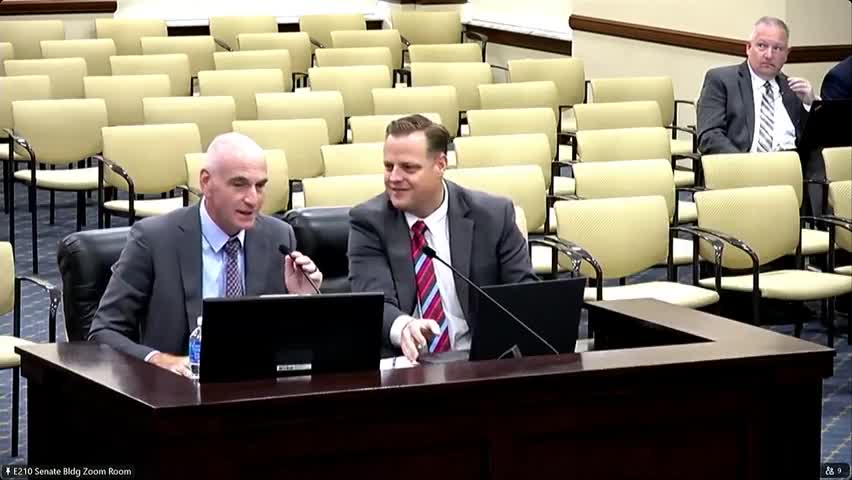
Dan Anderson, URS executive director, described a convergence of staffing reallocations to an IT modernization project and higher-than-expected staff turnover that created a backlog of retirement applications. Anderson said URS had reached a peak where, in his words, “I think we were, you know, maybe 300 applicants beyond the 90 days,” and that steps including rehiring, reassignment of staff off the IT project and cross-department support reduced the number to about 16 applicants currently beyond the agency's 90-day standard.
Anderson said URS historically aimed to pay initial retirement payments within 90 days and is targeting a faster 30-to-60-day window going forward. He attributed many remaining delays to missing employer or employee records, unresolved domestic relations orders and other case-specific documentation.
URS also gave a status update on its ARIAS modernization project (the Advanced Utah Retirement Interactive System). Anderson and other staff said the project was launched in 2018 and that the current planned production go-live date is March 30, 2026. URS staff described the work remaining as extensive testing, employer and user training, security vulnerability assessment and a final data-conversion effort aimed at reducing legacy-data errors. “The go live is 03/30/2026,” Anderson said.
Dee Larson, URS general counsel, and other staff described data conditioning as a significant effort; URS reported improving a legacy-data error rate from about 0.04% to about 0.02% of records but said the remaining portion has required substantial attention because the conversion must be accurate across decades of employer- and member-submitted records.
Committee members asked how retirees were notified. Anderson said URS sent letters to affected applicants explaining processing delays and that the agency has been communicating with constituents while working to resolve cases.
When asked about total project cost, Anderson said ARIAS's all-in cost with vendor licensing, consulting and internal work is about $47,000,000 and that the expense is contained within URS's budget. URS staff said the agency will continue to operate, monitor and patch the system after go-live and expects a period of post-implementation punch-list activity.
The committee received the update; members requested continued, proactive communication if future processing incidents arise so legislators can better assist and respond to constituents.