
Council presses BPW on staffing, on-call vehicle use and cost cuts as utility rate debate continues
Get AI-powered insights, summaries, and transcripts
Subscribe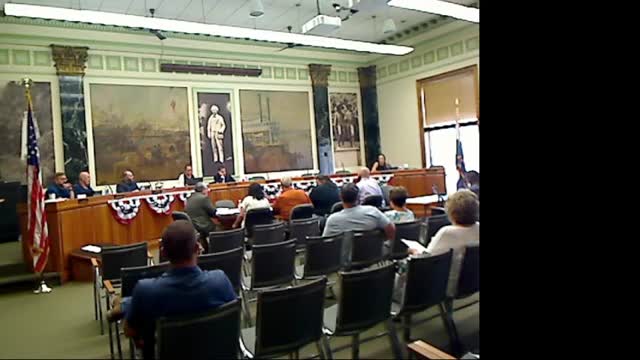
Summary
City council members questioned the Board of Public Works on staffing reductions, raises, and company-vehicle policies during a June 27 meeting; BPW staff said crews are at minimum staffing, on-call rules require availability, and supervisors and on-call employees use BPW vehicles to ensure rapid response.
Council members at a June 27 special meeting pressed Hannibal's Board of Public Works on whether staffing cuts and newly budgeted raises are consistent with the board's proposed rate increases, and questioned widespread use of BPW vehicles for travel outside work hours.
"If the raises were budgeted, there would be an actual savings," Councilman Leaders said when discussing a figure BPW staff provided showing three fewer positions would save about $210,000 but a 4% across-the-board raise for budgeted employees would add roughly $227,000. "So a positive number from last year's budget," he added, arguing the net effect was not a cost saving.
BPW staffing and raises
BPW staff told the council the FY26 budget includes funding for 65 employees and a 4% raise for most employees; the staff member Paul said the 4% raise for union employees is scheduled for Jan. 1 and for nonunion employees on July 1. Paul said three positions are being held vacant compared with the prior year and the payroll delta reflects that combination of cuts and raises.
BPW staff defended investment in employees as retention-focused, citing higher recruiting and training costs compared with retaining existing employees. "We see significant value in investing in our employees," Paul said, describing pay reviews, stay interviews and annual evaluations as part of a retention strategy.
Vehicle policy, on-call coverage and monitoring
Council members raised constituent complaints about BPW vehicles seen at personal destinations and asked how many employees drive company vehicles home. BPW staff said there are seven union employees on call from each department plus one supervisor on rotation (eight total on call at any given time) and additional supervisors who also drive assigned BPW vehicles. Staff reported 14 BPW vehicles taken home by employees (seven on-call line workers and roughly six supervisors plus the general manager).
Paul explained the on-call arrangement: employees agree to be on call for a week at a time and must be able to respond within 30 minutes and remain within a 15-mile radius; supervisors may need to respond to calls even if the incident originated in another department. "They've agreed to take the call, go run and fix the electric... they're not gonna sit at home watching the phone waiting for it to go off," Paul said in describing why company vehicles are used.
Monitoring and safety
Council members asked who monitors vehicle use and fuel. BPW staff said fuel usage and mileage are tracked and anomalies are addressed by staff. Public comments and BPW employees emphasized safety consequences of deep cuts: Justin Brown, speaking for employees, told the council that line and water/sewer work is hazardous and that "every time we don't replace a job, we're asking the employee to pick up the burden ... and it makes the job more dangerous." He added, "But I'd rather keep those employees on and not give raises then if it's a matter of your guys' safety."
Cuts elsewhere, tree trimming and training
BPW staff provided specific reductions: tree trimming line-item budget down from $650,000 to $625,000 (a $25,000 reduction) and travel and training line items across departments reduced, which staff said yielded modest savings. Council members requested a consolidated spreadsheet showing deltas for all proposed cuts and savings; BPW staff offered to prepare that information.
Ending
Council members said the answers will help them respond to constituents. BPW staff agreed to supply more detailed budget deltas and to provide documentation showing vehicle‑use monitoring and the board's decisions on staffing and raises.