
Hannibal BPW defends proposed 11.2% electric rate increase as move to rebuild reserves after surge in purchased power costs
Get AI-powered insights, summaries, and transcripts
Subscribe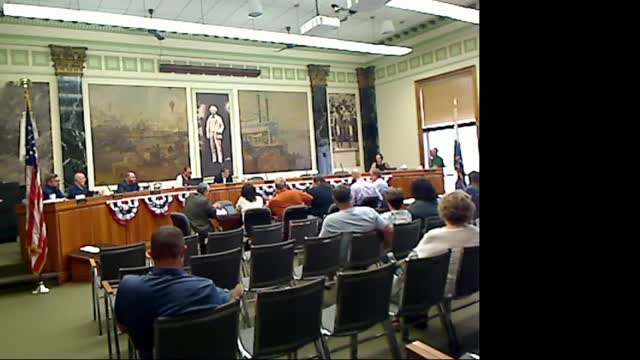
Summary
Hannibal City Board of Public Works officials told the City Council on June 27 that the board-approved FY26 budget includes an 11.2% electric rate adjustment — scheduled to take effect Oct. 1, 2025 — to replenish cash reserves depleted by higher purchased-power costs and to comply with a board-approved cash-reserve policy.
Hannibal City Board of Public Works officials told the City Council on June 27 that the board-approved fiscal year 2026 budget includes an 11.2% electric rate adjustment — scheduled to take effect Oct. 1, 2025 — to replenish reserves depleted by higher purchased-power costs and to comply with a board-approved cash-reserve policy.
At a special council meeting in City Hall Council Chambers, Paul, a Board of Public Works staff member, said "the primary reason for the rate increase this coming October isn't for next year's budget. It's primarily for replenishment of what's been lost from prior year's budgets." He said the electric fund has paid significantly more for capacity than in prior years and the board is seeking to restore reserves.
Why it matters: BPW officials said the utility's cash reserves fell from about $17.18 million to roughly $7.5 million over several years as the board covered higher purchased-power costs. Paul told the council the board expects to add roughly $3 million of new revenue next year to meet the board's cash-reserve target and to address a rate covenant the utility has failed to meet in the past two years. City council members said they are fielding constituent concern about higher bills: one councilor said "the amount of citizens that have contacted me in fear because they're afraid they're not gonna be able to afford it is insane."
Board rationale and debt implications
BPW officials pointed to a sustained rise in the cost of purchased power in regional wholesale markets as the main driver. Paul gave a recent weekly example in which hourly purchase prices jumped from typical mid-$30s per megawatt-hour to spikes over $300 during extreme demand, a pattern the BPW estimates added roughly $400,000 to costs in a single week. Paul also said the BPW will have paid about $11.6 million for capacity by the end of the next fiscal year versus much smaller amounts in earlier years.
Officials argued that restoring reserves reduces the utility's financial risk and helps maintain access to low-cost borrowing. Paul said failing the BPW's rate covenant contributed to a downgrade in the utility's debt rating, and that a continued shortfall could prompt bondholders or their advisers to require a forced rate track from an outside consultant. "The longer you're downgrading, the more risk that that lender is taking," Paul said, drawing an analogy to a homeowner's credit score affecting mortgage rates.
Board-approved numbers and timing
Paul told the council the BPW board adjusted the FY26 operating budget to include an 11.2% electric increase and a 3% water increase, both targeted for Oct. 1, 2025. When the board proposed a smaller increase in prior years, officials said they used reserves to cover the gap, which reduced the reserve balance over time. Paul described the board's cash-reserve policy as recommended by an outside consultant, Utility Financial Solutions, and adopted by the board in February 2019.
Council questions and follow-up requests
Council members pressed BPW staff on alternatives: cutting costs, delaying capital projects, or paying down debt early. Paul and other BPW representatives said many operational categories have already been reduced — they cited a 0.31% reduction in O&M (excluding purchased power) — and that purchased power is largely outside the utility's control. The mayor and council asked BPW staff to provide documentation from bond counsel and to quantify the financial tradeoffs between increasing reserves and the potential cost of higher borrowing if ratings remain low.
Public-comparison context
BPW staff also presented a regional comparison, saying that before the October increase the utility's residential bills were the lowest among nearby providers for a 1,200 kWh customer. Paul said the board delayed the rate increase until Oct. 1 to avoid months when bills peak in summer, and to let larger customers budget for changes.
What was decided and next steps
BPW staff said the board has approved the FY26 budget that includes the 11.2% electric adjustment; the council did not take a formal vote on the BPW rate (the BPW board, not the council, approved the budget). Council members sought follow-up material: the bond-counsel guidance on covenants and the BPW's calculations tying the proposed increase to reserve replenishment and debt-rating outcomes.
Ending
BPW officials asked councilors to consider the balance between protecting ratepayers from sudden spikes and preserving reserve levels that the board's advisers and bondholders view as essential to financial stability. Staff committed to providing written follow-up on bond-counsel advice and the board's reserve calculations for council review.