Get Full Government Meeting Transcripts, Videos, & Alerts Forever!
Get email alerts on the Municipal Budget topic
No spam. Unsubscribe anytime.
Rolla council opens public hearing on 2025–26 budget, proposes $1 sewer availability fee increase
Summary
City staff presented a $45 million 2025–26 budget that uses reserves for planned capital projects and proposes a $1 monthly increase to the sewer service availability fee; council held a public hearing and took first readings of related ordinances.
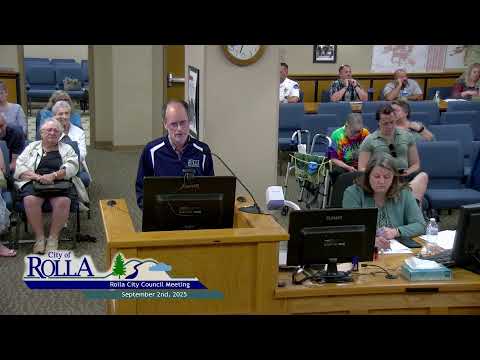
City officials opened a public hearing Sept. 3 on the proposed fiscal 2025–26 budget, which totals about $45 million and is balanced in part by drawing down prior reserves for planned capital projects, and they gave the first reading of an ordinance that would raise the sewer service availability fee by $1 per month.
The proposed budget “is offset with revenues of $40,260,000,” John (staff member) told the council, adding that the apparent $4.7 million difference is intentional and largely funded from reserves: “we're spending about an extra $2,000,000 coming out of the Street Capital Improvement Fund. We've just built that fund up over the years, and we want to get more of that back out into pavement.”
The proposal also includes a planned storm sewer project on Pine / Rolla Street and deposits for equipment: John said the budget contains a deposit on a new fire truck and “$180,000 in there for the animal shelter.” He described the budget as “in pretty decent shape.”
Why it matters: The city is proposing to use accumulated fund balances to accelerate infrastructure work rather than holding the funds in reserve. That approach reduces the near-term fund balance and therefore requires council oversight to ensure the city remains in compliance with state requirements.
Sewer and trash fee changes
As part of the budget package, staff proposed a $1-per-month increase in the sewer service availability fee, raising the typical residential sewer bill from about $40 to $41 per month, and an 8–10% increase on residential trash fees with somewhat larger increases for commercial customers. Darren (staff member) explained the availability fee covers the cost of the collection system while a separate volumetric rate covers treatment: “the service availability fee is a flat fee to cover the cost of collection system… the variable rate… covers the treatment cost.”
Council member Roger questioned the source of trash cost increases; John and other staff said higher disposal and transfer-station charges and increasing tonnage were major drivers. Nathan (staff member) responded to a resident question about legal limits on fee increases, explaining the Hancock Amendment distinction between taxes and fees: “taxes can't be increased without a vote of the people, fees can,” and courts have treated sewer rates as fees that require a public hearing but not a public vote.
What the council did
The council conducted the public hearing and gave first readings to the budget ordinance and an ordinance amending the city code related to sewers and water. No final vote on the budget ordinance was taken at the meeting; the ordinances advanced with first readings so the council can consider final action at a later meeting.
Discussion and next steps
Council members asked staff to clarify the drivers of cost increases, the implications of spending reserves, and timing for equipment purchases. Staff said some large purchases may occur in the next budget year. The council will consider final readings and votes on the budget and related fee ordinances in upcoming meetings leading up to the budget’s effective date of Oct. 1, 2025.
Ending
The public hearing and first readings complete the formal hearing requirement for fees and set the stage for the council’s final budget decisions later in September.