
Council recommits Haleʻiwa land‑use amendment to zoning committee after wide community opposition
Get AI-powered insights, summaries, and transcripts
Subscribe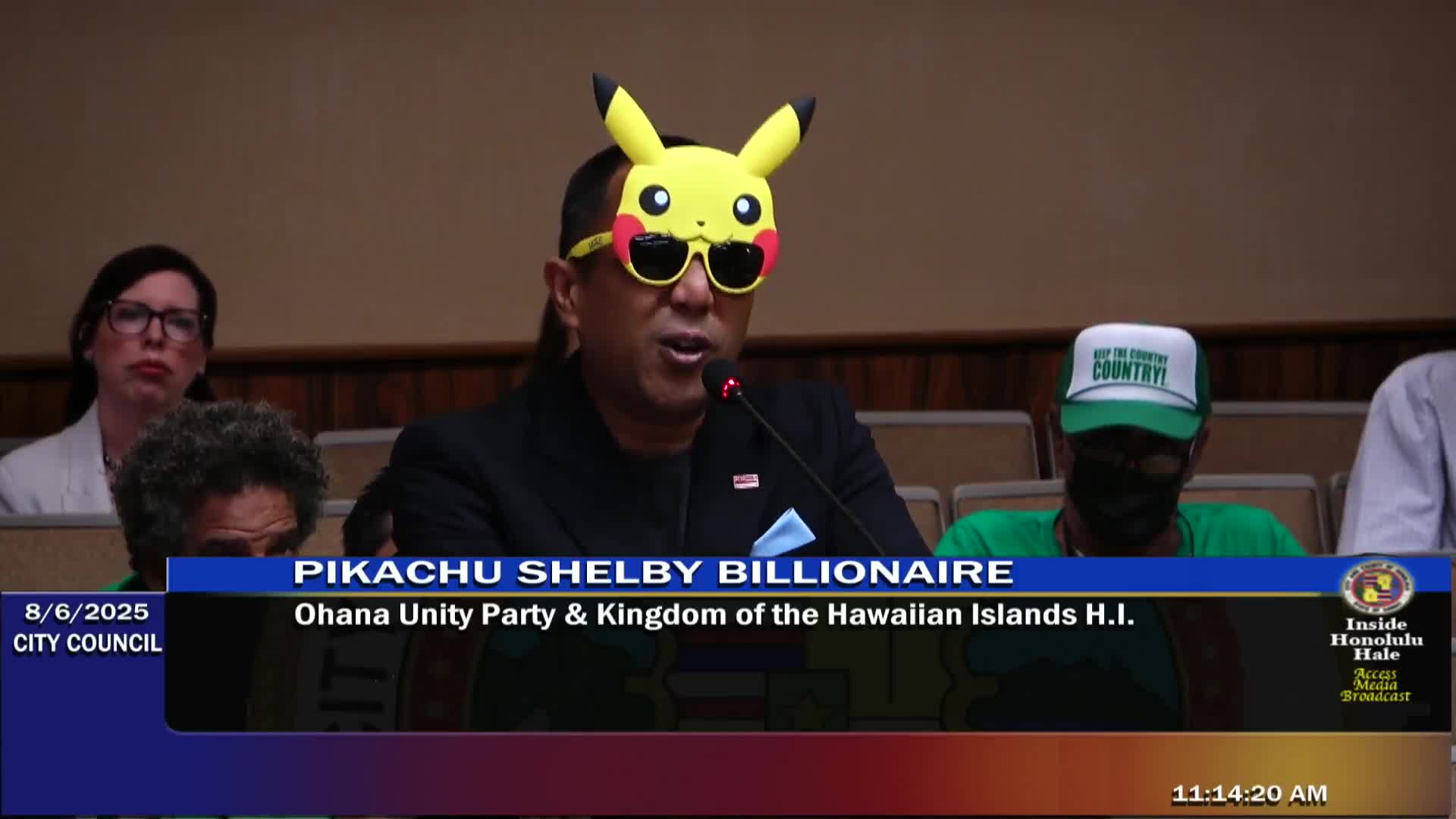
Summary
Faced with thousands of testifiers and concerns about traffic, evacuation safety and loss of agricultural land, the council voted to send Bill 37 (a proposed state land‑use boundary change for a Haleʻiwa parcel) back to the Committee on Zoning and Planning for further work and community engagement.
After more than three hours of public testimony — mostly opposed — the Honolulu City Council voted to recommit Bill 37 CD1, a proposal to amend the State Land Use District Boundary Map for a roughly seven‑acre parcel near Haleʻiwa from agricultural to urban, back to the Committee on Zoning and Planning.
The bill’s proponents said the boundary change is a necessary first step to allow planning for workforce housing. Travis Murakami of the Hawaii Regional Council of Carpenters told the council the project would “directly address Oʻahu’s housing crisis by creating workforce housing in a region that desperately needs it.” Supporters argued the parcel sits inside a community growth boundary and that a managed rezoning could create local housing opportunities.
Opponents, including large numbers of North Shore residents, neighborhood‑board members, agricultural and environmental groups, and the present State Senator for the North Shore, urged the council to defer action. They repeatedly cited public‑safety and infrastructure concerns after last week’s tsunami warning, traffic congestion in the one‑and‑a‑half‑mile town, the age‑old value of agricultural land and the need to protect local food security. Testifiers included Fred Tamayo and other carpenters who supported housing; however many more residents, including Chris Hagan (a Haleʻiwa resident), Linda Molina and Denise Antolini (Aole Backyards Coalition), argued that conversion to urban would permanently alter Haleʻiwa’s rural character.
Several speakers emphasized that a district boundary change is irreversible and would create market pressure for future development. State Senator (North Shore) told the council that rezoning “skews the math” toward generational investor gains and urged protections such as strict local‑resident sale requirements if any rezoning moves forward. Environmental and food‑security advocates, including Sierra Club Oʻahu and local farmers, stressed that the state and city have recently increased emphasis on locally sourced food for schools and that agricultural land is a strategic resource.
Councilmembers from multiple districts, including Councilmember Weier and Councilmember McGuire, said the record contains unanswered legal, traffic and infrastructure questions. Planning staff confirmed that a change at the state land‑use level would not by itself alter city zoning (the parcel currently carries city AG‑2 zoning), meaning further city processes would be required for development; that technical distinction caused confusion among residents. Chair Waters and other members flagged potential city interest in alternative acquisitions or uses — for example, using the Clean Water and Natural Lands fund to preserve the land, establishing a community garden, or relocating city facilities — and asked the administration to explore options with the budget office.
After discussion the council voted to recommit Bill 37 CD1 to the zoning and planning committee for additional community engagement, further study of evacuation and traffic impacts, and exploration of city acquisition or alternative uses. The motion to recommit carried with no recorded objections. The recommitment pauses the boundary amendment while staff, the developer and the community seek a path that addresses safety, infrastructure and local food and housing priorities.