Get Full Government Meeting Transcripts, Videos, & Alerts Forever!
Get email alerts on the Professional Learning Mtss topic
No spam. Unsubscribe anytime.
District 113 prioritizes Tier 1 instruction, co-teaching and PLCs; considers MCIE partnership
Summary
Superintendent and curriculum leaders outlined a multi-year professional learning plan focused on strengthening universal instruction (Tier 1), co-teaching, and professional learning communities (PLCs); the district will pilot MTSS alignment and is considering a partnership with the Maryland Coalition for Inclusive Education (MCIE).
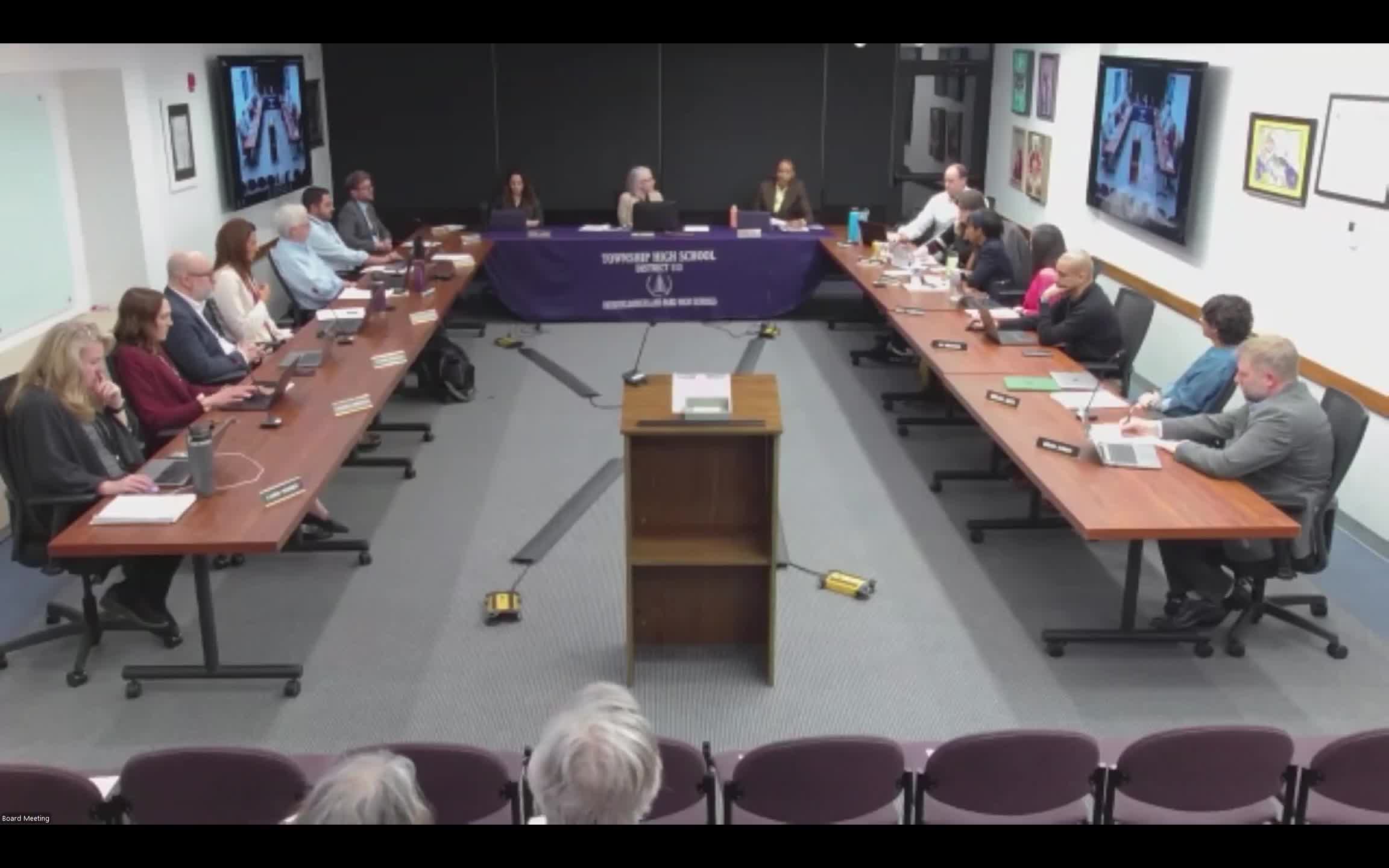
Township High School District 113 leaders presented a multi-year professional learning and MTSS (Multi-Tiered System of Support) plan at the April 22 board meeting that prioritizes strengthening Tier 1 (universal) instruction, expanding co-teaching models, formalizing PLCs and improving district-wide data systems.
Superintendent Kayla Holland said the district is in the final stages of drafting a strategic plan and asked staff and the community for feedback during a survey window from April 23–30, 2025. Holland described a proposed focus next year on Tier 1 instructional design to better meet the needs of the largest number of students, while continuing to design improvements for Tier 2 (targeted) and Tier 3 (intensive) interventions.
Assistant Superintendent for Curriculum, Instruction and Assessment (presenter) described concrete priorities: align Tier 1 practices to serve 75–80% of students effectively; provide sustained co-teaching professional development so both educators share instructional responsibility rather than one acting as an aide; and embed PLCs into the master schedule with department chairs and instructional coaches supporting PLC leaders. The district plans to use instructional coaches, embedded collaboration time and district institute days to sustain learning rather than “one-and-done” workshops.
The MTSS committee update emphasized the need for consistent screening and progress-monitoring tools across both Highland Park and Deerfield high schools. Presenters recommended leaning more on norm-referenced assessments (the district uses STAR and Panorama platforms) and implementing evidence-based protocols to analyze student response to interventions at semester breaks. The MTSS team will pilot a push-in model for Tier 2 in 2025–26 and create districtwide data-day protocols to align the two buildings’ intervention typologies.
Superintendent Holland proposed considering a multi-year partnership with the Maryland Coalition for Inclusive Education (MCIE) to assess readiness and co-design a tailored implementation plan. She framed MCIE as a potential external partner for a year-long readiness review followed by design and implementation phases, but said the district’s internal “foundation” (Tier 1, co-teaching, PLCs) should be solidified before a formal MCIE launch.
Board members asked about measurement cadence, resource mixes of internal versus external supports, and potential costs. Administration said some costs for outside partners had been discussed but not yet scoped; engagement with MCIE would follow a readiness assessment and design conversations. Presenters said data collection cadence for Tier 2 progress monitoring would typically be every two to three weeks, with more frequent checks for Tier 3 work, and intervention cycles generally aligned to semester timing.
The presentation also noted planned professional learning activities with True North and use of existing tools such as Panorama and the STAR suite; next steps include finalizing instructional-coach models, PLC leadership, and public communication about the strategic plan and professional learning schedule.
No formal board vote was taken on the MCIE partnership at the April 22 meeting; board members directed further refinement of the plan and budget implications.