
Senate committee warns U.S. must speed transmission, interconnection and diverse generation to meet surging electricity demand
Get AI-powered insights, summaries, and transcripts
Subscribe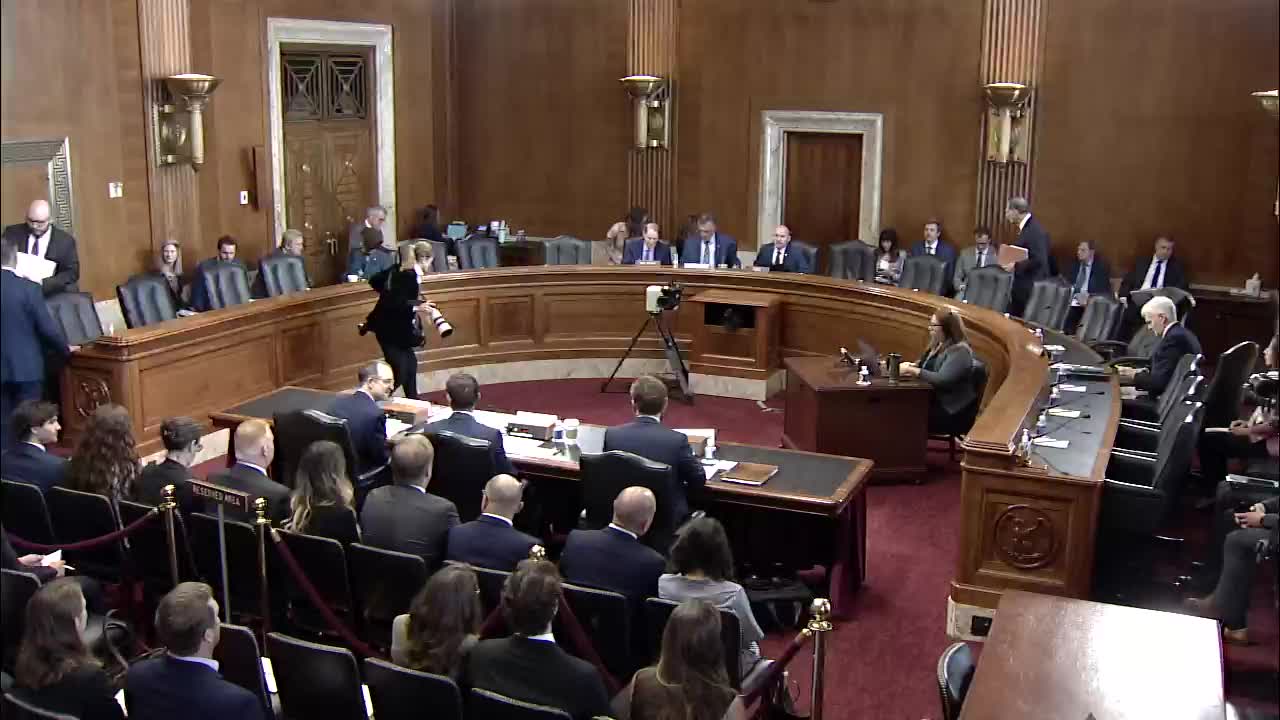
Summary
Witnesses at a Senate Energy and Natural Resources Committee hearing said U.S. electricity demand is rising rapidly because of data centers, electrification and reshoring of manufacturing and urged faster transmission build-out, interconnection reforms and a mixed-generation approach to avoid reliability problems and higher bills.
The Senate Energy and Natural Resources Committee opened a hearing July 24 on how to meet a rapid rise in U.S. electricity demand driven by artificial intelligence data centers, electrification and returning manufacturing.
Chairman Mike Lee said, "America's electricity demand is surging," and the panel heard testimony from three witnesses who urged faster transmission development, shorter interconnection timelines and more generation of many types to keep power reliable and affordable.
Committee members and witnesses said the immediate obstacles are lengthy interconnection queues, slow permitting, fractured regulatory processes and a transmission system that does not move large blocks of power between regions quickly enough.
Peter Huntsman, chairman and chief executive officer of Huntsman Corporation, told the committee that manufacturing and other energy‑intensive industries need reliable, affordable power. "It is simply impossible to build a modern industrial and technological economy on an energy base that is neither reliable or affordable," Huntsman said, arguing that overly aggressive limits on hydrocarbons contributed to higher costs and plant closures in parts of Europe.
Jeff Tench, executive vice president for Vantage Data Centers, described rapid demand growth inside the data‑center industry and said access to timely power is the sector's greatest barrier. He told senators that facility sizes have grown from roughly 30 megawatts five years ago to 100 megawatts as a starting point today and that some customers seek gigawatt‑scale supplies. Tench described a Virginia site where a utility withdrew an allocation of roughly 100 megawatts after Vantage had begun construction; as a result, he said, "we were left no choice" and the company built an on‑site natural‑gas power plant operating independent of the grid in about 18 months to keep the project viable.
Rob Gramlich, president of Grid Strategies, urged Congress to prioritize transmission as "the great integrator of all resources," saying better high‑voltage interregional lines and grid‑enhancing technologies can lower costs and improve reliability by enabling regions to share diverse resources at different times of day. "Transmission is also the main thing we need right now," Gramlich said.
Witnesses and senators discussed several disputed data points and policy effects cited in testimony. Committee opening comments cited a Department of Energy analysis warning of much longer outage hours if demand grows without a corresponding build‑out; witnesses cited widespread backlog and studies showing large shares of projects in interconnection queues are wind, solar and batteries while only a small fraction clear to connect. The panel also cited FERC estimates about coal retirements and limited replacement by new gas generation in the near term.
On policy, senators and witnesses debated recent federal actions and incentives. Witnesses urged clearer, stable tax‑credit rules and faster permitting at agencies and FERC. Several senators praised recent bipartisan work on the Energy Permitting Reform Act (EPRA) as a starting point for speeding interregional transmission permitting. Witnesses warned that new administrative reviews of wind and solar projects on federal lands could add delays and raise costs for consumers.
Participants described a pragmatic, mixed approach to meet near‑term needs: expand transmission and interconnection capacity quickly, add whatever generation can be sited and permitted in time (including renewables plus storage, gas and existing plants), and continue to pursue longer‑lead options such as advanced nuclear and geothermal. Gramlich emphasized that no single resource is a panacea: "When you put them all together on the integrated grid that's how you get nearly 100% reliability of the power system."
Senators from both parties pressed witnesses for specific actions: shorten interconnection timelines, authorize and incentivize high‑voltage transmission and encourage states and regions to coordinate planning. Multiple senators cited recent examples in Texas, California and Nevada where higher shares of renewables plus storage coincided with improved reliability in their grids, while others warned of the need for firm, dispatchable resources to back up long periods of peak demand.
The hearing included detailed examples of process failures and workarounds: Vantage's on‑site plant, manufacturers' concerns about industrial competitiveness when energy prices rise, and utilities' requests for larger, more certain regional lines. Senators asked witnesses how Congress and federal agencies could reduce delays without disrupting state authority over generation choices under the Federal Power Act.
The committee left the record open for follow‑up. Senators were reminded to submit questions for the record and additional statements by the committee deadlines announced at the hearing.
Provenance: Testimony and exchanges in the July 24 hearing before the Senate Energy and Natural Resources Committee, including opening remarks by Chairman Lee and questions and answers with witnesses Peter Huntsman, Jeff Tench and Rob Gramlich.