Get Full Government Meeting Transcripts, Videos, & Alerts Forever!
Get email alerts on the Sba Inspector General Nomination topic
No spam. Unsubscribe anytime.
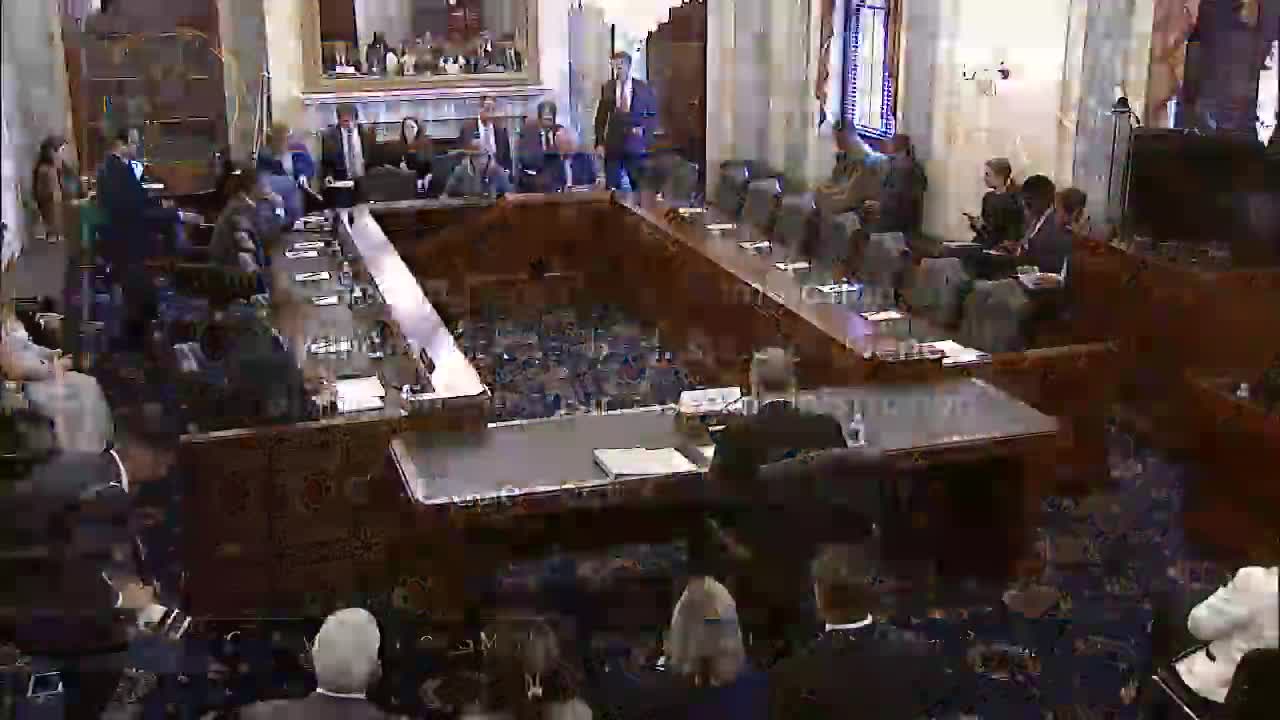
Senate Small Business Committee questions William Kirk on independence, COVID fraud and data security in SBA IG nomination
Summary
The Senate Committee on Small Business and Entrepreneurship convened a confirmation hearing for William Kirk, President Trump’s nominee to be Inspector General of the U.S. Small Business Administration, where members pressed him on independence, oversight of suspected COVID-era fraud, disaster-response investigations and reports that outside operatives gained access to SBA systems.
The Senate Committee on Small Business and Entrepreneurship convened a confirmation hearing for William Kirk, President Trump’s nominee to be Inspector General of the U.S. Small Business Administration, where members pressed him on independence, oversight of suspected COVID-era fraud, disaster-response investigations and reports that outside operatives gained access to SBA systems.
The hearing opened with Chair Ernst (Chair, Senate Committee on Small Business and Entrepreneurship) saying the committee would consider Kirk’s nomination and noting the scale of suspected fraud tied to pandemic relief: the SBA Office of Inspector General had estimated “more than $200,000,000,000 in potentially fraudulent COVID relief advances and loans,” and the office had received what committee members described as “over 100,000 leads” related to fraud.
Kirk described his background in higher education administration, private-sector auditing and prior service in inspector general offices, and pledged to execute the IG role “with impartiality and objectivity.” He told the committee, “I will uphold the law, and I . . . pledge to execute the responsibilities of the inspector general with impartiality and objectivity, fully complying with the inspector general act.” He also said, “I will maintain absolute neutrality in oversight operations.”
Why it matters: Senators framed the IG post as the SBA’s principal independent watchdog for billions in program dollars — including pandemic relief, disaster aid and SBA flagship lending and contracting programs — and asked how an IG could investigate these programs while retaining independence after a recent White House removal of multiple inspectors general.
Key lines of questioning
- Independence and the recent IG removals: Ranking Member Markey criticized the administration’s removal of inspectors general and said the President’s actions raised concerns that IG offices are being filled with loyalists rather than independent watchdogs. Markey said the I in “IG” should stand for “independent or impartial,” and expressed doubt about whether recent nominee selections demonstrate that principle.
- Experience and investigative capacity: Several senators asked Kirk whether he has direct experience managing large audit and investigative teams. Kirk noted his early auditing work at Price Waterhouse and his roles providing counsel to IG offices, and said the IG’s statutory duties are to “conduct and supervise audits and investigations.” He told the committee he would prioritize modernizing complaint intake, reducing backlogs and expanding data-analytics capabilities to improve investigative efficiency.
- COVID-relief fraud: Senators repeatedly cited the OIG estimate of roughly $200 billion in potentially fraudulent COVID relief and asked whether Kirk would prioritize using technology and data analytics to recover funds and refer cases for prosecution. Kirk committed to using technological tools to “root out fraud, waste, and abuse” and said he would review caseloads and investigative operations to maximize fraud recovery.
- Disaster relief and rural access: Senators asked whether Kirk would investigate the SBA’s handling of disaster relief shortfalls and root causes of failures to deliver aid to rural or underserved communities. Kirk called the shortfall “a tragic situation” and committed to assisting efforts to ensure disaster aid is properly distributed.
- Reports of outside access to SBA systems: Ranking Member Markey asked whether the SBA OIG should examine reporting by Wired that unvetted operatives (referred to in the hearing as “Doge operatives”) gained access to SBA information systems holding sensitive financial data from small-business applicants. Kirk replied that protecting the privacy and security of applicant data is “critically important” and that “any allegations . . . would be matters that the inspector general’s office would appropriately look at.”
What Kirk said he would do
Kirk told the committee he would: conduct and supervise audits and investigations under the Inspector General Act; work to modernize intake and investigative analytics; review investigative caseloads to maximize fraud recovery; examine disaster-relief failures; and treat allegations of improper access to SBA data as matters for OIG review. He repeatedly emphasized adherence to the law and neutrality: “I am committed to unwavering adherence to principles of independence and objectivity.”
Points of concern raised by senators
Lawfulness of prior IG removals and potential chilling effect. Senators including Markey, Hirono and Schiff pressed Kirk on whether he could guarantee that he would remain independent if his findings displeased the White House, noting ongoing litigation over prior IG removals and expressing concern about the practical ability of IGs to report unpopular findings without retaliation. Kirk declined to comment on ongoing litigation, saying those matters were before the courts, and reiterated commitments to independence.
Potential conflicts and prior positions. Ranking Member Markey and others questioned Kirk about prior roles — including service at the Environmental Protection Agency’s OIG and a detail to the Department of Education — and whether past public positions (for example, prior comments about university decisions described in the hearing) could indicate bias in future oversight decisions. Kirk responded that his personal beliefs were not relevant to the impartial application of audit and investigative criteria.
Process notes
No committee vote or formal action on the nomination was recorded during the hearing. Chair Ernst left the record open for two days for members to submit questions for the record (due by 5 p.m. Friday, Sept. 12) and for two weeks to submit statements and other materials. The committee adjourned at the close of questioning.
Ending
Kirk’s nomination will advance only after the committee receives his written responses to questions for the record and decides whether to report the nomination to the full Senate. In the hearing, Kirk emphasized the IG role as a nonpartisan watchdog and repeatedly pledged to follow the law while pursuing fraud recovery and data-security reviews.