Citizen Portal

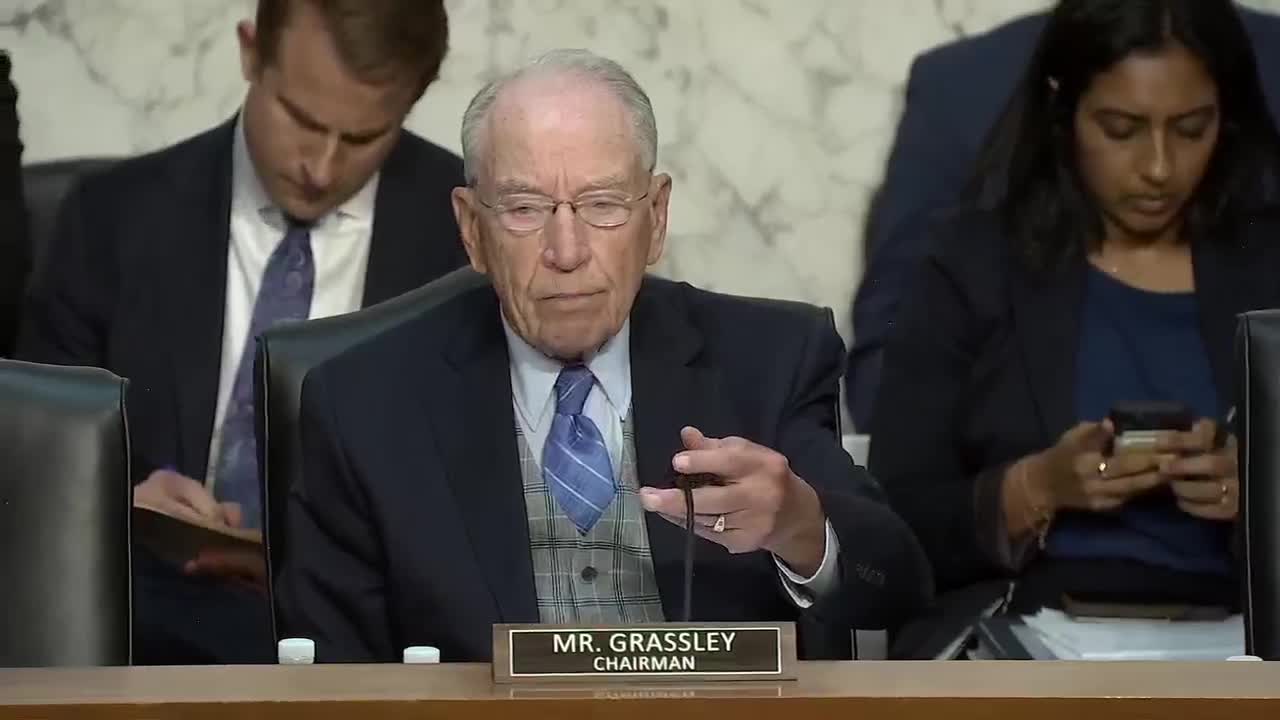
Senate Judiciary hears introductions and questioning for multiple district court nominees from Mississippi and Alabama

5753119 · September 3, 2025

Get AI-powered insights, summaries, and transcripts

Subscribe
AI-Generated Content: All content on this page was generated by AI to highlight key points from the meeting. For complete details and context, we recommend watching the full video. so we can fix them.

Summary

Senators introduced multiple nominees for U.S. district judgeships and questioned several on their records, courtroom experience and past public roles during the second panel of a Senate Judiciary Committee hearing.

Senators introduced multiple nominees for U.S. district judgeships and questioned several on their records, courtroom experience and past public roles during the second panel of a Senate Judiciary Committee hearing.

Sen. Roger Wicker and Sen. Cindy Hyde-Smith introduced James Maxwell and Robert (Bobby) Chamberlain as nominees for the U.S. District Court for the Northern District of Mississippi. Both senators described long careers in state courts, federal prosecutions and public service; Maxwell was noted for a long record on Mississippi appellate courts and authorship of many opinions, and Chamberlain was presented as a longtime circuit judge and local public servant.

For Alabama, senators including Tommy Tuberville and Katie Britt introduced nominees Edmund Lacour, Hal Moody and Bill Lewis for federal district judge seats. The nominees gave brief opening remarks, thanked the senators who sponsored them and described their legal and judicial experience, which included service as state supreme court justices, prosecutor roles, private practice and prior clerkships.

During questioning, senators pressed several nominees on substantive matters.

- Sen. Richard Blumenthal asked detailed, sometimes pointed questions about Professor Mascotte earlier in the hearing and other senators later focused on nominees’ records. In the second panel, senators questioned Edmund Lacour about redistricting litigation in Alabama. Lacour said parts of that litigation remained pending, noted he represented state clients and stated that privilege and ongoing litigation constrained how much he could discuss publicly. He acknowledged evidence in the record that he had advised lawmakers and said he would not overstep in commenting while litigation continued.

- Senators questioned Justice James Maxwell about a state-court decision affirming a lengthy sentence for possession of a phone in jail; Maxwell said he was not the trial judge in that matter, that the sentence was within statutory parameters and that the Mississippi Supreme Court had upheld it.

- Senator Ben Cardin and others asked nominees about judicial temperament, impartiality and how they would handle binding Supreme Court precedent. Multiple nominees, when asked about landmark civil-rights decisions such as Brown v. Board of Education and Loving v. Virginia, said they would follow binding Supreme Court precedent if confirmed. Several nominees explicitly said they believe Brown v. Board and Loving v. Virginia were correctly decided and that they would apply Supreme Court precedent in their work.

- Senators also questioned nominees about political activity in state party organizations. One nominee explained that state judicial election rules and guidance from a Judicial Inquiry Commission had permitted his participation in partisan committee roles.

Nominees emphasized courtroom experience, work ethic, docket management and respect for precedent as qualifications for the federal bench. Several senators praised nominees’ community ties and legal records; some, including Democratic members, pressed for more detail on specific contexts such as map-drawing and sentencing decisions that had political or racial justice implications.

No committee votes were recorded in the transcript excerpt. Senators said written questions for the record would follow and that rapid responses would accelerate any further consideration by the committee.