Senate Judiciary questions Jennifer Mascotte on independence, ethics and ties to Delaware
Get AI-powered insights, summaries, and transcripts
SubscribeSummary
At a Senate Judiciary Committee hearing, nominee Jennifer Mascotte defended her record while senators pressed her on judicial independence, Supreme Court ethics, her scholarly views on removal and administrative power, and her ties to the Third Circuit seat in Delaware.
President Trump’s nominee to the U.S. Court of Appeals for the Third Circuit, Professor Jennifer Mascotte, faced sustained questioning Wednesday at a Senate Judiciary Committee hearing about her academic writings, past advocacy and ties to Delaware.
The exchange centered on judicial independence, compliance with judicial ethics, and whether Mascotte’s record of scholarship and public commentary would affect her ability to apply Supreme Court precedent impartially.
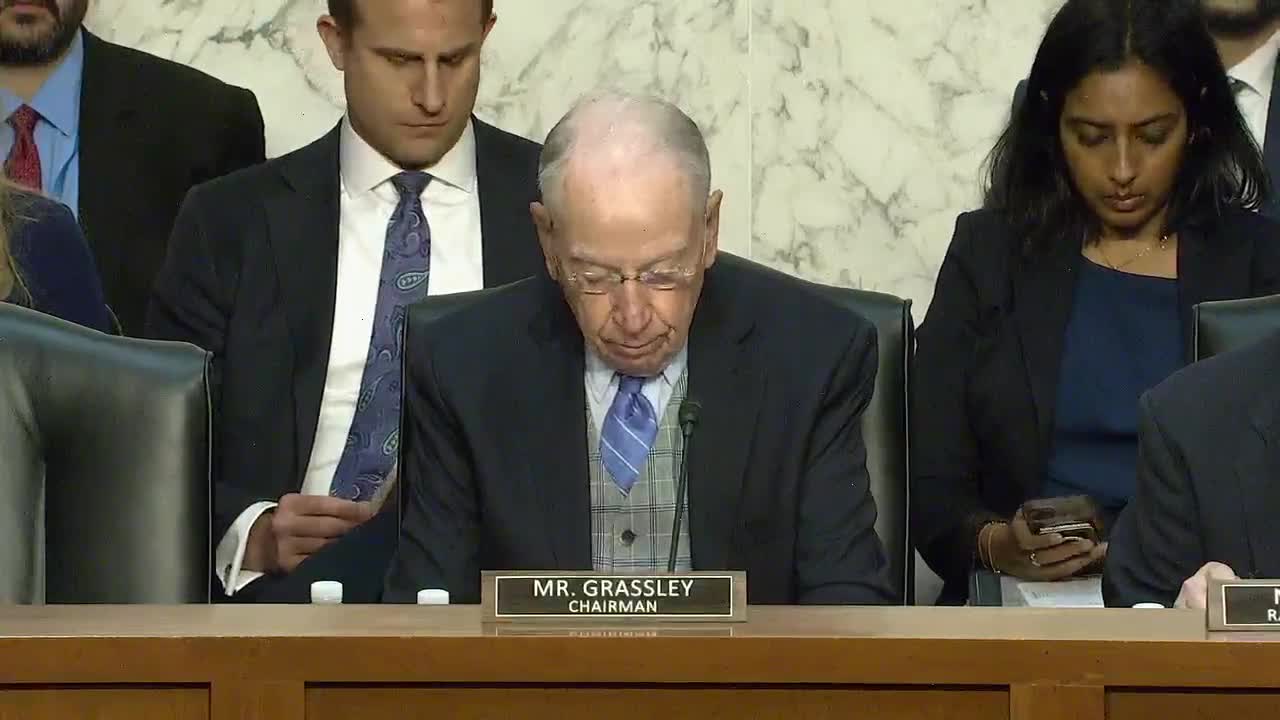
Sen. Charles Grassley, chairman of the Senate Judiciary Committee, opened the panel by defending the committee’s role in vetting nominees and arguing for timely floor consideration. "When nominees clear this committee, they deserve a timely vote," Grassley said. He described Mascotte as "well known and well respected by this committee" and noted her record of clerking for two Supreme Court justices and being cited by the Court.
Ranking Member Sen. Dick Durbin said partisan holds and delays on the Senate floor have left nominees and justice offices understaffed, and pressed the hearing’s broader context of judicial confirmations. "For decades, the Senate confirmed U.S. attorneys by voice vote or unanimous consent," Durbin said, adding that recent obstruction has changed that practice.
During her testimony, Mascotte emphasized her commitment to judicial ethics and to following Supreme Court precedent if confirmed. "Oh, senator. Absolutely. I would be committed to all ethics requirements," she told Sen. Durbin when asked whether she would abide by judicial ethics rules. She described her scholarship and teaching background and said her clerkships, academic work and government service prepare her to follow precedent and apply law impartially.
Several senators pressed Mascotte on specific scholarly positions. Sen. Richard Blumenthal referenced her past writings questioning Humphrey's Executor, the 1935 Supreme Court decision on tenure protections for independent agencies, and asked whether she now would recuse from cases involving that precedent. Mascotte said she stood by her academic work but reiterated that as a judge she would "fully and completely" apply Supreme Court precedent and statutory recusal requirements.
Sen. Mike Lee and others pressed her on originalist methods of interpretation; Mascotte described her approach as starting with the text and the original public meaning but allowing for established precedent to govern lower-court decisions. "It means the meaning that the text... as it was understood by the public at the time it became law," she said in reply to questioning from Sen. John Kennedy about "original public meaning."
Sen. Tammy Duckworth and others questioned Mascotte on statements she made opposing proposed Supreme Court ethics legislation and on whether she had personal knowledge of disclosures by justices raised in reporting. Mascotte said she had no personal knowledge and reiterated her commitment to ethics compliance.
Senators also asked about Mascotte’s ties to the Third Circuit. Multiple members noted that Mascotte is not a long-practicing member of the Delaware bar and that she was admitted to the Third Circuit only recently; she said that she would establish chambers in Wilmington if confirmed and that her prior legal work has been principally in Washington, D.C., and in academic settings.
Democratic members such as Sen. Sheldon Whitehouse and others expressed concerns about how Mascotte’s writings on executive authority and administrative agencies could affect her approach to cases involving independent agencies. Republican senators including Sen. Marsha Blackburn and Sen. Josh Hawley praised her scholarly record, clerkships and appellate experience.
The committee’s questioning ranged across legal doctrine (Humphrey's Executor, Chevron deference, separation of powers), Supreme Court ethics reform, and Mascotte’s record of public advocacy. Mascotte repeatedly stated that, if confirmed, she would follow Supreme Court precedent and statutory recusal rules and that her role would be to decide cases fairly based on the law.
The hearing concluded after several hours of questioning and statements from committee members; panel 1 ended when the chair excused Mascotte. No committee vote was recorded in the transcript excerpt provided.
Mascotte is one of several nominees the committee considered during the hearing; senators said the panel would proceed with additional nominees in a second panel.
The record of the hearing will be augmented by written questions for the record and any future committee action.