Get Full Government Meeting Transcripts, Videos, & Alerts Forever!
Get email alerts on the Tribal Energy Financing Doe Gao topic
No spam. Unsubscribe anytime.
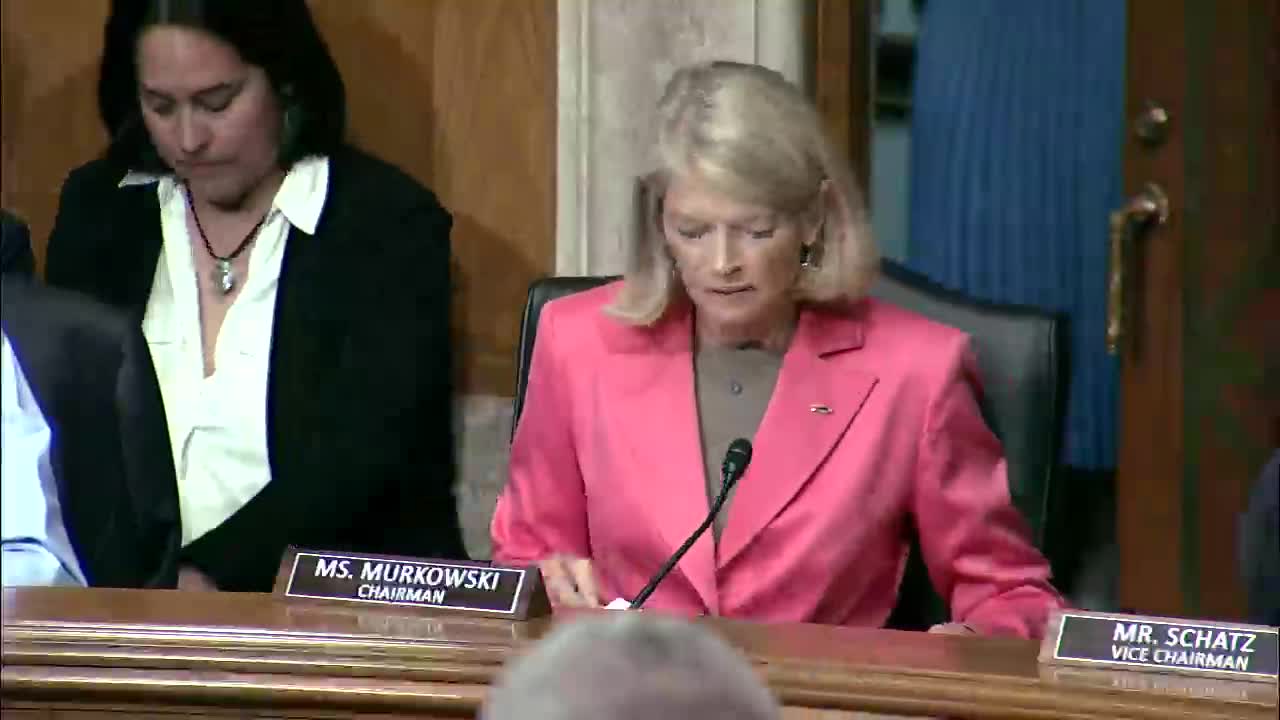
Senate hearing: GAO faults DOE loan program office for barriers to tribal energy financing; Denali Commission highlights Alaska’s bulk‑fuel crisis
Summary
At an oversight hearing, GAO told the Senate Committee on Indian Affairs that the Department of Energy’s Loan Programs Office has administered the tribal energy finance program in ways that deter applicants and slow projects, closing only one partial loan guarantee since 2018.
The Senate Committee on Indian Affairs heard testimony that the Department of Energy’s tribal energy programs have both demonstrable successes and persistent barriers that limit tribes’ ability to finance and build energy projects.
Why it matters: Tribes control substantial energy resources and often face higher electricity costs and lower access to reliable power. Federal programs intended to expand tribal access to capital and technical assistance can reduce energy costs, support economic development and improve resilience — but witnesses told the committee that program design, staffing and financing tools have repeatedly inhibited projects from advancing.
Key findings from GAO and DOE: Anna Maria Ortiz, director of GAO’s Natural Resources and Environment Division, told the committee that the Loan Programs Office’s (LPO) Tribal Energy Financing Program (TEFP) has closed only one partial loan guarantee since it was solicited in February 2018. GAO found program design choices that deter applicants, require tribes to pay uncertain due‑diligence costs, and subject applicants to lengthy, inconsistent review. Ortiz said 12 applications have been rejected, withdrawn, or paused and, as of July 2025, seven remained active with four under review for more than two years. GAO recommended that LPO revise program elements, publish consistent guidance and designate dedicated staff with tribal expertise; DOE has agreed to those recommendations.
DOE perspective and commitments: David Conrad, acting director of the Department of Energy Office of Indian Energy and a citizen of the Osage Nation, described the office’s technical‑assistance work and led with projects such as the Igiugig, Alaska, installation of two hydrokinetic devices and energy storage that he said save that small community nearly $170,000 a year. Conrad told the committee DOE’s Office of Indian Energy has helped more than 240 tribal energy projects, provided technical assistance for over 500 requests and delivered affordable, reliable energy to more than 11,000 homes and buildings. When asked about GAO’s recommendations, Conrad said DOE and LPO “agree with all the recommendations and they're beginning implementation immediately.”
Denali Commission and Alaska testimony: Jocelyn Fenton, director of programs for the Denali Commission, described the urgency of rural Alaska’s energy infrastructure: many villages are accessible only by plane or boat, use diesel powerhouses and rely on aging bulk fuel tank farms. She said rural households spend roughly 27% of income on energy — nearly four times typical urban levels — and that electricity in some Alaskan villages can cost more than $1 per kilowatt-hour versus a national average of about $0.16. Fenton estimated more than $1 billion is needed to bring rural tank farms up to code plus about $400 million to upgrade powerhouses. She urged more flexible financing tools tailored to small tribal utilities, expanded technical assistance such as regional planners and circuit riders, and better federal coordination to “braid” funding streams for complete projects.
Program design and potential fixes discussed: Senators and witnesses discussed a proposed LPO public‑financing pathway intended to scale review and underwriting to project size and to reduce reliance on costly outside consultants. GAO described the model as similar to USDA Rural Utilities Service or other public financing programs; Ortiz said it could shorten review times and lower costs if LPO staff with tribal expertise are designated and trained. Witnesses warned, however, that a public‑finance approach would require tribes to back projects with their own revenues, a step that could pose fiscal strains for tribes lacking flexible revenue sources.
Other concerns: Committee members raised the department’s budget request and administration guidance that would pause DOE funding for wind, solar and battery projects; several senators asked whether that pause was affecting FY25 awards. Conrad said FY25 funds had been on temporary pause for notices of funding opportunities while DOE completed its spend plan approvals, but he said historically the office had supported such projects and remains “technology neutral” in practice. Members also pressed DOE about tribal consultation; Conrad said engagement continues and that some tribal leader working groups are meeting, but several senators expressed concerns that formal, government‑to‑government consultation on program direction should be clearer and more consistent.
GAO recommendations and next steps: Ortiz said GAO’s recommendations — to revise program elements, develop consistent guidance and staff with tribal expertise — have been accepted by DOE. Senators asked DOE to follow up on available credit subsidy funds; Ortiz told the committee that LPO had about $10.5 million in credit subsidy funds remaining against an estimated $19.9 billion in loan authority. The hearing record was left open for two weeks for written submissions from tribes and stakeholders.
Ending: Committee members said they will continue oversight and consider legislative or appropriations measures to address the identified gaps in staffing, program design and financing tools so tribal communities can access energy projects that meet their needs.