
Tribal leaders press for housing vouchers, supportive services in draft bill to aid homeless and survivors
Get AI-powered insights, summaries, and transcripts
Subscribe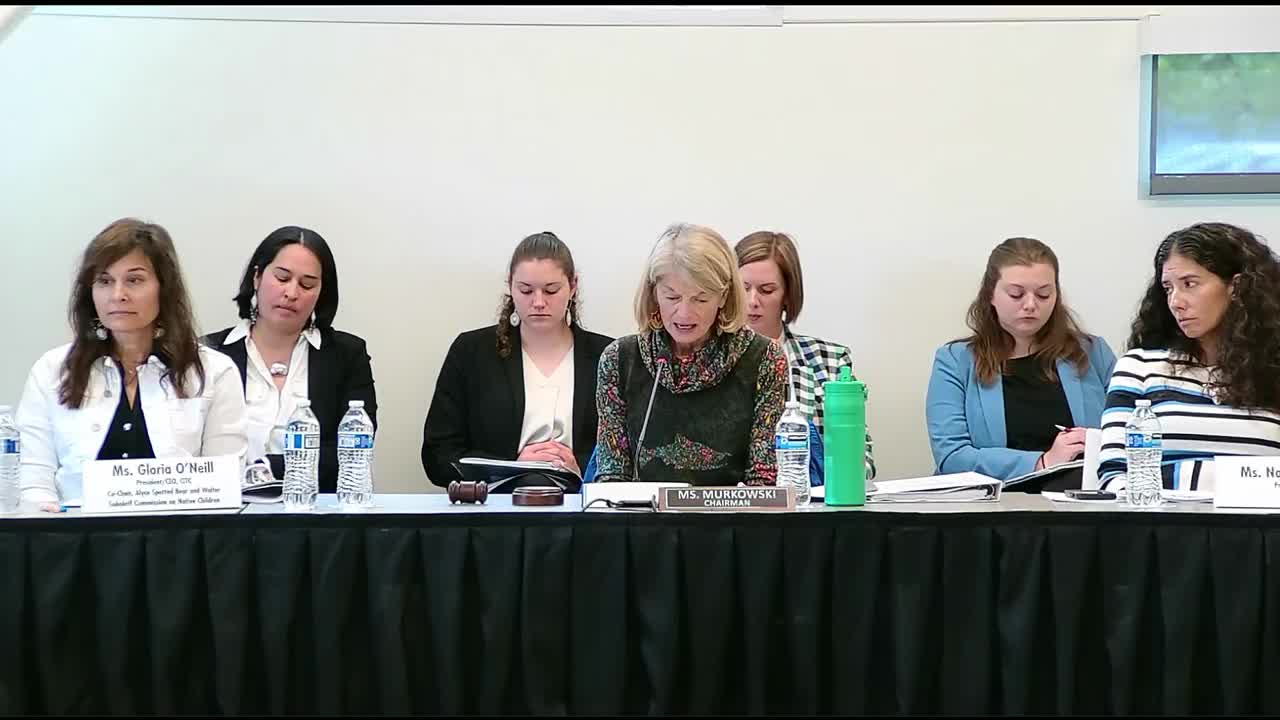
Summary
Panelists at the Senate roundtable urged Title 7 of the draft Native Children bill to fund tribal-led housing vouchers, seed continuum-of-care programs and recognize the link between homelessness and domestic violence, citing overcrowding and high costs in Alaska.
ANCHORAGE — Tribal leaders and advocates at a Senate Indian Affairs roundtable urged lawmakers to include tribal-administered housing vouchers and supportive housing pilots in the draft Native Children legislation, saying housing instability and overcrowding drive homelessness and trap survivors in dangerous situations.
“Alaska Native survivors are consistently denied these basic rights due to our state's housing crisis,” said Tammy Giroux, executive director of the Alaska Native Women’s Resource Center, citing a statewide safe housing assessment and stating that rural Alaska household overcrowding is about four times the national average. Giroux added that in rural areas “44% of the households are severely overcrowded.”
Jackie Pata, first vice president of Central Council of Tlingit & Haida and an architect of the first tribal Continuum of Care in Alaska, told the committee that the proposed pilot modeled on tribal VASH and a 75 percent set-aside for tribal projects could provide flexible services including counseling, rapid rehousing and transitional housing. She said counseling tied to housing was critical to helping veterans and youth move from crisis into stable housing.
Panelists repeatedly linked domestic violence and homelessness: Giroux cited research showing that as much as 57 percent of homeless women report domestic violence as the immediate cause of their homelessness. They argued that tribal-led programs must be able to finance emergency shelter, case management and permanent supportive housing alongside construction funding.
Senator Murkowski said the committee intends to preserve tribal self-determination in housing responses and to ensure funds cover both capital and service elements that enable survivors and families to remain safe and stable.
The roundtable did not enact legislation; staff will use testimony to inform the package before formal introduction.