Get Full Government Meeting Transcripts, Videos, & Alerts Forever!
Get email alerts on the Short Term Rentals topic
No spam. Unsubscribe anytime.
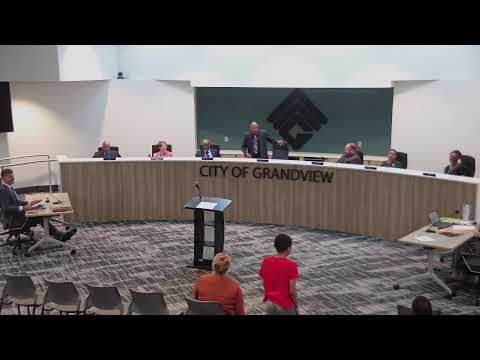
Grandview aldermen adopt short-term rental rules, set registration and tax requirements
Summary
The Grandview Board of Aldermen approved an ordinance adding Article 11 to Chapter 10 of the city code to regulate short-term rentals, setting an annual registration fee, an inspection fee, and a nightly tax; the vote passed with one dissent.
The Grandview Board of Aldermen on May 13 adopted an ordinance (bill 7844, now ordinance 7582) adding Article 11 to Chapter 10 of the Grandview Code of Laws to regulate short-term rentals, including a $150 annual charge per unit and a 5% nightly tax on transient rental revenue.
The measure, introduced by city staff and placed on first reading, moved through second and final readings after discussion about scope, enforcement and staffing. Mayor Leonard B. Jones Jr. presided over the meeting; aldermen voted 5–1 in favor of final passage, with Alderman John Maloney casting the lone no vote.
City staff said the proposal would allow short-term rentals only in single-family and duplex residential zones and would fold registration and inspections into the existing rental registration program. Staff proposed a $100 annual registration fee plus a $50 annual inspection fee (total $150) and a 5% nightly tax. Jamal (city staff) told the board that the city would use a vendor-hosted registration system (referred to in the meeting as GovBuilt) and said, "we would be more than happy to share that information with" the police department if they need it.
Alderman John Maloney pressed staff on staffing and enforcement. He asked how the city would identify units that are rented but not reporting revenue. City staff responded that enforcement would be a cross-department effort and that the finance department would work with code and licensing staff to pursue unpaid collections when listings are known.
Board members also discussed the types of properties allowed. Staff said the draft restricted short-term rentals to single-family homes and duplexes; staff and some aldermen noted that multifamily complexes and mixed-use commercial buildings were not included under the current draft. Staff said platforms such as Airbnb had provided best-practice guidance and suggested optional limits for larger apartment complexes (for example, limiting the share of units within a complex used as short-term rentals).
Council members asked for additional public outreach if the ordinance moved forward; staff said the communications director would help with public education. Jamal estimated the city’s housing stock at about 12,000 units, of which a little more than half are single-family, and said an estimate of about 100 short-term units would represent “a little less than 2%” of the housing stock.
The board placed the bill on second reading and, after final discussion, approved final passage. Alderman John Maloney voted no; the ordinance passed and was recorded as ordinance 7582.
The ordinance establishes registration, inspection and taxation requirements and directs city staff to implement a registration process; the meeting did not produce a finalized enforcement protocol for tax collection or an exact timeline for roll-out beyond staff assurances that rental inspectors would incorporate the work into existing duties.
Board members said they will include further follow-up in a future work session to address implementation details and outreach.