Get Full Government Meeting Transcripts, Videos, & Alerts Forever!
Get email alerts on the Budget topic
No spam. Unsubscribe anytime.
West Linn–Wilsonville superintendent presents reduced 2025–26 budget; community urges restoration, clearer communication
Summary
Superintendent Cathy Ludwig on Monday presented the West Linn–Wilsonville School District’s proposed budget for fiscal 2025–26, asking the newly formed budget committee to review a plan that rolls forward current programs while incorporating $15 million in reductions and projected revenues that leave the district with a tighter ending fund balance.
Superintendent Cathy Ludwig on Monday presented the West Linn–Wilsonville School District’s proposed budget for fiscal 2025–26, asking the newly formed budget committee to review a plan that rolls forward current programs while incorporating $15 million in reductions and projected revenues that leave the district with a tighter ending fund balance.
The proposal calls for a total budget across funds of $265,991,820, including a general fund of $158,035,887, a special revenue fund of roughly $31,000,683 (with supplemental items noted in the document), a debt services fund of $44,057,708 and a capital projects fund of $32,214,601. Ludwig told the budget committee the document reflects current law and best estimates but is subject to change as state and federal allocations are finalized.
Why it matters: the district projects a smaller cushion going into 2025–26 and faces continuing uncertainty from enrollment shifts, potential changes to state special education and high-cost disability funding, PERS adjustments and federal grants. School staff and the community told the board this week that the choices embedded in the plan—especially reductions to licensed positions—carry direct classroom and community effects.
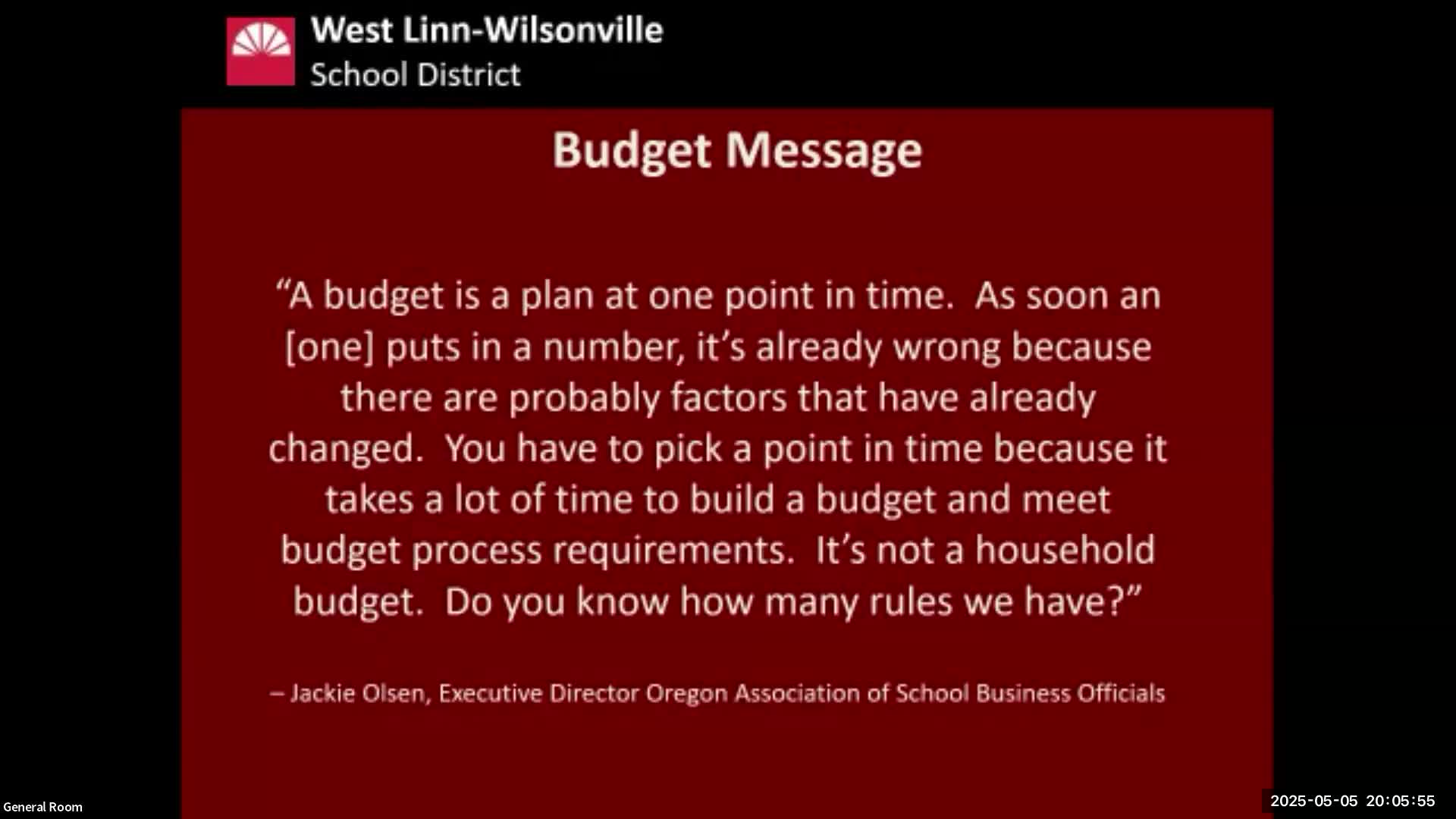
Ludwig described the budget-development process to the budget committee and public: staff rolled current staffing and programs forward, evaluated needs, surveyed families and employees, and then modeled revenue and costs under the governor’s preliminary state school fund estimate. The superintendent noted the statewide funding environment remains volatile and that adopted budgets are a snapshot that can change once final allocations and enrollment data are known.
Community priorities and district survey: the district reported it received 337 survey responses in April about restoration priorities. Nearly 90% of respondents flagged restoring reduced teaching positions as the top priority; 56% prioritized specialists and paraeducators; roughly 28% supported increasing the ending fund balance to reduce future cuts. The budget document includes detailed survey results and links to responses.
Public commenters urged the district to restore classroom staff and to accelerate capital spending in some areas. Several parents and community members used the public-comment period to press the board on two themes: (1) athletic-field safety and timing of turf replacements, and (2) stability and communication for small schools and early-learning programs.
- Brad Christiansen, a parent and longtime youth coach, told the board both Westland and Wilsonville stadium fields “have exhausted their useful life” and asked the district to study whether bond-sale or other capital proceeds planned for new sites could instead accelerate field replacement. He said coaches and parents have observed more serious injuries on the fields in recent seasons and left photos and written material for staff review.
- Other speakers, including Athena Contreras and Sarah Gloss, asked the board to consider advancing field work if funds or community fundraising could be used, while noting that maintaining teachers remains a top priority for many families.
Budget-committee process and schedule: the board converted the meeting into a budget-committee session and appointed Ginger Fitch as budget committee chair and Charles Steele as vice chair. The committee received the full proposed document and was invited to send written questions to the superintendent and business office by May 15; staff said responses will be shared to all committee members before the May 19 public meeting. The budget committee will meet May 19 (and May 21, if needed); the school board will hold a public budget hearing and adopt the budget later in June.
Uncertainties and carry-forward assumptions: the proposal assumes an estimated carry-forward (ending fund balance) from the current year; staff noted that if final audited balances or state allocations differ, further changes will be necessary. The message highlighted a $6.5 million estimated ending fund balance (about 4.5% of general fund revenues) under current assumptions and reiterated the district’s caution about a two‑year biennium in which expenditures are expected to rise faster than revenue.
Next steps: the budget committee will review the packet, submit questions by the committee deadline, and receive staff replies in writing. The public can review the proposed budget when it is posted to the district website and comment at the committee’s public meeting on May 19.
Ending: Ludwig closed by thanking staff, the board and community volunteers for the time required to assemble the proposal and reiterated that statewide funding shortfalls—not local choices alone—drive much of the reduction work districts face statewide.