Get Full Government Meeting Transcripts, Videos, & Alerts Forever!
Get email alerts on the Transient Lodging Tax topic
No spam. Unsubscribe anytime.
Sherwood reviews transient lodging tax collections, uses and possible rate changes
Summary
City staff briefed the council March 18 on Sherwood’s 3% transient lodging tax (TLT), which has generated about $632,000 since inception; councilors discussed current allocations to the arts and economic development, a pending Oregon bill (HB 3556) that could expand allowable uses, and the prospect of researching a rate increase.
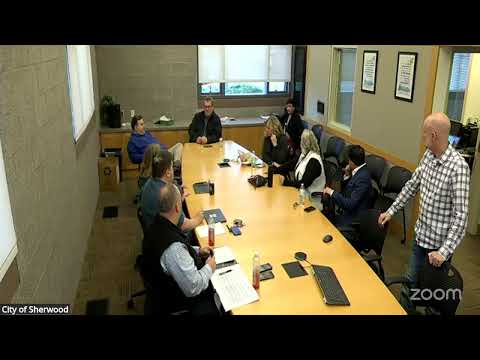
Sherwood City Council reviewed the city’s transient lodging tax (TLT) during a March 18, 2025, work session, receiving background on current collections, legal constraints and possible future uses.
David, a staff member, summarized the tax and its history: “the city of Sherwood implemented a 3% tax back in February 2019” that became effective April 1 after a 30‑day waiting period. David told the council that total city collections since inception are a little over $632,000 and that collections rose after the Hampton Inn opened in summer 2020—averaging about $150,000 after the hotel opened versus roughly $4,000 prior to it.
David described statutory restrictions the council must follow: “70% of the net revenue must be used to fund tourism promotion, tourism related facilities, finance or refinance the debt of tourism related facilities,” while the remaining 30% may be used for city services. He also noted a pending state bill (identified in the meeting as Oregon House Bill 3556) that would, if enacted, allow cities or counties to use hotel tax revenue for public‑safety and certain infrastructure costs tied to tourism. David reported the bill would have a hearing Thursday and that public testimony to date included far more opposition than support in the materials he reviewed.
Councilors discussed options for the city’s current allocation model. Staff said the city currently transfers TLT receipts to the center for the arts fund; portions of the TLT are supporting public art and an Old Town strategic initiative. During discussion council members cited sample dollar amounts: roughly $45,000 staying in the center for the arts and about $35,000 supporting a public‑art fund (figures discussed as approximate annual amounts during the work session). Councilors asked staff to research rate comparisons and legal limits.
Several council members raised the question of whether the city could raise its local rate. David and other participants said local rates vary by jurisdiction; Washington County and some cities were cited as charging up to 9% locally, and the state tax component was described as 1.5%—with the meeting using an example that combined local, county and state levies to show how total tax on lodging can add up. One councilor noted section 47 of the Sherwood Charter as potentially relevant to any proposal that would raise business fees or taxes beyond certain thresholds and asked staff to confirm charter constraints.
Council members also discussed how TLT funds could support a range of priorities if the state expands allowable uses under HB 3556—public safety, road/trail maintenance, economic development, and tourism promotion. Several council members said they were comfortable keeping the current allocation until the legislature’s action is clear and until the Sherwood Chamber of Commerce presents a business plan (the chamber is scheduled to present next month). No formal decision or ordinance change was made at the meeting.
Staff committed to return with more information: a legal review of permissible rate increases, a compilation of neighboring jurisdictions’ rates, and information about how much additional hotels would likely increase revenue. The council directed staff to schedule follow‑up discussion after the legislature acts and after the chamber presents its plan.