Get Full Government Meeting Transcripts, Videos, & Alerts Forever!
Get email alerts on the Historic Preservation Grants topic
No spam. Unsubscribe anytime.
State preservation office outlines grants, tax credits and training as Washington commission readies guideline update
Summary
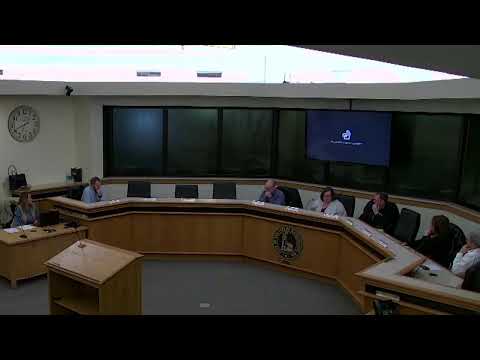
Representatives from the Missouri State Historic Preservation Office outlined grant programs, tax-credit rules and training opportunities at a meeting of the Washington Historic Preservation Commission (date not specified), and the commission agreed to pursue updating its design guidelines and to place three previously reviewed sign applications on the public record.
Representatives from the Missouri State Historic Preservation Office outlined grant programs, tax-credit rules and training opportunities at a meeting of the Washington Historic Preservation Commission (date not specified), and the commission agreed to pursue updating its design guidelines and to place three previously reviewed sign applications on the public record.
Ethan Starr, identified as an architectural historian with the Missouri State Historic Preservation Office, said Washington participates in the Certified Local Government (CLG) program and has received more than $300,000 across 16 grants since the 1980s. Andrew Bridal, identified as grants manager at the State Historic Preservation Office, summarized available funding, saying, “The maximum amount that you can apply for is $50,000” from the state grant program and that CLG applicants receive preferential allocation of over half the annual funds the office distributes.
The presentation described three main grant categories: national-register and survey work; pre-construction planning and condition assessments for publicly owned, National Register–listed properties; and planning and outreach projects such as updated design guidelines, brochures and community training. Bridal noted the state grants typically fund up to 60% of a project budget (a 60/40 match) and run for 18 months. He also reviewed federal and state tax credits: a 20% federal rehabilitation tax credit for income-producing buildings and a recently increased 35% Missouri state tax credit that applies to commercial, residential and nonprofit-owned buildings and can be transferred (sold) to finance projects.
Bridal and Starr highlighted other competitive funding sources the commission could consider, including Save America’s Treasures (National Park Service), National Trust for Historic Preservation programs, the National Fund for Sacred Spaces for houses of worship, and the National Park Service’s Paul Bruhn Historic Revitalization Grants (a subgranting program for economic revitalization). They also mentioned nontraditional funders such as corporate programs (T‑Mobile), railroad philanthropy and Missouri Department of Transportation programs for bridge and infrastructure work.
Commission members used the presentation to identify near-term priorities. Commissioners discussed applying for a state CLG grant to update the city’s design guidelines (the current guidelines date to 2009) and adding cultural/archaeological language and stronger demolition review provisions to the city’s preservation ordinance. The commission agreed education and training for commissioners and the public should precede major ordinance changes: Starr offered to provide training on the Secretary of the Interior’s standards for rehabilitation, and commissioners discussed sending members to national training programs such as NAPC’s CAMP and the National Alliance conference.
On administrative business, the commission placed three design reviews for signs — previously approved via email — on the record during the meeting after discussion about whether size and zoning approvals remain a separate planning review. The commission also agreed to limit email-only reviews to signs (which members described as generally administrative) while asking applicants for other types of projects to appear in person so commissioners can provide outreach and education.
Commissioners raised a concern about 320 Jefferson Street, a building that recently suffered fire damage. A commissioner said they would “fight vigorously for that building,” and members asked staff whether a structural engineer had inspected it; staff reported contact with insurance adjusters but said owner engagement and structural assessment status were not specified. Several commissioners asked staff to provide support and to consider preservation options before demolition is assumed.
No construction work or bricks-and-mortar projects are eligible under the state grant program; instead the office funds planning, surveys, nominations to the National Register and projects that make properties eligible for other funding, Bridal said. He encouraged commissioners and local property owners to contact the State Historic Preservation Office for application guidance and noted a pre-application deadline (February 28) and a final application deadline (April 25) for the current grant round, with a separate grant opportunity opening in August.
Commissioners closed the meeting after taking the administrative votes and agreed to pursue a grant application and schedule preservation-training sessions with State Historic Preservation Office staff.