Get Full Government Meeting Transcripts, Videos, & Alerts Forever!
Get email alerts on the Historic Preservation topic
No spam. Unsubscribe anytime.
Historic Preservation Commission favors in-person design reviews, forms subcommittee on district rules
Summary
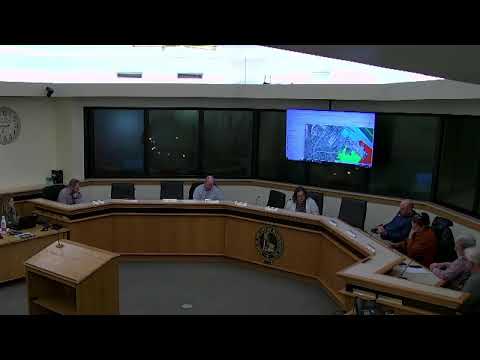
At a regular meeting, the commission agreed to prefer in-person design-review meetings rather than email-only reviews, authorized a subcommittee to clarify design-review district boundaries and signage, and discussed training and a forthcoming visit from the State Historic Preservation Office.
At its meeting, the Historic Preservation Commission agreed by consensus to make in-person design-review meetings its default instead of relying primarily on email reviews. Commissioners also formed a subcommittee to recommend clarifications to the municipal design-review boundaries, district signage, and related code language, and discussed training and a planned visit from the State Historic Preservation Office.
The shift to in-person reviews was presented as a way to improve applicant engagement and allow commissioners to see materials, ask questions, and reach compromises with applicants more quickly than an email-only review process. Commissioners cited practices used in nearby cities such as St. Charles and Hermann, where applicants typically appear in person and commissions often require applicants to attend before a building permit is issued; those jurisdictions were described as using in-person review to reach compromises and ensure required changes are made before permits proceed. The commission did not adopt a new ordinance; members said the change is a board preference and staff will continue to handle cases that do not require permits or are minor projects.
Commissioners also discussed uncertainty about which parcels fall within the local design-review area versus the C-3 zoning district. One commissioner recalled the design-review overlay generally running “front to Fifth and market to Cedar,” while others noted the C-3 district stops at Third Street. Commissioners asked staff to clarify the boundary on the municipal map and recommended the subcommittee develop proposed code language or maps to remove ambiguity so applicants and property owners know when design review applies.
The commission discussed the limits of its current authority. Members said only a small number of properties are legally protected from demolition without commission approval; the meeting contained conflicting counts (the commission at one point said three buildings are protected, later noting the cemetery and gazebo as additional protected elements). Commissioners reiterated that outside the small set of legally protected properties the commission currently issues recommendations and provides mandatory review only where tied to public or grant funding. Several members described the commission’s present role as largely educational and said adopting mandatory compliance (often described as “teeth”) — the ability to deny a project — would require a formal code change and broader policy decisions by the city.
The commission established a subcommittee to work on proposed historic-district code changes, signage, and process improvements. Volunteers and potential members named during the meeting included Rick Hopp, Pat (last name not specified in the transcript), Joe McGowan, and Tyler King; non-voting participants and other suggested contributors included Sarah Understall, Russ Balmert, Brian (last name not specified), and Andrew (last name not specified). Staff indicated they would confirm sunshine-law limits and verify whether small subcommittee meetings would need to be publicly noticed.
Staff reported limited resources but said some work is underway to improve the commission’s public presence. Sarah Skeen (staff) described efforts to add maintenance flyers and to develop a story map and a historic-preservation web page with photos, plaques and an interactive map. Commissioners discussed using the web tools and the design-guide color palette to educate property owners and realtors, noting that many owners do not realize design-review expectations when they buy a building.
On budget, staff said the commission’s annual allocation had been reduced in recent years from about $4,500 to $2,000, with the caveat that budget increases could be requested if the commission grows its programs. Commission staff noted a recent $435 expenditure for a sign for the Comueller Farmstead and discussed planning new budget requests in mid-summer for the October fiscal cycle (fiscal year end was noted as Sept. 30).
Training and outreach were also on the agenda. Commissioners agreed to schedule a short (approximate 30-minute) training during a regular meeting and to consider field visits to other commissions. The State Historic Preservation Office representative, identified as Ethan, is scheduled to attend the next meeting to review the commission’s processes, offer suggestions, and discuss grant cycles for surveys and individual nominations; commissioners said they would prepare questions about survey and nomination funding and timing.
Votes at a glance - Motion to approve minutes from November: outcome — approved (mover and seconder not specified in the transcript). The meeting record shows an aye vote and the chair declared the motion passed. - Motion to adjourn: outcome — approved (mover and seconder not specified in the transcript). The meeting record shows an aye vote and the chair declared the meeting adjourned.
The commission set out next steps: convene the subcommittee, draft proposed clarifications for the design-review district and signage, prepare a short training for the next regular meeting, and meet with the State Historic Preservation Office representative to discuss survey, nomination, and grant timing. Staff will circulate subcommittee scheduling information by email and will follow up on legal and code clarifications.