Get Full Government Meeting Transcripts, Videos, & Alerts Forever!
Get email alerts on the Public Safety Fire Ems topic
No spam. Unsubscribe anytime.
Commissioners agree to work session after volunteer chiefs urge tax to shore up fire, EMS services
Summary
A county resident and volunteer fire chiefs urged the Currituck County Board of Commissioners to consider a dedicated property tax to support fire and EMS. The board asked the county manager to schedule a work session with staff and advisory board members to review options.
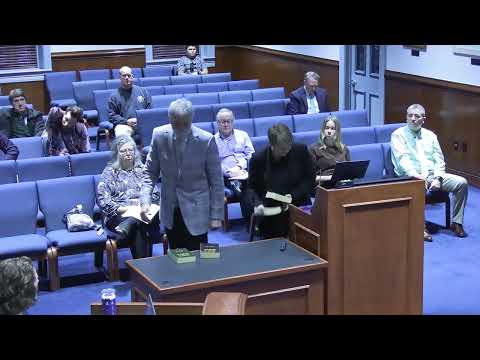
A resident and multiple volunteer fire chiefs told the Currituck County Board of Commissioners on March 17 that the county needs a dedicated funding plan for fire and emergency medical services as call volumes rise.
Todd Mitchell, a Moyock resident, told the board he and leaders of nearly all the county’s volunteer departments have prepared a proposal that would begin with a 3-cent tax increase in year one and add 1 cent per year for three additional years for a total increase of 6 cents earmarked for fire, EMS and public safety. "Yes. Does it mean you're gonna have to increase taxes? Of course, it does," Mitchell said during the public-comment period.
The appeal prompted commissioners to ask for formal internal review. Chairman O'Neil asked the county manager to schedule a work session for the board, paid staff and volunteer leaders to discuss the Fire/EMS advisory board’s role, department needs and a longer-term funding strategy. "We need to know where we are before we start engaging the volunteer fire departments about fire service and our expectations," the chairman said; the request drew no objection from other commissioners.
Why this matters: Commissioners and volunteer chiefs said the issue is time-sensitive because growth increases call volume and because converting to a fully paid service would be substantially more expensive than staged investment. Mitchell referenced a 2012 county study that estimated a full paid fire service at $25 million then and said costs and equipment lead times have risen since.
What was requested and next steps: Commissioners asked the county manager to convene a work session with staff, the Fire/EMS advisory board and volunteer chiefs to clarify the advisory board’s purpose, review call-type data (structure fires vs. other responses) and consider possible changes to the advisory board’s membership or mission. The board did not vote on a tax change; the manager was asked to schedule the session for discussion and fact-finding.
Context and constraints: Commissioners and Mitchell acknowledged that any tax change would require formal budgetary steps and public process. Mitchell said his proposal used current taxable base figures and did not include future growth; the amount that tax revenues would actually yield if property values increase was "not specified" in his remarks.
The county will return to the item after staff compiles cost estimates, call-volume data and options for structuring a dedicated funding source.
Ending: The board’s request for a work session was entered as direction to county staff; no ordinance or tax change was proposed or adopted at the meeting.