Get Full Government Meeting Transcripts, Videos, & Alerts Forever!
Get email alerts on the Personnel Pay Salary Study topic
No spam. Unsubscribe anytime.
Consultant recommends new pay plan, phased raises after Currituck County salary study
Summary
David Hill of the Piedmont Triad Regional Council presented a seven‑month salary study to the Currituck County Board of Commissioners recommending a single pay plan with wider ranges, a phased move toward a 5% grade differential and comp‑ratio modeling to bring employees to market midpoint by year eight; estimated gross implementation cost is about $1.7 million and staff proposed starting in fiscal 2025–26.
A consultant who completed a seven‑month salary study for Currituck County on March 3 recommended the county adopt a new pay plan with wider salary ranges and a phased implementation intended to bring employee pay to market over time.
David Hill of the Piedmont Triad Regional Council presented the study and Melissa Futrell, Currituck County human resources director, joined for technical explanations. Hill said the study compared each county job to similar positions across a market of nearby counties and recommended grade and range adjustments for many classifications. "I am David Hill with the Piedmont Triad Regional Council," he said, describing the data collection process and employee position questionnaires. Futrell explained step advancement: "At initial hire, you're hired in step 1. After 6 months of successful employment you advance to step 2 and then after an additional 6 months ... you advance to step 3."
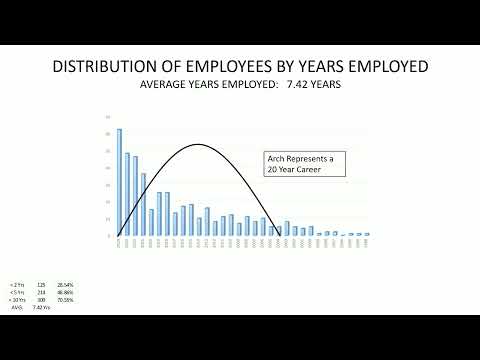
Why it matters: County staff and commissioners cited recruitment and retention problems across public safety, social services and other departments; Hill showed that almost half of the workforce had been in their positions fewer than five years and that most employees remained near step 3 of the county's pay plan. Hill said the county's current pay grade ranges are narrow (about 17%) while market ranges average roughly 50%, and differentials between grades in the market average about 5.4% compared with Currituck's current 2% increments.
Key recommendations and numbers: Hill proposed a single pay plan for all employees with a 50% range (maximum 50% above minimum) and an initial move to a 3% differential between grades as a step toward a full 5% differential in future years. He recommended position‑level regrading based on market comparisons and internal relationships (for example, social worker ladders), and an implementation model using comp‑ratio modeling that would move an employee's pay to the market midpoint by year eight in the position. Hill projected a total one‑time implementation cost across all funds of about $1.7 million: roughly $1.386 million for salaries and $367,000 for payroll‑related benefits (FICA, retirement, 401(k) contributions). The study assumes a FY 2025–26 start if the board approves funding. Futrell said the county currently contributes about 6.39% to employee retirement/401(k) and that staff plan to recommend capping the county 401(k) contribution at 5% to align with peer practice.
Staff cautioned the board that the plan affects positions first (grade and range) and that not every individual employee would necessarily see a pay increase; some employees currently already sit at market. Hill and Futrell also noted operational complexities such as positions funded from enterprise or special revenue funds; the $1.7 million estimate is a gross cost before reimbursements the county would receive for grant‑funded positions.
Commissioners asked about timing and impact. Hill said he recommended the 3% differential now because adopting an immediate 5% differential would roughly double implementation costs. Futrell said the county would roll longevity into the salary structure rather than keep it as a separate supplement and would return with implementation details and personnel impacts for the board and employees.
The presentation closed with thanks to HR staff for preparing individual salary data; no formal vote or policy change was made that night. The board received the study and staff said they will return with options for implementation and budget requests for FY26.
Ending: County staff said they will provide the full presentation to the public and will bring implementation options, including the recommended grade assignments and a cost schedule, back to the board for formal action prior to any pay changes.