Get Full Government Meeting Transcripts, Videos, & Alerts Forever!
Get email alerts on the Mobile Vending topic
No spam. Unsubscribe anytime.
Planning commission opens review of mobile‑vending rules, weighing short‑term permits, restroom access and fire safety
Summary
Ferndale commissioners reopened discussion of mobile‑vending rules on Feb. 19, exploring tiered permits (day/week/seasonal/annual), restroom and waste requirements, fire inspections, and outreach to vendors and property owners before drafting code changes.
FERNDALE, Mich. — The Ferndale Planning Commission on Feb. 19 opened a public discussion to rework the city’s mobile‑vending rules, focusing on how to balance support for small businesses with requirements for public health, safety, and site maintenance.
Commissioners pulled the mobile‑vending section out of the zoning ordinance for further work and discussed a tiered approach to permitting, options for short‑term and long‑term uses on private property, restroom and waste handling requirements, and how to enforce limits on truck permanence.
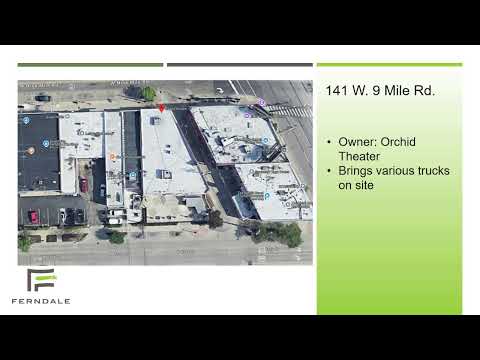
Commissioners and staff said the conversation is intended to regulate mobile vendors on private property (not to replace the city’s event or public‑property permitting handled by staff). Presenter Commissioner Michele summarized concerns identified in a tour of existing mobile‑vending locations: restroom access for employees and patrons, long‑term use of private property without appropriate site improvements, trash collection, noise and neighbor impacts, and consistent application of fire and health safeguards.
Staff cited Oakland County Health Department standards for mobile and temporary food operations and said the Ferndale Fire Department requires inspections and, for cooking trucks, overhead ventilation and fire‑suppression measures where applicable. Staff noted that fire‑marshal inspection permits are valid for a year and that failure to comply can result in fines; during the meeting staff stated the fire‑marshal fine for noncompliance is $500.
City staff and commissioners discussed draft options that include: - Short‑term vendor permits (one‑day up to a week) tied to Oakland County health standards and requiring an employee restroom access plan; - A seasonal patio‑season permit (March 15–Nov. 15) for vendors with outdoor patron seating, requiring site‑plan review for circulation, parking relief, restroom access and sanitation measures; and - An annual vendor permit that would require site‑plan review, a restroom plan, waste handling, and repeated inspections, with possible limits on renewals or a transition to accessory‑structure standards if a location becomes effectively permanent.
Michael (city staff) told the commission the city already follows a pattern used for other temporary services: a short‑term or temporary license (the city determines the exact temporary length, but staff suggested a cap that the temporary permit not exceed 30 days) and an annual license that runs calendar year‑to‑Dec. 31. He said that approach gives staff flexibility to address unusual events (e.g., a 21‑day market) through policy rather than creating many separate ordinance tiers.
Commissioners said their on‑site review found instances where mobile vendors had been parked for months or longer, effectively operating as semi‑permanent businesses without the site improvements a brick‑and‑mortar operation would require. Commissioners noted the equity dimension of the work — many vendors are minority‑owned — and said the code should not impose undue burdens while still protecting neighbors, sightlines and public health.
Several commissioners suggested outreach before drafting final rules: invite food‑truck operators and affected property owners to a future meeting or workshop, and run a short online survey to gather vendor business models, frequency, and restroom/trash handling practices. Commissioners proposed clear thresholds for when a vendor transitions from "mobile" to a long‑term category that triggers additional site requirements, and discussed tying the seasonal permit to the city’s existing patio season to align inspections and standards.
Next steps Staff and commissioners agreed to collect data and invite stakeholders — vendors, property owners and public‑safety staff — to a future meeting. The commission also said it will prepare questions for vendors and consider a community survey to inform draft code language. No formal vote was taken; the discussion will continue at a future meeting.