
Committee tables bill to shield livestock disease data after split over transparency and producer protections
Get AI-powered insights, summaries, and transcripts
Subscribe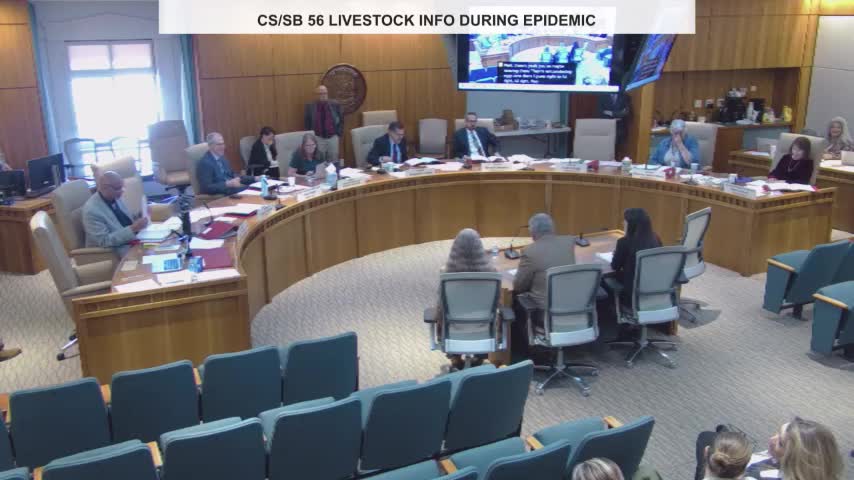
Summary
Senate Bill 56, which would allow the Livestock Board to redact identifying information in records released during animal‑disease investigations, was tabled after extended debate. Proponents said confidentiality would encourage prompt reporting and protect the food supply; opponents warned it would limit public oversight and harm third parties.
Senate Bill 56, which would authorize the New Mexico Livestock Board to redact certain personally identifiable and biosecurity information from records released during animal‑disease investigations, was tabled by the Senate Judiciary Committee after lengthy debate weighing producer confidentiality against public transparency.
Sponsor Senator Woods framed the bill as a public‑safety measure to protect the state’s food supply by encouraging producers to come forward when they detect disease. He said modern examples such as H5N1 outbreaks and other recent animal‑health threats demonstrated the need for producers to voluntarily share information with the state veterinarian without fear that detailed, identifying information would be disseminated publicly.
Supporters included Tom Patterson (president‑elect, New Mexico Cattle Growers Association), Kelly Fajardo (New Mexico Farm Bureau) and Marsha Wilson (co‑director, Southwest Border Food Protection and Emergency Preparedness Center). State Veterinarian Samantha Hall explained the practical problem the agency faces: producers sometimes refrain from reporting disease because they fear public backlash, social media exposure and economic harm; the proposed confidentiality would allow the Livestock Board to protect personally identifiable information while still coordinating with response partners.
An opponent on the record, trial attorney Felice Rael, said she opposed the committee substitute because it would limit the rights of New Mexico citizens who might be harmed or suffer losses as a result of an outbreak; she urged the committee to balance producer protections with the public’s right to information.
Several senators voiced principled concerns about reducing transparency. Senator Maestas, among others, said the public has a right to know outbreak size, locations and movements of animals; he expressed skepticism that confidentiality was the correct remedy and suggested alternative approaches such as strengthening reporting incentives or statutory penalties for non‑reporting. Other committee members noted the bill mirrored protections in Colorado and Texas and emphasized the Livestock Board’s interest in encouraging early reporting to limit spread.
After debate, a motion to table the bill was carried by roll call.
What’s next: The measure was tabled in committee. Sponsors may continue to negotiate with stakeholders (Livestock Board, producers, animal‑health advocates and consumer representatives) before any future action.