Get Full Government Meeting Transcripts, Videos, & Alerts Forever!
Get email alerts on the Facilities topic
No spam. Unsubscribe anytime.
Public commenter urges proactive roof and HVAC repairs after condition assessments; board approves consent agenda
Summary
At the March 27 board meeting a citizen and building professional urged the Olympia School District to take proactive action after recent condition assessments, citing a 25‑year‑old roof at Madison and the risk of closures. The board approved the consent agenda unanimously; staff said condition assessments remain open for further review.
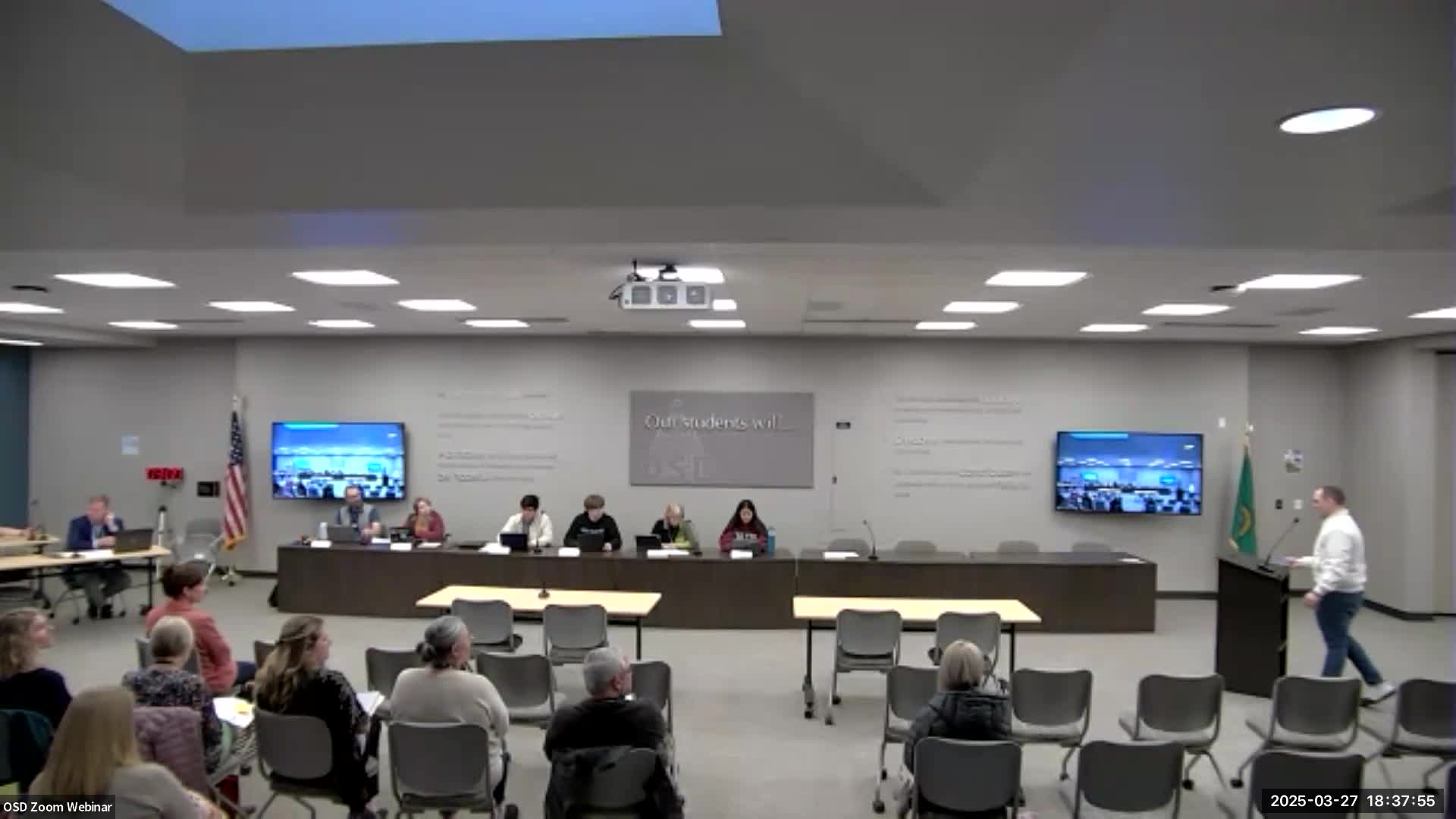
A local building professional, speaking during the March 27 Olympia School District Board of Directors meeting, urged the district to take a proactive approach to maintenance after the district released condition assessments for several school facilities. The board, after discussion, approved the meeting’s consent agenda unanimously; the assessments were among materials included in the consent packet.
Brian Brannies, who said he serves on the district’s Long‑Term Facilities Strategic Planning Citizens Advisory Committee and runs the condition assessment program for the Washington State Department of Transportation, reviewed findings he said concerned him. “When I look through some of the condition assessments…Madison, the roof, I believe is original, 25 years old. It is well beyond its normal expected lifespan, which would be 20 years,” Brannies said. He described visible missing shingles and gutter problems and told the board the roof “needs to be immediately replaced.”
Brannies warned of knock‑on effects from deferred maintenance, noting his recollection that Madison had closed more than a decade ago for damage. He urged more frequent condition assessments — industry standard about every three years — and asked the board to scrutinize how the assessments compute a building condition score. “That percentage number…I'm concerned that that specific number isn't an industry standard approach and that that number doesn't mean a whole lot,” he said.
Superintendent Murphy acknowledged Brannies’ request during her superintendent’s report and connected the facilities discussion to workforce and campus planning work underway. Murphy also noted the recent death of the district’s director of capital projects, Kirk Cross, and called his contributions to district facilities “a legacy.”
Board action and next steps: the board unanimously approved the consent agenda after a brief discussion and no roll‑call dissent. Board members characterized the consent agenda as items they are expected to review in advance but said the materials remain open for further internal discussion. Staff did not announce an immediate capital project approval or emergency replacement at the meeting; instead, Brannies’ request is a public comment urging the board and staff to prioritize proactive repairs and closer review of condition‑assessment scoring.
Ending: Brannies asked the board to “review these condition assessments very closely” and to consider more proactive replacement cycles for roofs, HVAC systems and other building components to avoid temporary school closures. District staff and the board signaled they will continue to review the assessment materials submitted in the consent packet.