Olympia School District presents data, next steps to improve student social, emotional and physical wellness
Loading...
Summary
At its April 10 meeting the Olympia School District board reviewed Outcome 3 metrics—including Panorama survey results, athletics and activities participation, counseling supports, the High School and Beyond Plan transition to SchoolLinks, and suicide-prevention work—and staff outlined data gaps and next steps for measurement and equity.
The Olympia School District Board of Education on April 10 heard a presentation on Outcome 3—students' social, physical and mental wellness—and what district staff described as steps to measure and improve supports across grades K–12.
Superintendent Patrick Murphy said the district aims to help students "advocate for their social, physical, and mental wellness" and described Panorama survey data, athletics and activities participation, counselor-led programming and suicide-prevention work as pieces of a broader strategy.
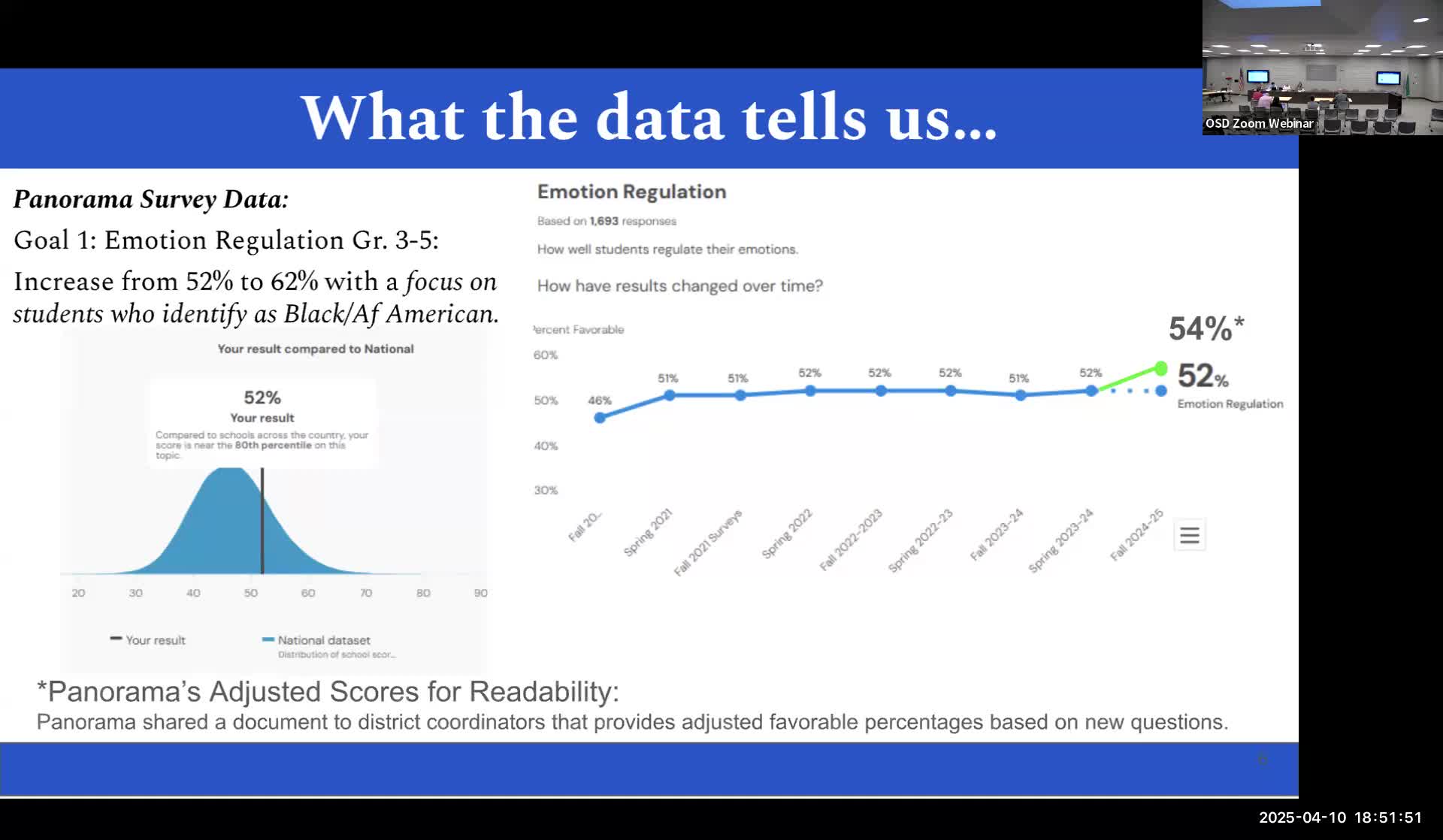
The district reported mixed Panorama results. For grades 3–5, the district's emotion-regulation item registered 52 percent positive responses; staff said that corresponds roughly to the 80th national percentile. For grades 6–12, the emotion-regulation measure was 54 percent and was described as the 90th national percentile. District staff cautioned that Panorama changed some questions this year and that automatic rostering errors affected some demographic captures.
District data presenters highlighted disparities the board has targeted: staff said students who identify as Black or African American responded to the emotion-regulation question at 44 percent in 2022, rose to 56 percent last fall and fell back to 48 percent this fall. Director Billy Harris told the board staff remain focused on increasing that metric for Black and African American students and said the district's goal for the subgroup at elementary levels was a 10-point increase.
Staff also noted the Healthy Youth Survey is on an "off year" (it is administered every other year), so the district had no new Healthy Youth Survey results to report at this meeting.
Athletics and activities were another focus. James (district athletics staff) said approximately 33 percent of high-school students and about 27.5 percent of middle-school students participated in at least one sport this year, yielding roughly 30 percent participation across those grade bands. He said the district's ratio measure (which counts seasonal participation across fall/winter/spring) showed room to grow. James credited introduction and growth of girls flag football—about 100 participants this year—with narrowing gender gaps in participation.
Staff acknowledged data gaps. One middle school did not report rosters into Skyward, district staff said, so middle-school participation could be understated. They also said activities and clubs are not consistently tracked in the student information system: at the two comprehensive high schools classroom-time clubs can yield 100 percent participation while other schools rely on parent-led PTAs and paid after-school programs, making comparable districtwide measurement difficult. Executive director Autumn Lara said elementary after-school activities depend heavily on PTA grant-writing, parent supervision and paid programs, which can create inequities in access.
Counseling and crisis response were described as central to Outcome 3. Laura Conklin (who oversees counselor professional development) told the board counselors align work to national and state standards and repeatedly review building-level data to set school improvement goals. April Goodman, interim director of student support for secondary, described school-based suicide-prevention and the district's crisis-response team: "Suicide prevention is directly tied to students' sense of belonging," Goodman said, and noted interventions include risk assessments, collaboration among counselors, social workers and school psychologists, and partnerships with community behavioral-health providers who deliver weekly in-school services.
Staff described programmatic supports used across grade levels (Second Step, Character Strong, Lifelines) and said district counselors track use of time and aim to increase direct services to students. Conklin and Murphy emphasized the district is working to frame counselors as educators who deliver standards-aligned learning experiences tied to social-emotional learning, career readiness and hope for the future.
On the High School and Beyond Plan, Paula Pearman (director of college and career and CTE director) and other staff said the district moved early to the statewide platform SchoolLinks. Staff said SchoolLinks is easy for students to use and produces data reports, but counselors flagged a gap in how the platform highlights non-college postsecondary options (career and technical pathways, apprenticeships and other credentials). Pearman and Murphy said counselors and career specialists are advocating for stronger ways to surface those options in the platform.
Public commenter Renee Popolchin urged the district to incorporate direct student feedback when assessing whether the High School and Beyond Plan is meaningful in students' pathway development. Popolchin said three motivated rural students she spoke with "remembered it mainly as a task to be completed, but not meaningful in their pathway development." Staff said the district will continue outreach and examine how classroom learning experiences can connect to postsecondary planning.
District staff listed next steps: continue Panorama monitoring, pursue stronger roster practices so clubs/activities can be consistently logged, expand professional development for trauma-informed practices, maintain suicide-prevention curricula at middle and high school levels, and continue partnerships that deliver in-school behavioral-health services. Staff asked the board to support ongoing investment in counselors, family liaisons and social workers to close gaps of access and build students' belief in their futures.