Get Full Government Meeting Transcripts, Videos, & Alerts Forever!
Get email alerts on the Public Safety Budget topic
No spam. Unsubscribe anytime.
Jefferson City officials say personnel costs dominate public-safety budget; chiefs warn cuts would reduce services
Summary
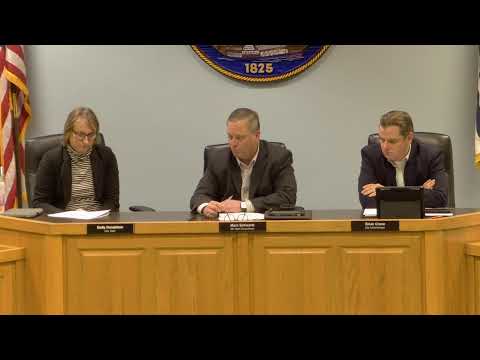
Jefferson City public-safety leaders told the City Council at a May 20 budget workshop that the bulk of police and fire spending is personnel-related and that any significant reductions would force cuts to proactive services and specialized units.
Jefferson City public-safety leaders told the City Council at a budget workshop on May 20 that the bulk of police and fire spending is personnel-related and that any significant reductions would force cuts to proactive services and specialized units.
The discussion, led by Jefferson City Police Chief Willoughby and Jefferson City Fire Chief Schofield, came as council members reviewed department budgets and potential reductions to address a structural shortfall between revenues and expenditures.
City Administrator (name not specified) said department requests “far exceed the revenue available” and that the city has routinely had to triage requests to present a balanced mayoral budget. Jefferson City Police Chief Willoughby said the police organization manages five separate budgets — the general police fund, school resource officers (SROs), the Mustang drug task force, animal control and 9-1-1 communications — and that about 90% of those budgets pay personnel costs. “Ninety percent of my budget across the board goes into paying people salary benefits,” Willoughby said. He added that 70% of the combined police-related budgets is the police general fund, 15% is communications, 7% is SROs, 6% is animal control and 2% is the Mustang task force.
Willoughby and council members used a roughly $240,000 example to illustrate where reductions might fall across police, SROs, animal control and 9-1-1. Willoughby said such cuts would be “service related” decisions and would likely reduce proactive work such as traffic enforcement, a traffic unit, the community action team and community outreach events; during past staffing shortages those programs were scaled back to preserve core response capability.
Council members asked about the SRO cost split with the school district. Willoughby said the city has discussed moving the school district’s share from a roughly 50/50 split toward a higher school contribution (for example, 70/30 or 75/25) but had not reached agreement. He said many departments nationally compensate SRO programs in the 50%–75% school-share range and asked that discussions continue.
9-1-1 staffing, county contributions and data needs
Willoughby and Chief Schofield described a completed 9-1-1 staffing study by Mission Critical Partners and said a facility study is forthcoming. The city currently reports the county pays 25% of the city’s 9-1-1 budget and is asked to pay 25% of equipment upgrades; council members pressed staff to reopen discussions with Cole County about contribution levels. Willoughby said the communicators are “doing pretty well” but the center was down three positions at the time of the meeting.
Fire Chief Schofield said the fire department’s operating budget also is heavily personnel- and equipment-driven (he estimated personnel around 93% of operating budgets) and noted a large fleet and facility footprint that requires routine maintenance. Schofield described a recent $500,000 award for an airport crash truck as a grant success but warned some capital needs — notably self-contained breathing apparatus (SCBA) air packs — are nearing end of service life. He said the department’s AFG (Assistance to Firefighters Grant) ask for replacement air packs is roughly $700,000 and would require a 10% local match.
Both chiefs and multiple council members raised the city’s limited in-house data-analysis capacity. Willoughby said the officer who previously performed data pulls left for higher pay and that harvesting and validating CAD and reporting data requires either in-house analyst capacity or paid external services; he cited vendor costs that nearby agencies pay of about $2,000–$3,000 per month.
State property, nonprofit use and potential cost recovery
Several council members said Jefferson City provides substantial services to state offices and other nonresidential users that do not generate local property-tax revenue. Council members asked whether state buildings inside the city pay property taxes; staff replied those buildings are “probably exempt” from property tax. Willoughby said the city does not routinely respond to state buildings when Capitol Police are available, though the city does handle street and crowd-control duties for protests at the Capitol and sometimes assists Capitol Police.
Multiple council members proposed pursuing increased reimbursement from the county, the school district, state agencies or nonprofit institutions that rely on city-maintained streets, stormwater and public safety. Council members discussed “payments in lieu of taxes” (PILOTs), revisiting a use tax or user fees, and billing third parties or insurers for certain emergency responses. Fire Chief Schofield noted some municipalities bill insurers or responsible parties for responses and said the city may need to evaluate similar approaches.
What was asked of staff
Council members asked staff to continue negotiations with the school district about SRO cost-sharing and to reopen talks with Cole County about 9-1-1 contributions. Several council members asked staff to explore data options to quantify calls for service tied to state properties, school facilities and large events; Willoughby said address-level tracking is likely possible but emphasized validation challenges without an analyst.
Why it matters
Public-safety chiefs told the council that personnel-driven budgets leave little flexibility for large one-time purchases or to absorb recurring higher salary and benefit costs. Council members signaled they will need to consider multiple revenue and cost-recovery options — from altered intergovernmental cost shares to grants, PILOTs, user fees or billing insurers — before deciding deeper cuts or program changes.
The workshop closed with plans to continue department-level budget reviews in subsequent sessions so council members can refine options before adopting a balanced budget later in the process.