Get Full Government Meeting Transcripts, Videos, & Alerts Forever!
Get email alerts on the Housing Incentive topic
No spam. Unsubscribe anytime.
Jefferson City approves $560,000 developer reimbursement program to speed housing construction
Summary
Council approved substitute bill 2024-094 to reimburse developers $5,000 per completed housing unit, initially funding up to $560,000 for six projects (about 112 units). Supporters say the incentive will spur construction; critics warned about tapping general-fund revenues and the program's long-term sustainability.
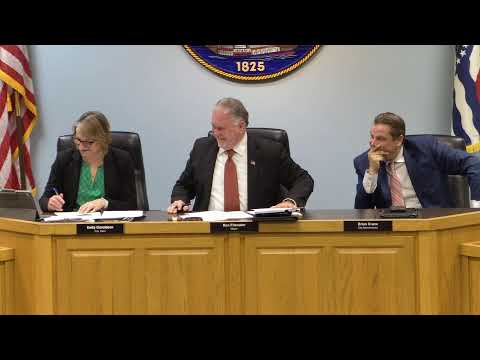
The Jefferson City Council on a split vote approved a substitute ordinance (2024-094) creating a residential reimbursement incentive that will reimburse participating developers $5,000 per completed housing unit, with an initial allocation of up to $560,000 for six projects representing about 112 units.
Supporters framed the program as a short-term, targeted investment to accelerate housing production. "This $5,000 per unit incentive ... it is not a silver bullet, but it is a meaningful and immediate step in the right direction," said Luke Holtzier, president of the Jefferson City Regional Economic Partnership, during public comment.
City staff told the council the program grew from a city RFP seeking developer partners and that six developers committed to build in an initial round. Staff said reimbursements are payable only after a certificate of occupancy and inspection. Meadow Acres, one of the projects included, was described by staff as a roughly 25-acre development that would create 19 lots (18 new single-family sites plus one existing house to be renovated). Savannah Place was listed as another committed project with an estimated 25 units.
The substitute adds a mechanism to direct certain revenues tied to new construction (building-permit fees, sewer connection fees and property-tax revenue associated with the new units) into a special account to reimburse the initial investment and provide a funding source to sustain the program for future rounds. Staff said permit-related revenue for the 112 units would total roughly $360,000 in up-front fees and yield an estimated $118,000 per year in ongoing property- and other tax revenue, and that value-engineering and a time-limited structure are intended to limit ongoing budget risk.
Council members pressed staff on administrative details. Councilwoman Munoz asked what happens if a developer misses the deadline; staff replied that agreements include a required timeframe (staff said the initial round allows roughly two years and that an extension would require council approval). Councilman Spencer asked whether nonprofit developers would sell properties or retain them; staff said ownership plans were not specified in every proposal.
Some council members urged more deliberation. Multiple members asked that the program be routed through committee in future rounds so staff and council could evaluate budget trade-offs. Opponents warned that channeling general-fund revenues (or permit income normally earmarked elsewhere) into an incentive could reduce amounts available for roads, public safety and other city priorities unless houses were built and revenues returned.
After discussion, the substitute passed on a roll-call vote, 8 to 2. Council members recorded as voting no included Schwartz and a council member identified in the roll call as "Kimberly"; the final tally reported by the clerk was 8 ayes, 2 noes.
The ordinance requires the mayor and city clerk to execute template cooperative agreements with participating developers; staff said the council would see agreements and that extensions or amendments to the template would have to return to council for approval. Staff also said round two guidelines and timing would be developed after the initial awards were finalized.
Why it matters: Jefferson City has trended below needed housing production in recent years (staff cited 14 and 23 single-family permits in the last two years). Council and business leaders say additional units ease workforce shortages and expand the tax base; critics say the city must guard one-time reserves and avoid creating unsustainable ongoing obligations.
What happens next: Staff will finalize cooperative agreements with the six developers identified in round one and begin the administrative steps to issue reimbursements as certificates of occupancy are granted. Staff also indicated they will bring guidelines and a timeline for round two back to council in the coming months.