Get Full Government Meeting Transcripts, Videos, & Alerts Forever!
Get email alerts on the Signage topic
No spam. Unsubscribe anytime.
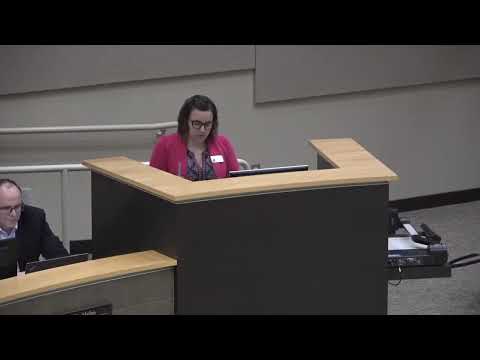
Planning commission denies Tim Hortons' request to keep nonconforming pole sign at 1900 NW 7 Highway
Summary
The Blue Springs Planning Commission on April 28 denied master alternative sign plan ASP04259554, rejecting a request to retain a nonconforming pole sign for a proposed Tim Hortons at 1900 Northwest 7 Highway.
The Blue Springs Planning Commission on April 28 denied a master alternative sign plan (ASP04259554) that would have allowed the continued use of an existing nonconforming pole sign for a proposed Tim Hortons at 1900 Northwest 7 Highway.
City staff told the commission the pole sign — originally installed for a former Backyard Burgers tenant — is nonconforming because the property is not within the Interstate 70 corridor and does not meet location requirements in the sign code. Staff cited city code section 501.03(e) (appeal timeline) and sign code section 501.06(c)(2)(a) when explaining the basis for denial, and said the pole sign is approximately 80 square feet and sits roughly 3,069 feet from the I‑70 corridor. Staff also reported that newly discovered plan evidence shows the existing pole sign is located in a 10‑foot water easement on the property.
“Staff does not recommend approval of the master alternative sign plan application,” the staff presenter said, noting the city has been making a deliberate effort to replace pole signs with monument signs on both north and south sides of Highway 7 and that the sign as located does not meet the code criteria for a pole sign.
Roy Brown, speaking for the applicant, said the water‑easement information was not available before the applicant's prior hearing on March 24 and argued a pole sign is necessary for visibility for this commuter‑dependent business. “This is a commuter dependent business, and it will draw people to Blue Springs who have never been to a Tim Hortons,” Brown said, urging the commission to allow the existing pole sign to be re‑faced. Brown also explained engineering constraints he said would make a monument sign difficult on the site: the water easement limits footing placement and the remaining open space between the easement and the curb is about 4 feet 6 inches, which he said is too narrow for a conventional monument sign footing.
Commissioners asked questions about whether a monument sign could be sited in the available open space and whether any exceptions exist in the code. Staff replied that the code allows a pole sign in the corridor only through a master sign plan and that the specific location criteria (between a frontage road and I‑70 or within four feet of the travel lane) leave no routine exception unless the commission grants a modification or variance. Staff also noted the 180‑day vacancy rule — a sign installed for a now‑vacant business loses its nonconforming status if vacant for more than 180 days — and that several other pole signs along the corridor have been converted to monument signs after vacancy or redevelopment.
A motion to approve the master alternative sign plan was made and seconded; the commission voted and the motion failed. The transcript records voice responses of “nay” and “no”; the chair announced the motion was denied. Staff reiterated that the city does not impose a mandatory waiting period before submitting a new master alternative sign plan following a denial, and staff had also noted no appeal was filed within the 10‑day window after the March 24 denial.
The record includes staff comparisons of other existing pole signs north of I‑70 and photographs shown by the applicant demonstrating site constraints. The commission’s denial means the existing pole sign cannot be reused as requested; any new signage must comply with the sign code or be approved through a properly documented modification/variance process.