Get Full Government Meeting Transcripts, Videos, & Alerts Forever!
Get email alerts on the Governance Municipal Law Training topic
No spam. Unsubscribe anytime.
City attorney’s training reviews municipal law, conflicts and Sunshine Law for council
Summary
Lauber Municipal Law attorney Jennifer Baird gave a high-level training covering charter-city powers, ordinance vs. resolution distinctions, conflict-of-interest rules, nepotism, and Missouri’s Sunshine Law.
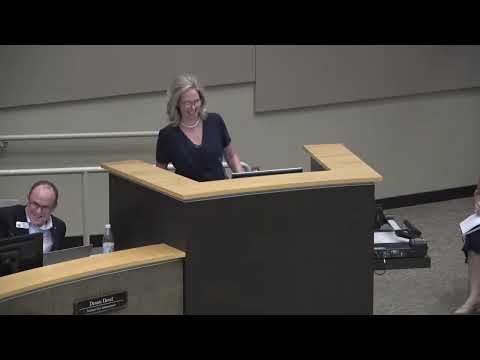
Jennifer Baird, attorney with Lauber Municipal Law and legal counsel to the city, delivered a high-level training to the Blue Springs City Council on municipal law topics including forms of city government, ordinance and resolution procedures, conflicts of interest, nepotism, and the Missouri Sunshine Law.
Baird told the council that Blue Springs is a charter (home-rule) city and therefore has the broad powers granted by the Missouri Constitution; she contrasted charter or “home-rule” cities with statutory city types and noted that some statutory issues are handled in Chapter 82 of the statutes. She explained the practical differences between ordinances and resolutions — ordinances create city-wide law, require formal readings, mayoral signature, and effective dates; resolutions are generally administrative and may require only majority of those present.
On ethics and conflicts of interest, Baird summarized statutory limitations on officials acting for financial gain, accepting things of value, and using confidential information, and she said council members must file written disclosure of substantial personal interest and typically should recuse themselves from voting. She reviewed the Missouri constitutional nepotism prohibition (appointment of relatives within the fourth degree) and described the city charter’s own, stricter conflict-disclosure provisions. Baird also explained key elements of the Sunshine Law (open meetings): 24-hour public notice and tentative agenda requirements, allowable closed-session exceptions, minutes requirements, emergency meetings and electronic meeting options.
Council members asked clarifying questions during and after the presentation. Baird emphasized practical tips for the governing body: involve the city attorney early, give staff fair notice of questions so staff can prepare, and maintain decorum and respectful engagement during meetings.
No formal action was required or taken on the training presentation; council members thanked Baird for the session.