Lifetime Citizen Portal Access — AI Briefings, Alerts & Unlimited Follows
Committee advances bill requiring open EVV aggregator for home health and personal care; removes emergency clause
Loading...
Summary
House Bill 269 would require the New Mexico Health Care Authority to allow an open data-aggregator model for electronic visit verification (EVV) so providers can use interoperable EVV systems. The committee adopted an amendment removing the emergency clause and gave the bill a due pass as amended.
House Bill 269, sponsored by Representative Ferrari, would require the New Mexico Human Services/Health Care Authority to permit use of an EVV data aggregator so home health and Medicaid-funded personal care providers can use EVV systems of their choice while remaining compliant with federal EVV requirements under the 21st Century Cures Act.
The sponsor said New Mexico’s current closed EVV system forces providers to use the state-provided solution (Authenticare by Fiserv), creating administrative burdens without measurable care-quality benefits. “Our closed model system forces agencies to only use the state provided solution,” Representative Ferrari told the committee, arguing that an aggregator would enable interoperability and reduce claim-processing labor.
Megan Lorino, executive director of the New Mexico Association for Home and Hospice Care, testified as an expert witness and described how the proposed aggregator would allow providers’ EVV systems to communicate with payroll, electronic medical records and claims systems and reduce duplicate manual work. Mitch Ferguson of Matrix Home Health Services said the current Authenticare system creates significant manual interventions and billing exceptions, particularly on location and address errors.
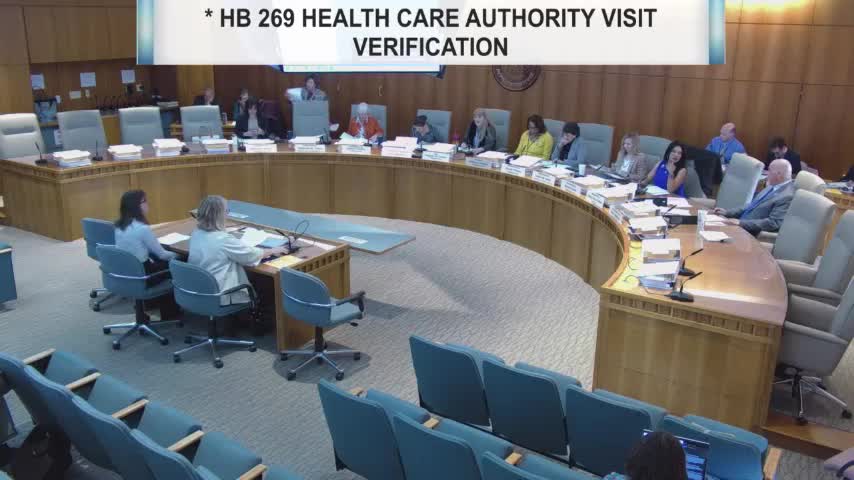
Representative Ferrari offered an amendment to remove the emergency clause and set the effective date to Jan. 1, 2026, allowing time for the Health Care Authority to implement an open-aggregator model. The committee adopted that amendment by voice vote with no opposition. The bill then received a due pass as amended and will proceed to the Judiciary Committee.
Committee members asked how an aggregator would interact with a recently issued HCA RFP and whether the aggregator or MCO contracts would allow the committee to get necessary monitoring information; witnesses said the bill’s objective is interoperability and accountability, and they said they have been in repeated conversations with HCA but that a timeline is needed. Several lawmakers asked the sponsor and witnesses to confirm integration with HCA’s RFP before the bill advances to the floor.
Ending: The committee gave House Bill 269 a due pass as amended. Sponsors and witnesses said they will continue discussions with the Health Care Authority to ensure interoperability with systems the authority is procuring.