
House committee tables bill extending well plugging liability to past owners
Get AI-powered insights, summaries, and transcripts
Subscribe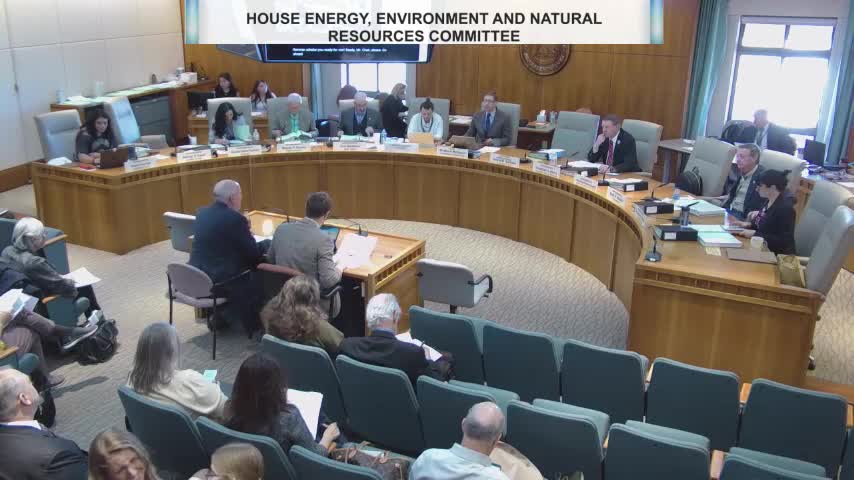
Summary
The House Energy, Environment & Natural Resources Committee tabled House Bill 481, a proposal to make all current and prior owners/operators responsible for plugging and abandoning oil and gas wells; supporters said it would protect the public from orphan wells, opponents said it would chill transfers and invite litigation.
The House Energy, Environment & Natural Resources Committee on March 1 tabled House Bill 481, legislation that would make anyone who has owned or operated an oil or gas well responsible for ensuring it is properly plugged and abandoned.
Sponsor Representative Kevin Small, chairing introduction of the measure, told the committee it would “set up a system where if you own or operate a well, you’re responsible for plugging it.” He said the provision was aimed at preventing wells from being transferred down a chain of smaller operators until the cost of plugging is left to the state.
The bill drew sharp public comment on both sides. Ashley Wagner, vice president of government affairs for the New Mexico Oil and Gas Association, urged opposition, saying the proposal “could have a chilling effect on leasing and transfers because potential buyers may hesitate to acquire wells if they could inherit unexpected future costs.” Lisonbee Riley of the New Mexico Chamber of Commerce warned the bill’s “retroactive responsibility” and “vague language” could lead to prolonged litigation. Industry witnesses also said the measure duplicates existing legal remedies and could increase bankruptcies and abandonment.
Environmental and community groups and several public-interest witnesses urged support. Mary Ellenasi of New Energy Economy cited state estimates of a large gap between bond coverage and remediation costs and said “the risks of unplugged wells are enormous,” including methane emissions and groundwater contamination. Colin Cox of the Center for Biological Diversity said the bill “would give OCD another tool, to ensure that the industry pays to clean up its mess.” Charles Goodmacher of Earthworks argued the bill would hold “bad actors” accountable.
Committee debate focused on application, retroactivity and potential economic impacts. Small said the bill is prospective: section 2 applies to owners and operators with an interest beginning on or after 07/01/2025. He and other supporters said the measure would incentivize sellers to perform stronger due diligence and require contractual indemnities and bonding when wells are transferred. Opponents repeatedly warned of a chilling effect on transfers and drilling, arguing that open-ended liability could discourage investment and lead operators to prematurely plug wells rather than sell them to a secondary operator who might extract further production.
Representative Roseanne Murphy (during committee Q&A) pressed whether the state already had funds to plug orphaned wells and noted industry pays into a conservation/reclamation fund; Small said this bill complements those programs by preventing transfers that leave the public on the hook. Witnesses and members discussed numbers the Oil Conservation Division has provided: OCD has plug orders on roughly 2,000 wells and historical plugging costs cited in testimony ran about $150,000 per well for downhole work, with higher costs if environmental remediation is needed.
A substitute motion to table HB 481 took precedence and passed on roll call. The committee announced the bill had been tabled.
Votes at a glance: the committee recorded the tabling motion as passing 6–3; the chair announced, “By a vote of 6 to 3, House Bill 4 81 has been tabled.”
What’s next: Tabling means HB 481 will not advance from this committee at this time. The sponsor said he and the ranking member would discuss whether to bring the bill back later.
Reporting note: Quotations and vote language are taken from committee testimony and roll-call recorded during the March 1 meeting of the House Energy, Environment & Natural Resources Committee.