Get Full Government Meeting Transcripts, Videos, & Alerts Forever!
Get email alerts on the Juvenile Justice topic
No spam. Unsubscribe anytime.
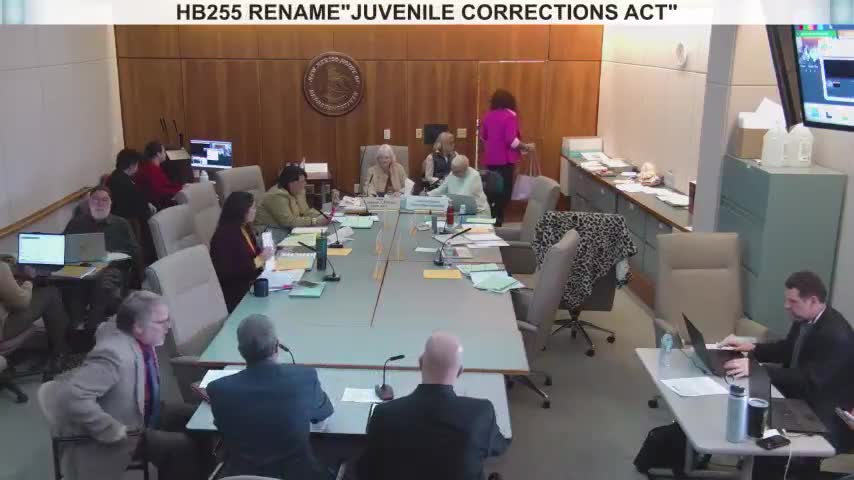
Panel unanimously advances bill renaming juvenile community corrections act to expand services upstream
Summary
Committee members unanimously recommended do-pass on House Bill 255, which renames and expands the juvenile community corrections act to allow broader access to diversion and community supports for youth.
The committee unanimously recommended do-pass on House Bill 255, a measure that renames and expands the Juvenile Community Corrections Act so more young people can access diversion and community-based support services earlier in their involvement with state systems.
Sponsor and Sentencing Commission witnesses described the change as twofold: the bill replaces the term “adjudicated delinquent” with broader definitions for “child” and “youth,” and it explicitly allows access to the program for young people involved with juvenile justice or protective services before adjudication. Senator Maestas and witnesses told the committee the statutory update reflects how the program already operates in practice and would allow unused funds in the program’s nonreverting fund to be used for direct services.
Douglas Carver, acting director of the New Mexico Sentencing Commission, said the commission unanimously supported the bill after a multi-year review. Nick Costales, formerly with the Children, Youth and Families Department, described services covered by the act: educational supports, job training, transportation, housing assistance and other community-based interventions aimed at preventing deeper system involvement.
CYFD deputy general counsel Ramona Martinez and other advocates testified in support, saying earlier intervention and community connections reduce recidivism and improve life outcomes. Supporters framed the change as a technical clean-up with substantive benefit — widening eligibility and improving access to existing funds.
Committee action and votes - Motion for a do-pass recommendation on House Bill 255 carried unanimously (4–0).
The committee adjourned before hearing three additional bills on the agenda; sponsors said they will return with additional measures to be scheduled or heard in other committees.