Get Full Government Meeting Transcripts, Videos, & Alerts Forever!
Get email alerts on the Rent Stabilization topic
No spam. Unsubscribe anytime.
Sponsors seek temporary rent-stabilization and utility safeguards for manufactured-home parks
Summary
House Bill 442 proposes a two-year rent-stabilization and utility-reliability framework for manufactured-home parks; sponsors said the measure would cap increases at 3% for fiscal year 2025–26 and 5% for the following year while the Legislature reviews longer-term regulatory options; the committee heard extensive testimony from park residents.
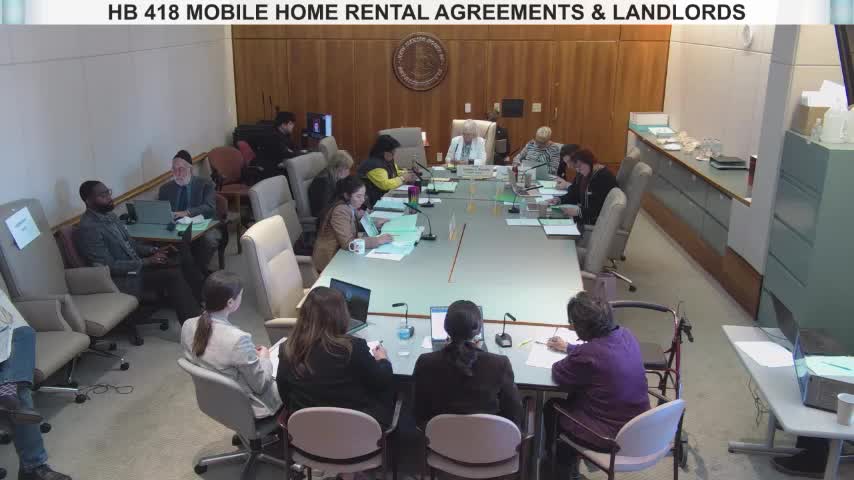
House Bill 442, which would temporarily cap lot-rent increases and require basic utility reliability standards for manufactured-home parks, was debated at length by the Consumer & Public Affairs Committee and prompted hours of constituent testimony.
Representative Matthews, the sponsor, described the bill as a stopgap measure to protect residents who own their homes but lease the lots on which those homes sit. The bill sets a two-year rent-stabilization schedule: for the 12 months beginning July 1, 2025, lot rents would not increase by more than 3% over the prior rent; for the following 12 months the cap would be 5%. The sponsor said the temporary schedule would buy time while agencies examine structural solutions for the industry.
Park residents from Albuquerque Meadows and other communities testified about repeated rent hikes after out-of-state private-equity owners bought parks, and about prolonged utility outages. Witnesses described multiple rent increases in two years, steep percentage increases and uncertainty for seniors on fixed incomes; one resident said rent had risen four times in two years. AARP New Mexico, Conservation Voters New Mexico and other advocates supported the bill.
Opponents including the New Mexico Association of Realtors said rent stabilization can discourage investment and risk shrinking lot supply; one lobbyist said the bill "substitutes the word stabilization for control" and urged negotiation on longer-term regulatory ideas. Committee members discussed the 1991 Rent Control Preemption Act and the bill’s legal posture; sponsors characterized the proposal as targeted and temporary, not a permanent local rent-control regime.
Several members asked technical questions about how the caps would account for park owners’ financing costs, property taxes and infrastructure repairs, and whether landlords with legitimate operating-cost increases could seek relief. Sponsors said the bill targets large, rapid, market-driven increases and that a concurrent memorial would direct state agencies (including the New Mexico Mortgage Finance Authority, the Public Regulation Commission and other housing entities) to study the industry and recommend long-term policy.
At the time committee debate in the transcript ended, a motion for a do-pass recommendation had been made but not yet recorded; committee members signaled both support and concern and asked sponsors to refine technical details and ensure grandfathering or transition rules avoid perverse incentives.