Get Full Government Meeting Transcripts, Videos, & Alerts Forever!
Get email alerts on the Consumer Protection Dynamic Pricing topic
No spam. Unsubscribe anytime.
Sponsor of HB285 seeks ban on dynamic pricing via electronic shelf labels; bill rolled for rewrite
Summary
Representative Silva introduced House Bill 285 to prohibit certain forms of dynamic pricing in grocery and retail stores, with an emphasis on electronic shelving labels and pricing tied to personal data; the sponsor agreed to roll the bill to refine definitions and consult industry and the attorney general's office.
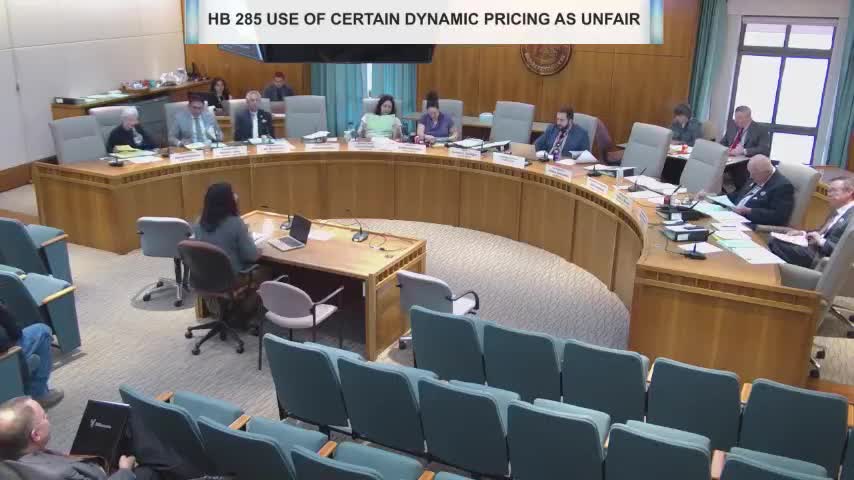
Representative Silva presented House Bill 285 to the House Commerce & Economic Development Committee, describing it as a consumer protection measure that would make certain uses of dynamic pricing by grocery and retail stores an unfair or deceptive trade practice.
"This is relating to consumer protection, making it an unfair or deceptive trade practice to use dynamic pricing to change the price of a good or service sold by a grocery or retail store in certain circumstances," Representative Silva said.
The bill, as introduced, defines dynamic pricing in the bill as a "digital process that uses a software program to determine or change the price of a good or service displayed on an electronic shelving label in a store," the sponsor said. The sponsor told the committee the bill would cover price changes based on personal data or purchasing patterns, including use of facial recognition systems, and said she would consider a friendly amendment to focus the prohibition specifically on electronic shelving labels and to limit the covered conduct to sudden price increases.
Ron Brown, representing the New Mexico Grocers Association, testified that the grocers'group was not opposed to the bill's consumer-protection goals but urged clearer definitions. "There are 3 things on the bill that we think need to be reworked. 1 is the definition of dynamic pricing. Number 2 is the section a 1, the use of software. ... And then in b 2, the use of tracking. Well, madam chair and committee, everybody uses loyalty cards," Brown said.
Committee members raised multiple concerns about scope and enforceability: several members asked whether the bill would sweep in gas pumps, airlines, hotels, or small businesses; whether it would make routine price reductions illegal; and whether a loyalty program would be prohibited. Representative Silva said routine seasonal or planned price changes would not be covered, and that the sponsor was open to narrowing the bill. The sponsor also agreed to work with industry, law enforcement and the attorney general's office before the bill returns.
At the end of the hearing the sponsor said she would roll the bill to rewrite language and consult stakeholders.