Get Full Government Meeting Transcripts, Videos, & Alerts Forever!
Get email alerts on the Fy26 Program Based Budget topic
No spam. Unsubscribe anytime.
Carefree reviews FY2026 program-based budget, discusses pay study, capital projects and transparency
Summary
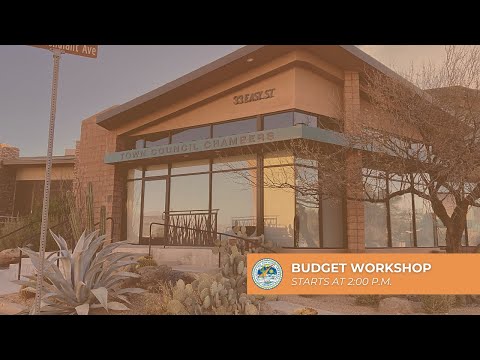
Carefree Town Council held a special budget workshop in which staff presented the town’s draft FY2026 program-based budget, projecting about $8.5 million in general-fund revenue and a minimum $700,000 surplus while council members and residents focused discussion on a third‑party compensation study, capital projects and transparency.
Carefree Town Council held a special budget workshop at which staff presented a draft FY2026 program-based budget estimating roughly $8.5 million in general fund revenue and a minimum $700,000 surplus while outlining planned capital investments and a recently completed compensation study.
Town Manager Gary Neese led the presentation and said the town is intentionally conservative in sales-tax forecasting and uses a five-year average to model receipts. "We anticipate approximately $8,500,000 coming into our general fund this this coming fiscal year and approximately $7,700,000 in expenses or a minimum surplus of $700,000," Neese said. He noted the town’s five-year average for local sales tax is about $5,320,000, while last year’s actual was roughly $6.3 million, creating a buffer that could raise the surplus above $1 million if collections remain strong. Neese added that last year the town collected about $500,000 in investment earnings, which the budget does not assume because it is speculative.
Why it matters: the budget supports public safety and infrastructure work that town leaders have prioritized in a council-approved strategic plan. Neese told the council the largest single expense is public safety (about $2.9 million), with operations, salary and benefits each roughly $2.2 million and risk management/legal/insurance about $440,000. He said combined town operations and capital expenditures total roughly $12.5 million and that the town is under the state statutory expenditure limit of $13.2 million.
Capital projects and funding: Neese outlined three capital focus areas—public works facilities, street maintenance and town-center improvements. He said roughly $1.8 million is programmed for town-center work, including implementation of a comprehensive signage plan (a contract is expected on the May agenda) and potential parking and sidewalk improvements tied to a May 12 joint session between Planning and Zoning and Town Council. Street maintenance estimates use the high end of recent mill-and-overlay bids to plan work in two neighborhoods that Neese said have 50-to-60-year-old asphalt and structural issues. Funding sources cited in the presentation included an EV phase 2 grant placeholder (speculative), HEERF funds for street maintenance, UTKAP receipts from Southwest Gas and the town’s general fund and capital reserves. Neese said capital reserves are at an all-time high and that the town has a track record of preferring to pay cash for projects when feasible.
Public safety contract and dispatch costs: Neese reminded the council that the town’s contract with Rural Metro is up in approximately two years and that negotiations with Rural Metro’s new leadership will be needed. He warned the council that with changes in how Rural Metro operates, some overhead and dispatch costs could be passed to the town: "Those costs associated with that contract now will be passed off to the town," he said.
Water company, bonds and loans: Council members asked whether water-company bond repayment appears in the town budget. Neese said bond payments on the water tank are not town liabilities and are funded through the water company’s rates; the town has provided certain loans and advances to the water company for infrastructure (fire hydrants, reservoirs) and those repayment schedules are captured in town records. He summarized: the water entity is a "separate financial entity," and bond liabilities are shown in the water company’s budget rather than the town's operating budget.
Compensation study and council debate: A substantial portion of the workshop centered on a third‑party compensation study that recommended market-based adjustments. Councilman Roth argued for more like‑for‑like comparisons with towns closer in population and budget size, saying some published comparators were not comparable. Gary Neese and other council members defended the consultant’s methodology and regional market approach. Neese said the town hired "a third party independent firm with a specialization in job classification and compensation studies." Resident Sharon Smith, who participated in selecting and reviewing the consultant, supported that view and told the council the study found Carefree was not overpaying staff: "The study concluded that we were not overpaying our our, our staff." Public commenter Maureen Benedetto said transparency about line items remains a concern and urged greater detail in future presentations, saying "transparency is, the foundation for truth."
Transparency and document format: Several council members and members of the public debated the length and format of the program-based budget document. Some council members said other municipalities present shorter, more line-item focused budgets; others said the program narrative helps lay readers understand how the town operates and that the document includes an appendix and schedule A–G spreadsheets that will be produced. Neese said salaries are now included in the document by position (title, not name) and that more detailed schedules and the monthly check registry provide line‑by‑line expense transparency.
Next steps: Neese said this was the third and final workshop and that formal approval steps will begin next month. "Next month, we'll begin the approval process for the budget," he said. No formal motions or votes were taken at the workshop.
Ending: Council members and residents thanked staff for the work on the budget. With no further public-comment slips, the mayor closed the workshop and adjourned the meeting.