Get Full Government Meeting Transcripts, Videos, & Alerts Forever!
Get email alerts on the Housing Production Fund topic
No spam. Unsubscribe anytime.
Tillamook County approves 2024 Housing Production Solutions Fund awards and moves projects into contract phase
Summary
The Tillamook County Board of Commissioners approved the Housing Commission'recommended allocations from the 2024 Housing Production Solutions Fund and authorized staff to begin contract negotiations for awarded projects, including preservation, affordable rental, permanent supportive and first-time homeownership developments.
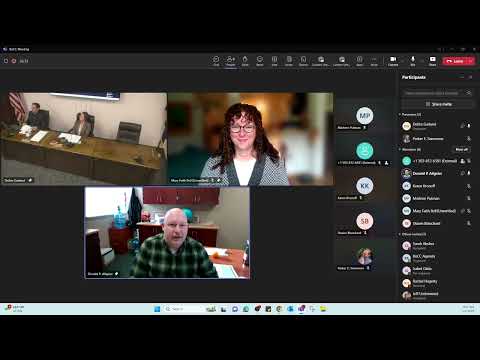
The Tillamook County Board of Commissioners on April 2 approved the Housing Commission'recommended awards from the 2024 Housing Production Solutions Fund and authorized staff to begin contract negotiations with the selected projects.
The fund, presented by Parker Sammons, Tillamook County housing coordinator in the Department of Community Development, is financed by an operator fee on short-term rentals in unincorporated Tillamook County. Sammons told the board the fund supports a range of projects including preservation and new affordable and workforce housing initiatives. "Our Housing Production Solutions Fund is fueled through a operator fee on short term rentals in unincorporated County," Sammons said during his presentation.
The housing commission recommended allocations for multiple projects across the county. Projects presented included: the Nehalem Bay House preservation conversion to Alder Creek Commons (55+ housing at roughly 30–60% area median income); an 8-unit redevelopment on the second floor of the National Building in downtown Tillamook (workforce-level units); Tillamook Bay Commons (34 units adjacent to the hospital, workforce-level); Spruce Point (60 affordable units in Manzanita, including five permanent supportive units); a proposed 54-unit affordable project in Rockaway (unit mix pending); Thompson Springs (a 10-unit affordable homeownership project targeting adults with disabilities and staged by AMI tiers); Alder Ridge / Anchor Street (four micro-apartments above a commercial kitchen/fish-processing space in Bay City); and other applications that received technical assistance or invitations to reapply.
Sammons said the commission used a mix of quantitative scoring (unit counts, AMI targeting, project type) and a qualitative scoring rubric. He also described contingencies attached to several awards: the Anchor Street (Jeff Wong) award carries a contingency tied to his application for an agricultural workforce housing tax credit; the National Building award was conditioned on funding being targeted to housing costs only; Tillamook Bay Commons' disbursement had a condition that a $40,000 allocation not be released until earnest-money payments had been made on the land; and Alder Ridge received technical assistance because the proposal is early-stage.
Commissioners praised the breadth of project types and the role the short-term rental fee has played in funding local housing work. One commissioner noted that the county has opened roughly 150 units over the past five years and that a substantial pipeline remains in development. Sammons requested board permission to move awarded amounts into the contract-drafting phase; the board voted to approve that request.
The motion to approve the housing commission's allocation recommendations passed on a voice vote; commissioners indicated unanimous support. The vote authorized staff to begin contract negotiations and incorporate the commission's contingencies into award agreements.
Because several awards carry conditions tied to other funding sources or delivery milestones, Sammons said the county will monitor contingencies and disbursement triggers as contracts are drafted and executed. He told commissioners that the housing commission''and county staff intend to continue using the quantitative and qualitative scoring tools while refining them to evaluate homeownership projects alongside rental proposals in future rounds.
What happens next: staff will begin drafting contracts with awardees, incorporate the commission's contingencies, and return to the board as necessary for formal contract approvals or to seek changes to award terms. Projects not awarded this round received technical assistance and invitations to reapply.