Get Full Government Meeting Transcripts, Videos, & Alerts Forever!
Get email alerts on the Urban Renewal topic
No spam. Unsubscribe anytime.
Budget committee backs Dallas Urban Renewal Agency 2025–27 biennial budget, recommends maximum tax levy
Summary
The City of Dallas Budget Committee voted to recommend the Dallas Urban Renewal Agency adopt a two‑year 2025–27 budget that continues work in the Downtown and South Dallas districts and to levy the maximum property tax allowed under law.
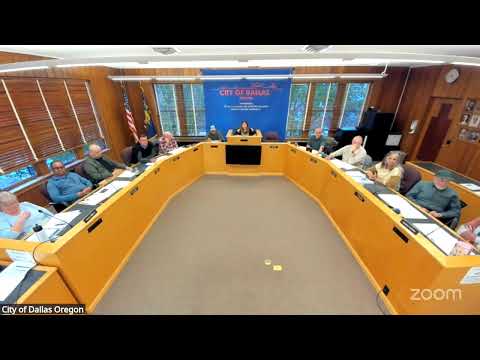
The City of Dallas Budget Committee voted to recommend that the Dallas Urban Renewal Agency Board of Directors adopt a 2025–27 biennial budget and to levy the maximum amount of property taxes allowed under the law.
The recommendation follows a presentation by Brian, a city budget staff member, who told the committee that “City staff is proposing for the Urban Renewal Budget to go to a 2 year budget cycle,” meaning the committee would authorize appropriations for two fiscal years instead of one. The downtown and South Dallas urban renewal districts will both continue to collect taxes and fund local projects, Brian said.
The committee heard details for the Downtown Urban Renewal Fund: staff estimate $495,000 in property tax revenue over the two‑year biennium, broken into $220,000 in the first year and $275,000 in the second. The budget keeps the Building Improvement Grant Program at $75,000 per year and the Minor Improvement Grant Program at the same historical level. On the expenditure side, the downtown fund includes $20,000 for project capital outlay and $100,000 for property acquisition; transfers to the general fund include $125,070 for debt repayment and an $89,151 interfund loan repayment tied to the 791 Main Street purchase. Brian said the debt service reserve is being zeroed out “because that’s not required, underneath our resolutions that we created to approve the debt in the first place.”
For the South Dallas Urban Renewal Fund staff projected $325,000 in taxes over the two years, split as $150,000 and $175,000, and noted higher-than-expected activity in industrial projects. The South Dallas budget includes a $250,000 professional‑services line “in anticipation of some big projects down there in the future,” Brian said, and otherwise places funds into contingency.
Committee members asked clarifying questions about the capital outlay line and whether the $20,000 was a placeholder; Brian said it was a set‑aside for projects that may arise and noted the 791 Main Street project could generate ancillary needs. Councilor Fitzgerald asked about the debt service reserve; Brian responded that transfers continue to pay debt but the reserve itself is not required by the original resolution and therefore was removed.
The committee approved minutes for the May 13, 2024 meeting, with one recorded opposed vote (Hogan). Michael moved to recommend adoption of the 2025–27 Urban Renewal Agency biennial budget and David seconded; the motion carried. The committee then voted to recommend the Urban Renewal Agency Board levy the maximum property taxes permitted by law; that motion also passed.
Nominations for the committee leadership were made and approved: Holly Williamson was nominated for chair and Rich Spofford for vice chair; the committee voted in favor of those appointments.
The Budget Committee transmitted its recommendation and the budget materials to the Urban Renewal Agency Board of Directors and to the City Council for next steps.