
Pratt County faces $704,000 bridge reimbursement and must decide where to park the cost
Get AI-powered insights, summaries, and transcripts
Subscribe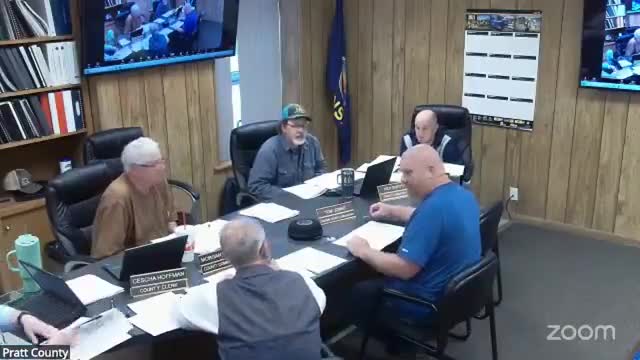
Summary
County staff told commissioners that a planned bridge project will require roughly $704,000 in up‑front payments while the county waits for state reimbursement under a 90/10 program, prompting discussion about drawing from capital improvement or road budgets.
Pratt County commissioners were briefed on a bridge project that will require the county to advance roughly $704,000 while it awaits state reimbursement under a 90/10 program. County staff said the county will pay the contractor as work is completed and then submit the invoices for reimbursement from the state, a process that typically results in a one‑month lag between payment and repayment.
The issue matters because the county must decide where to record and temporarily fund the outlays. County staff recommended paying the invoices from the capital improvement fund and, after the state reimburses the county, returning money to capital improvement rather than making a series of journal entries. Commissioners discussed alternatives, including having Road & Bridge pay the bills and later reimbursing that fund, and noted the effect of moving large one‑time cash flows on the tax rate calculation.
Staff explained the grant mechanics: the project is being administered with a 90/10 cost share (the county covering 10 percent locally and the state/federal program covering the remaining 90 percent of eligible costs). Staff said the county will be billed monthly as work is completed, then submit those monthly invoices for reimbursement. Commissioners and staff also discussed whether the county should “float” the 10 percent from Road & Bridge or use capital improvement so the line items and the tax rate picture do not become distorted in the adopted budget.
Commissioners asked for options that make bookkeeping cleaner and avoid misleading the public about available cash. Staff offered to produce a monthly cash‑flow worksheet and suggested moving the project expenditures into the capital improvement fund for clarity, then reimbursing capital improvement on receipt of state funds. A staff memo and the project worksheets will be circulated to the commission before finalizing the budget treatment.
The commissioners did not adopt a binding policy during the workshop but asked staff to return with the recommended journal treatment and the cash‑flow impact on the 2025 tax rate before the budget is finalized.