Get Full Government Meeting Transcripts, Videos, & Alerts Forever!
Get email alerts on the Fire And Ems Annual Report topic
No spam. Unsubscribe anytime.
Dallas Fire and EMS reports rising call volume, seeks funding for aging apparatus
Summary
At a May 5 Dallas City Council work session, Dallas Fire and EMS Chief April Wallace presented the department's 2024 annual report showing heavier call volumes, high ambulance mileage and ongoing plans to replace aging apparatus using ARPA and other funding, while raising staffing and facility concerns.
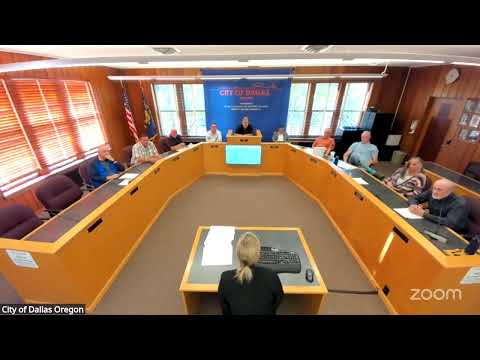
Dallas Fire and EMS Chief April Wallace presented the department's 2024 annual report to the Dallas City Council at a work session on May 5, 2025, detailing increased call volume, equipment needs and staffing and training initiatives.
"I'm gonna present to you tonight our Dallas Fire and EMS annual report for the year 2024," Wallace said, outlining services from fire suppression and technical rescue to interfacility ambulance transfers and community risk reduction work.
Wallace told the council the department handled 5,518 calls for service in 2024, including 1,153 interfacility transfers handled in part by the transfer medic unit; the transfer medic accounted for 689 of those transfers. The department made 2,364 trips to Salem hospitals in 2024 (about 6.5 trips per day) and recorded 690 transports to West Valley Hospital. Wallace said the department also logged 70,648 round-trip miles for Salem transfers alone.
Nut graf: The presentation framed two immediate challenges for Dallas: replacing aging, high-mileage apparatus and managing sharply increased utilization of ambulance and EMS resources, problems the chief said the department is addressing through grants, ARPA allocations and training partnerships.
Wallace described recent equipment acquisitions and replacements funded in part with American Rescue Plan Act (ARPA) dollars, including a 2024 Spartan engine and a 2023 Ford F-450 ambulance. She said the department plans to receive a new ambulance in 2025 that will be outfitted for interfacility transfers and can be used for 911 calls if needed.
The chief noted national guidance on apparatus service life. She cited National Fire Protection Association (NFPA) recommendations that engines older than 15 years be moved to reserve status and that apparatus older than 25 years be retired; Dallas replaced a 1995 Pierce that had reached nearly 30 years of service. Wallace said the city will work with attorneys to transfer that 1995 engine to a smaller fire district that can operate it under different NFPA-related standards.
Wallace outlined fleet concerns beyond the engine replacement: a 2003 International ambulance the department calls "Big Red," additional high-mileage medic units that approach the 200,000-mile threshold recommended for moving units to reserve status, and a 2003 ladder truck (85-foot aerial) that may require expensive replacement (Wallace cited an estimated replacement cost of about $2.3 million and a 3-to-5-year lead time).
On EMS workload and performance, Wallace reported average operational times the council asked about: an average dispatch-to-departure ("shoot") time of 1 minute, 23 seconds for EMS and 1 minute, 40 seconds for Engine 101 on fire calls; an average response time of 6 minutes, 52 seconds for EMS and 5 minutes, 40 seconds for structure fires. She said average transport time was about 18 minutes and average turnaround at hospitals about 40 minutes, noting hospital choice affects turnaround.
"So 62% of the time, they are busy," Wallace said, describing the department's utilization (she compared that to industry benchmarks and private ambulance standards). Councilors and the mayor asked whether the department's current station location affected response times; Wallace said 24-hour staffing is the key driver of the improved times.
Wallace described personnel and training changes made in 2024: combining fire and EMS budgets, converting positions (for example, reclassifying an administrative assistant to executive assistant and an EMS division chief to EMS manager), standardizing training across career and volunteer members, and starting a structured field training program. She said the department currently has 16 full-time line staff, 18 part-time staff, four administrative staff, and volunteer rosters that include 15 suppression volunteers, six support volunteers and five chaplains.
The chief highlighted recruitment and retention work, partnerships with Polk County Fire District Number 1 under an intergovernmental agreement, and new educational ties with Dallas High School's CTE EMR program and Chemeketa Community College's fire science program. She also said the department seeks to establish Dallas as a regional training center, using staff instructors to host trainings for neighboring districts.
Wallace identified funding sources and reimbursement mechanisms the department relies on, including ambulance fees, FireMed memberships, Ground Emergency Transportation (GEMT) reimbursements, conflagration reimbursements for personnel and equipment, and ARPA funds used for the recent ambulance and engine purchases. She said OSFM (Oregon State Fire Marshal's office) awarded a seasonal grant to hire personnel for fire season response.
On mutual aid, Wallace reported Dallas provided mutual aid 387 times and received mutual aid 505 times in 2024; she said data on which units responded from partner districts is incomplete but that training at the communications center should improve data extraction next year.
Wallace closed by noting morale and mental health are an ongoing concern with high call volumes, that chaplains and peer checks help, and that the department is asking for continued council support for funding, facilities and recruitment efforts. No formal council action or vote was taken during the work session; the presentation was informational.
Looking ahead, Wallace said the department will continue to pursue grants and partner funding, work with legal counsel on equipment transfers, pursue facility planning as staffing grows, and expand community risk-reduction and fire prevention programs.