Get Full Government Meeting Transcripts, Videos, & Alerts Forever!
Get email alerts on the Central Business District Zoning topic
No spam. Unsubscribe anytime.
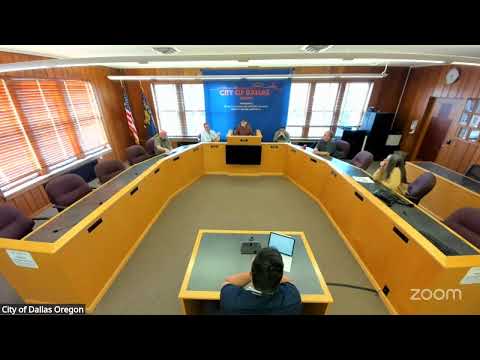
Committee discusses Central Business District expansion and uses; councilors raise concerns about schools, warehouses and automotive businesses
Summary
Staff presented three options for the Central Business District: expand south toward the mill site, leave boundaries unchanged, or create a mixed-use transition zone. Councilors flagged possible displacement, historic-home preservation and disagreed about allowing warehouses, automotive uses and some educational services downtown.
The Dallas Administration Committee spent substantial time discussing whether and how to modify the Central Business District (CBD) zoning to increase commercially available land and to shape permitted uses.
Staff presented three primary options: expand the CBD south along Main and Jefferson toward the former mill site identified in the Mill Site redevelopment draft; leave the CBD boundaries unchanged because other planning efforts (lock rail node master plan and the TGM redevelopment work) may supply needed commercial land; or leave the CBD intact but create a mixed-use transition zone on the CBD periphery to allow quieter daytime uses adjacent to residences.
Why it matters: The CBD and its permitted uses shape where restaurants, offices, retail and higher-density development can locate. Any boundary change also affects the Downtown Urban Renewal District, which provides access to grant and redevelopment funding for building rehabilitation and public improvements.
Staff cited a 2021 economic opportunities analysis by Eco Northwest that found a shortage of commercially available land in Dallas and noted that recent planning work (the Lockrail node master plan and the Mill Site TGM project) recommended rezoning some land for commercial uses. Tyler, a planning staff member, presented a comparison of permitted uses in downtown zoning for similar Oregon cities (Independence, McMinnville, Canby, Grants Pass and Woodburn), noting differences such as Dallas’s allowance of educational services and warehouses (both by conditional use permit) while many peer cities bar warehouses entirely from their CBDs.
Councilors raised multiple concerns. Several said they do not want additional automotive businesses, warehouses or certain school uses established in the CBD; one councilor explicitly listed automotive, educational and warehouse uses as “hot buttons” they would prefer to restrict going forward. Members also discussed potential displacement of longtime residents if boundaries change and considered using the local landmarks register and urban-renewal tools to protect historic homes and support rehabilitation rather than demolition.
Staff noted that any rezoning would require robust community engagement and that rezoning alone does not immediately displace residents — the city cannot force residents to leave — but councilors observed that new commercial uses adjacent to residences can alter neighborhood character.
No formal decision or vote on rezoning took place. Staff asked for committee guidance on which approach to pursue; councilors generally favored more study and community outreach. Options discussed for next steps included evaluating permitted uses in the CBD first, preparing an overlay or mixed-use district as a buffer, and compiling public input received during prior Lockrail and Mill Site planning efforts.
Next steps: Staff will continue analyses, provide maps and community-engagement plans, and return to the committee with refined options that include potential impacts on historic properties and alignment with the Downtown Urban Renewal District.