Get Full Government Meeting Transcripts, Videos, & Alerts Forever!
Get email alerts on the 791 Main Street Redevelopment topic
No spam. Unsubscribe anytime.
Agency hears consultant, councilors back RFQ and incentives talk for 791 Main Street
Summary
A consultant presented development options for 791 Main Street and recommended a two-step RFQ/RFP process; councilors expressed support to proceed while discussing potential incentives to close developer financing gaps.
A consultant recommended the Dallas Urban Renewal Agency seek developer interest this spring for redevelopment of 791 Main Street, and several councilors said they support moving forward with a two-step request-for-qualifications and request-for-proposals process while reserving judgment on any specific incentives.
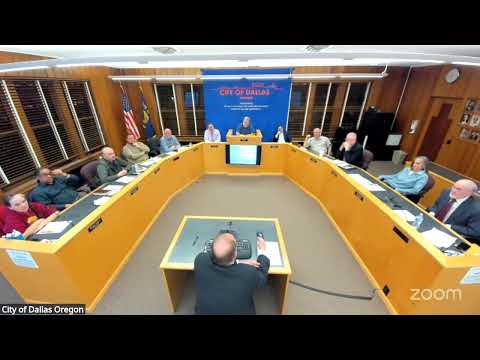
The recommendation came Tuesday when Brian Vaneman of Forum Placemaking presented survey results, design options and a preliminary fiscal analysis for the site. Vaneman said the city could expect “$150,000 if a hotel and a $139,000 if a housing project per year” in property taxes to the urban renewal area and city under a five‑story scenario, but added that a funding gap remains and that incentives could be necessary to make the project feasible for many developers.
Vaneman told agency members the city had collected 184 online survey responses in August–September 2024 and that respondents most often favored lodging on the upper floors. He said option 1A, a four‑story hotel with ground‑floor commercial space and a rooftop deck, was the single most preferred option in the survey; he recommended the RFQ list that option as preferred and allow other acceptable options (five‑story hotel, four‑ or five‑story housing, and L‑shaped variations) for developers to propose.
The consultant outlined a likely schedule: publish an RFQ in spring 2025, shortlist qualified teams, invite proposals and negotiate a preferred developer by late 2025. He advised a two‑step RFQ then RFP process so busy, experienced developers would not be deterred by an immediate request for full site drawings and pro forma work.
Vaneman described projected fiscal and operating assumptions used in his analysis (60% occupancy and a $190 average daily rate for a hotel). He said operation of a developed project could create about 20–30 jobs and produce other receipts (lodging tax, franchise fees, systems development charges). He estimated a one‑time systems development charge (SDC) for comparable housing at about $1,300,000 and noted the Urban Renewal Agency is obliged to start repaying its financing to the city—about $40,000 per year for 10 years beginning in 2026—on the property purchase price of roughly $385,000.
Because 4‑ and 5‑story mixed‑use construction is costlier than three‑story wood‑frame projects, Vaneman said incentives the city could consider include land value write‑downs, partial tax abatement (enterprise zone or a Vertical Housing Development Zone), SDC deferral or waiver agreements tied to public improvements, and other creative uses of transient lodging tax credits. He told the agency he would not recommend city commitments to incentives in the RFQ but to indicate the city “will consider innovative approaches” and invite developers to identify which incentives they would need.
Councilor Brandon Tilson said he favored the boutique hotel option: “Personally, yes... I lean more towards the boutique hotel as far as being able to provide more incentives towards that,” and argued a hotel would better support downtown revitalization by bringing visitor spending. Other councilors expressed similar preferences; Councilor Briggs and Councilor Shane voiced support for the hotel while acknowledging housing could help generate downtown activity after hours. Councilor Kim asked for clarification of the RFQ process and was told it is a qualifications‑based vetting step followed by an RFP for shortlisted teams.
Staff and the consultant also identified project constraints and regulatory matters: downtown code has a setback requirement for top floors on buildings of roughly five stories (a variance process is available and has been used on a recent project), and the proposed sidewalk widening may be achieved either by building setback or curb relocation, with tradeoffs for parking.
No formal vote was recorded during the presentation. The consultant asked whether the agency wanted to move forward with an RFQ; multiple councilors responded in favor and said the agency should continue to study which incentives it would be willing to consider. Vaneman said marketing and outreach to developers would begin once the agency provides direction and any refinements to the vision statement and acceptable options.
The agency will return to the item for further discussion of specific incentives and code/parking details; Vaneman and staff said they will prepare RFQ language and a proposed schedule for the agency to review before publication.