Get Full Government Meeting Transcripts, Videos, & Alerts Forever!
Get email alerts on the Council Rules topic
No spam. Unsubscribe anytime.
Dallas committee begins review of council rules; questions raised on attendance, electronics and public-comment ID
Summary
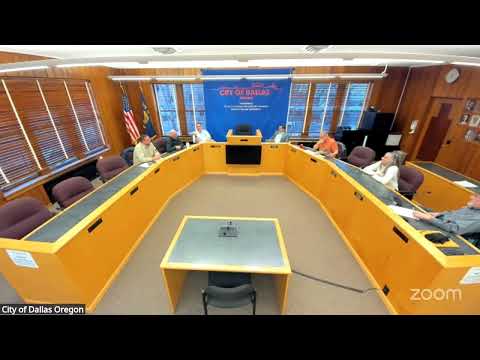
A Dallas City committee on Jan. 27 opened a review of proposed amendments to the council rules of procedure that would add written guidance on electronic communications, clarify how members report absences and reconsider how public commenters state their residency.
A Dallas City committee on Jan. 27 opened a review of proposed amendments to the council rules of procedure that would add written guidance on electronic communications, clarify how members report absences and reconsider how public commenters state their residency.
Assistant City Manager Emily Gonyer presented the packet to the committee and said the most substantive new language proposes rules on electronic communications to remind elected officials that messages tied to their public duties can be public records. She also reviewed suggested edits prompted by prior council discussion, including attendance language and a provision about stating a speaker’s address during public comment.
The committee discussed attendance language first. Members referenced charter language that an office “shall be deemed vacant” when a council member is absent from meetings for 60 days without the consent of the council and noted the charter also addresses absence from the city for 30 days. Several councilors said they want clearer council rules so members think more deliberately about scheduling absences; one councilor recalled a past case of repeated absences that was not addressed. The group agreed it wants a legal opinion from the city attorney on whether the council can add a rule that would create an additional vacancy trigger based on a percentage of missed meetings over a rolling 12‑month period. Staff said it will return with that legal analysis and, if permitted, draft language for committee consideration in March.
On electronic communications, Gonyer and other staff described two principal aims: (1) to reduce distractions and curb ex parte research during quasi‑judicial matters, and (2) to protect councilors by clarifying that electronic messages tied to official business can be public records subject to disclosure. Councilors reviewed sample language from other cities and indicated interest in using a concise policy (one committee member suggested language similar to Wilsonville’s rules). The committee asked staff to draft a succinct, usable provision rather than a lengthy, prescriptive policy.
The committee also discussed distributing city‑issued tablets or devices to councilors. Staff noted past local attempts to issue devices had little uptake and emphasized public‑records and property‑ownership implications: devices purchased by the city can create record‑retention and access questions when used at home. Committee members did not decide to adopt devices but requested more information on approaches used by other cities.
Members debated whether public commenters should be required to state an address. Staff noted many cities require a name and residence; several committee members favored a simple, less intrusive requirement—asking speakers to state whether they reside inside city limits (in‑town) or outside—so councilors and staff know whether follow‑up is appropriate. The committee reached a consensus around that in‑/out‑of‑city approach as the working preference and asked staff to refine the rule accordingly.
Finally, staff offered to research models for specifying how the council fills vacancies in its rules (the charter is not prescriptive on every step). Committee members asked staff to compile several municipal examples and circulate them ahead of the March meeting for further discussion.
The committee did not adopt rule changes at the Jan. 27 session; staff will return with a legal opinion on attendance‑based vacancy language and draft revisions in March.