Get Full Government Meeting Transcripts, Videos, & Alerts Forever!
Get email alerts on the Economic Development topic
No spam. Unsubscribe anytime.
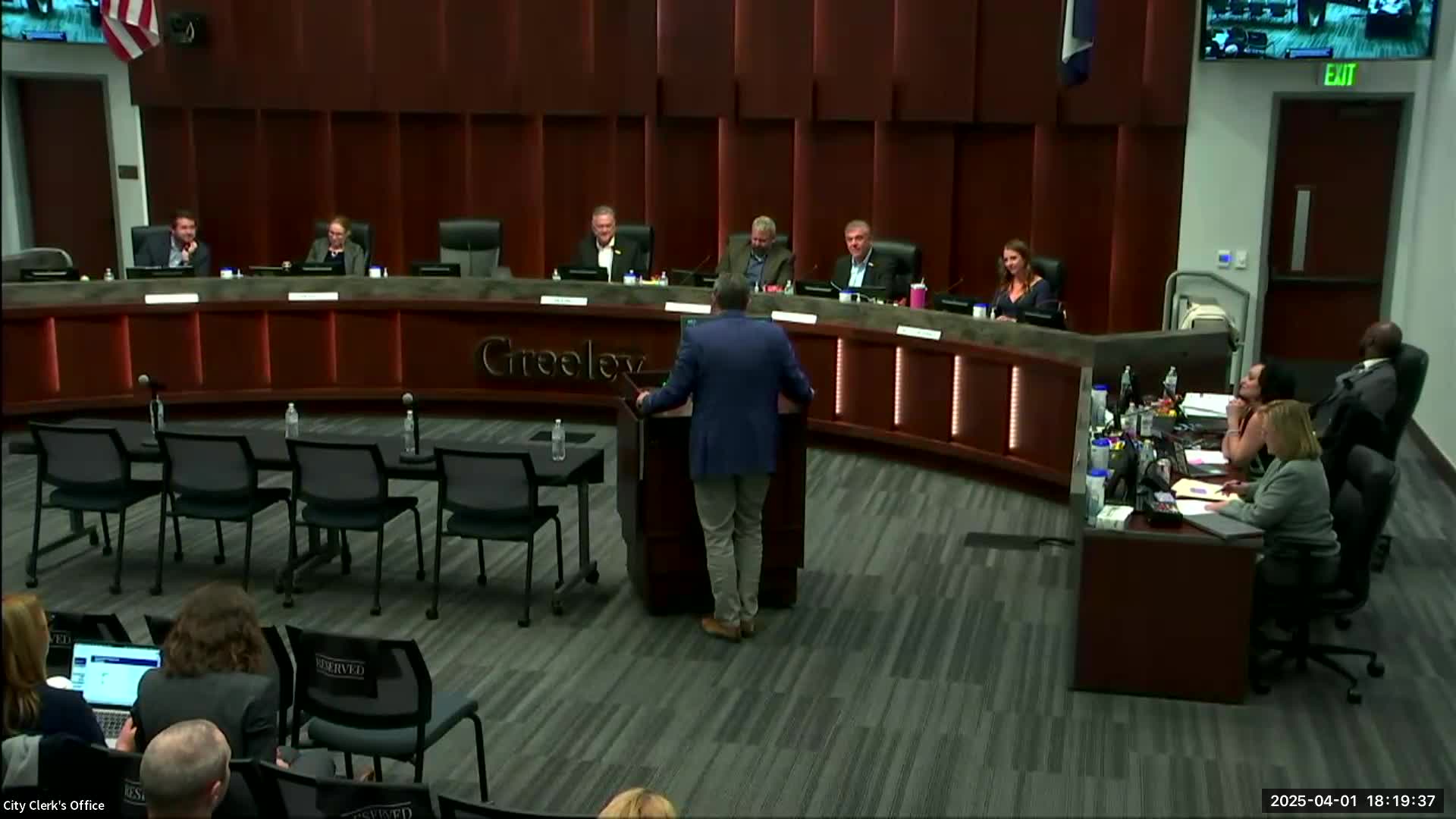
Greeley council hears hours of public comment on proposed West Greeley “Cascadia” development; staff outlines financing and next steps
Summary
City staff and the developer presented the proposed West Greeley “Cascadia” entertainment and mixed‑use project at the April City Council meeting. Dozens of residents voiced strong support and strong opposition while staff described a multi‑part financing plan and a timetable for predevelopment approvals and further due diligence.
Greeley City Council members heard extended public comment and a staff update on the proposed West Greeley “Cascadia” project during an April 2025 meeting, a project that city staff and the developer characterize as a mixed‑use, destination entertainment district featuring a large arena, conference and hotel facilities, an indoor water park and additional housing and commercial phases.
The proposal matters because the concept would be developed on city‑owned land, is modeled as a large regional destination with an estimated total project cost in the hundreds of millions, and relies on a combination of predevelopment borrowing, a nonprofit bond issuance, a general improvement district and long‑term “economic development payments” from the city to service debt. Staff described further design and third‑party underwriting steps required before construction or bond sales could proceed.
City manager Raymond Lee and members of the project team framed Cascadia as a catalytic, long‑term development that could deliver jobs, tourism and a regional entertainment anchor. John Hall, speaking for staff, summarized the primary elements: an 8,600‑seat arena (with the Colorado Eagles discussed as a potential anchor tenant), three regulation ice sheets for youth hockey, a 350‑room resort hotel, a 100,000‑square‑foot indoor water park and a conference center, plus future amphitheater and public spaces. Hall said the staff financial model has been run multiple times to close an initial revenue/cost gap and that additional design and third‑party financial studies would be needed before bond pricing could be sought.
The council meeting drew lengthy public comment from more than two dozen residents, business leaders and regional stakeholders. Supporters — including Rich Warner of Upstate Colorado Economic Development — stressed local economic development and called the project “transformative.” Jay Hardy, a Weld County resident with prior arena and downtown development experience, called it “transformational and exciting” and cited event‑centered economic development in other communities.
Opponents questioned the city’s financing plan, water use, and possible effects on downtown Greeley. Several speakers asked that the question be put to a public vote; resident Bernie Kendall said the project “needs to be taken by the people” and urged a special election. Speakers raised concerns about hotel occupancy projections, water stewardship for the water park, and the risk that municipal credit or other city services would be exposed if revenues fall short. Multiple speakers pointed to municipal arenas elsewhere that have generated operating shortfalls and urged caution.
Staff responded to questions on timing, infrastructure and legal steps. Hall and city finance staff explained the proposed financing structure: up to $115 million in certificates of participation for predevelopment, a roughly $832 million bond financing through a 501(c)(3) bond issuer with a city‑held reserve fund estimated at $33.2 million, a proposed annual “economic development payment” starting at about $12 million (rising 2% per year), and a general improvement district to fund on‑site infrastructure estimated near $129 million. City attorney staff outlined a sequence of legal approvals council would face if it chooses to proceed: a predevelopment services agreement, formation of the 501(c)(3) bond issuer, a purchase/lease framework for the arena site, formation of a general improvement district, and — only after those steps and further due diligence — a moral‑obligation pledge related to the bond reserve that itself would require a future council vote.
The project team provided high‑level economic outputs from city models: staff said construction could support roughly 2,500 jobs while the completed entertainment district could support about 1,300 permanent jobs and generate regional visitor spending. Staff said roughly half the modeled economic benefits were expected to occur within Weld County. Hall and finance staff emphasized that additional design, a third‑party reliance study and bond market testing would be necessary to close outstanding pricing and revenue questions.
Council did not vote on the project itself during the meeting. Members scheduled upcoming steps: council will receive the predevelopment services agreement for review and a work‑session presentation in mid‑April, followed by further public outreach and the third‑party financial work needed before final bond or moral‑obligation decisions. The project team said that if the council chooses to proceed, future approvals would include purchase/lease documents, formation of the GID, and the bond issuance process, each requiring separate council action.
The council meeting record shows both strong local business support and substantial citizen caution; the administration’s next actions will focus on hardening cost estimates, refining phasing, and completing outside financial validation before council considers any debt authorizations.