Get Full Government Meeting Transcripts, Videos, & Alerts Forever!
Get email alerts on the Transportation Funding topic
No spam. Unsubscribe anytime.
Administration seeks MBTA reserves, RTAs press for regional equity in fair-share surplus
Summary
The administration's supplemental proposal includes large one-time transportation allocations — notably reserves for federal matching and the MBTA — while regional lawmakers and transit advocates pressed for more direct, sustained investments for RTAs, chapter 90, microtransit, and transparency on securitization.
Committee members and transit advocates at the Ways and Means hearing pressed the administration on how House Bill 55’s transportation allocations would be divided between the MBTA, MassDOT programs and regional transit authorities.
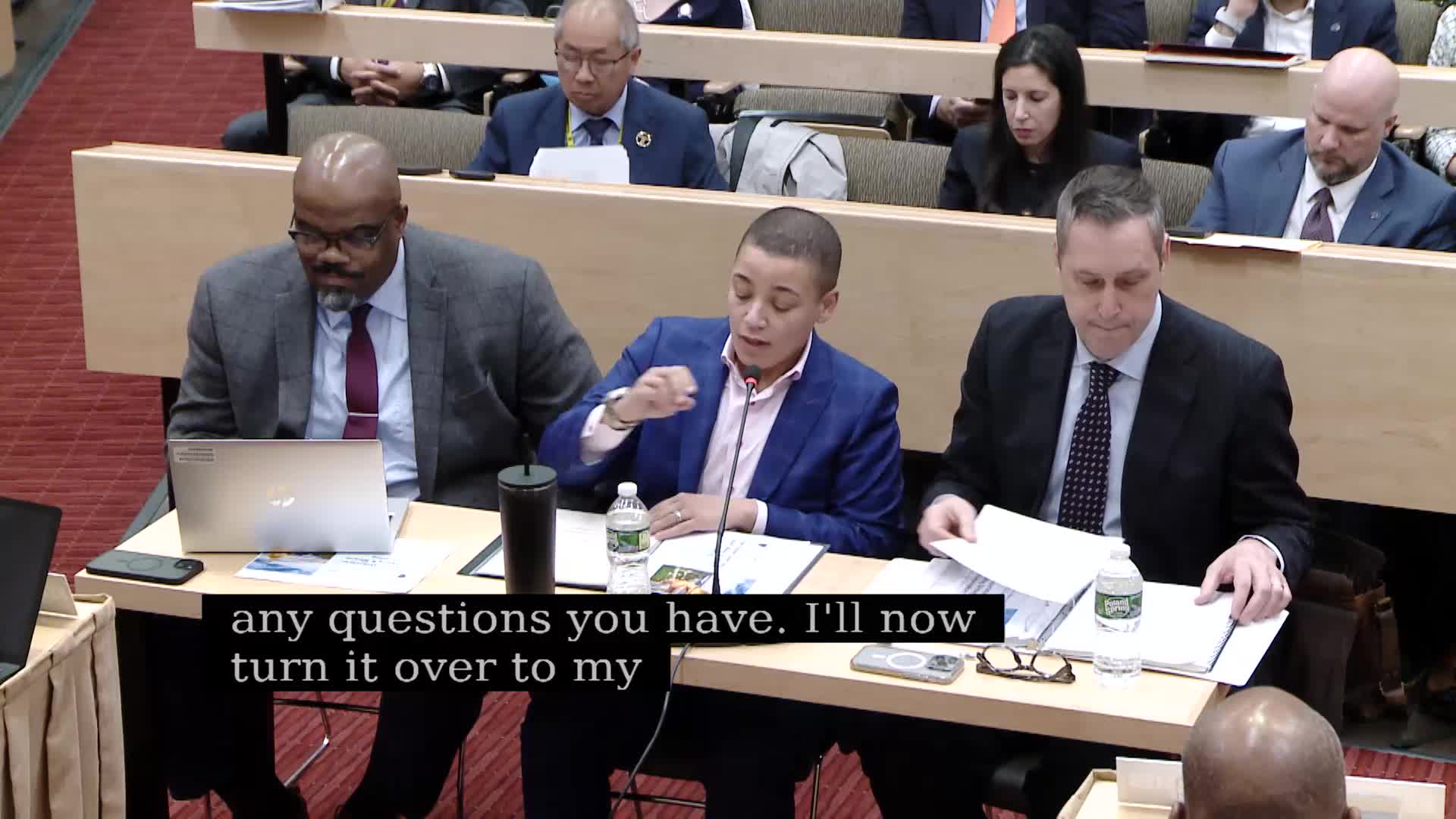
Monica Tibbitsnutt, Secretary and CEO of MassDOT, described the administration’s transportation priorities included in the supplemental appropriation. Her list of targeted uses from the proposed surplus included a $400 million Federal Transit Administration reserve, $300 million to replenish the MBTA stabilization reserve, $67 million to continue the MBTA income-eligible fare program, $25 million for winter resilience assistance for municipalities, $25 million for regional transit authority (RTA) workforce initiatives, $17.5 million for MassDOT workforce and project delivery capacity, and $10 million for micro-transit and last-mile innovation grants.
“Whether you drive to work, ride the T, bike, or rely on safe roads and bridges, every one of us depends on transportation that is reliable, resilient, and well maintained,” Tibbitsnutt told the committee. She framed the package as an attempt to protect federal matching opportunities, stabilize the MBTA and expand RTA and local investments.
Multiple committee members from non-MBTA regions pressed officials about regional equity. Representative Smola and others from Western, Central and coastal districts called the MBTA-focused numbers “jarring” and asked for a line-by-line comparison of Commonwealth investment per rider for MBTA riders versus riders of RTAs. In response, Tibbitsnutt said the administration has the data and will provide it to the committee; the administration also pointed to a broader set of transportation proposals filed in House 1 that officials said should be considered together with the supplemental.
Advocates and municipal representatives at the hearing urged a stronger, more predictable funding stream for RTAs and chapter 90 local road programs. Reggie Ramos of Transportation for Massachusetts supported one-time MBTA stabilization but said the state should also pursue “dedicated revenue sources” for long-term transportation funding. Doug Haugate of the Massachusetts Taxpayers Foundation supported a multi-year approach to address MBTA operating shortfalls and recommended a focused research and pilot set-aside to study special-education transportation costs.
Regional transit authorities themselves — and municipal leaders represented through the Massachusetts Municipal Association — argued that grant-based microtransit programs favor better-staffed agencies able to write proposals and urged technical assistance or direct formula funding to help smaller RTAs implement on-demand services. The administration acknowledged the competitiveness issue and proposed to work with the RTAs on workforce and technical assistance over the next fiscal year.
Several witnesses also urged transparency for securitization and bond-structuring choices. Pete Wilson of Transportation for Massachusetts urged a public, real-time dashboard showing how fair share transportation dollars are spent and how securitizations affect on-budget line items. The administration said it had proposed securitizing a portion of operating surtax dollars through the Commonwealth Transportation Fund to extend capital capacity and would cooperate with the legislature on disclosure and oversight.
Why it matters: The MBTA serves a large portion of the Commonwealth’s population and economic activity, and the administration said stabilizing MBTA reserves is necessary to avoid service cuts and to meet Federal Transit Administration corrective action timelines. Lawmakers from outside the MBTA footprint said that a single supplemental that appears MBTA-heavy risks deepening regional disparities unless coupled with larger chapter 90, culvert, local winter-resilience and RTA investments elsewhere in the budget.
What comes next: Committee chairs asked the administration to provide per-rider investment data and to describe options for microtransit funding and RTA workforce supports. Members signaled they will press for additional chapter 90, culvert and winter-resilience funding in committee markup and want clearer public reporting on the transportation trust securitization the administration proposed.