Get Full Government Meeting Transcripts, Videos, & Alerts Forever!
Get email alerts on the Economic Development topic
No spam. Unsubscribe anytime.
Economic development budget focuses on fundamentals, talent and sector leadership, Secretary Howe tells Ways and Means
Summary
Secretary of Economic Development outlined a $146 million FY2026 House 1 package that focuses on three priorities from the Team Massachusetts plan: fundamentals (downtown revitalization, rural affairs), talent (internships, workforce trust fund allocations) and sector leadership (life sciences, MassTech, tourism). She also described plans for a
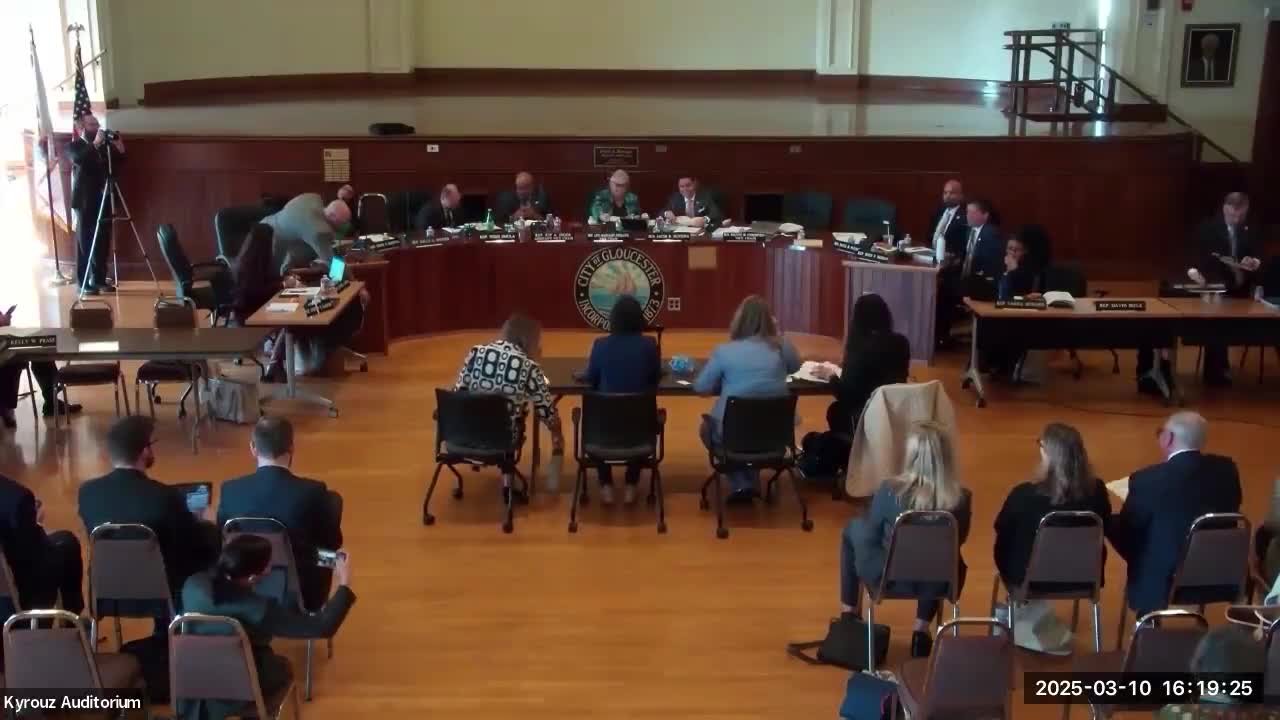
Secretary of Economic Development Rachel M. Howe told the Joint Committee on Ways and Means in Gloucester on March 10 that the administration’s FY2026 operating proposal for economic development totals about $146 million — a modest share of the state budget — but prioritizes targeted investments aligned with the Team Massachusetts economic development plan.
Three organizing pillars 1) Fundamentals: Howe said economic growth requires strong local fundamentals, including downtown revitalization and support for MBTA communities. The budget continues funding for the MassDowntown initiative and proposes rural economic development support and a rural affairs director to help smaller communities.
2) Talent: The administration proposed workforce trust fund uses (enabled by changes in the Mass Leads Act) to expand community reinvestment grants ($15 million), Community Workforce Partnership grants ($2.5 million), Pathmaker life‑sciences workforce slots ($10 million) and other internship/mentorship supports through MassTech and MassLifeSciences. The Thrive entrepreneur‑retention (Entrepreneur in Residence) program — a visa/retention support for high‑potential founders — would be funded to retain skilled entrepreneurs.
3) Sector leadership and small business supports: Howe requested a $12 million transfer for Mass Life Sciences Center to shore up research and development capacity; $2.5 million for MassTech operations and $1.2 million for advanced manufacturing. The budget maintains $7.5 million for small business technical assistance and funds a “Business Front Door” concierge portal to streamline access to state services for businesses.
Regulatory and oversight functions Secretary Howe also highlighted funding for the Office of Consumer Affairs and Business Regulation (OCABR), Divisions of Banks, Occupational Licensure and Insurance, and telecommunications oversight — all part of the economic‑regulatory apparatus. Several agencies are implementing IT modernization projects and licensing system consolidations.
Ending: Howe framed the package as lean but strategic, intended to catalyze investment in life sciences, climate tech and manufacturing, to expand talent pipelines, and to help communities statewide capitalize on development opportunities created by the Mass Leads Act and other recent policy changes.