Get Full Government Meeting Transcripts, Videos, & Alerts Forever!
Get email alerts on the Early Education And Care topic
No spam. Unsubscribe anytime.
State budget proposal seeks to preserve child-care gains but leaves income-eligible wait list closed
Summary
The administration seeks to maintain Commonwealth Cares for Children (C3), expand preschool partnerships and hold child-care financial assistance at record levels, while officials say the current funding will not allow reopening the long frozen income‑eligible wait list.
Lede: The Haley‑Driscoll administration’s fiscal 2026 budget holds funding to sustain the Commonwealth Cares for Children program and keeps child‑care financial assistance at a record level, but state officials said the money as proposed would not allow them to reopen the longstanding income‑eligible wait list.
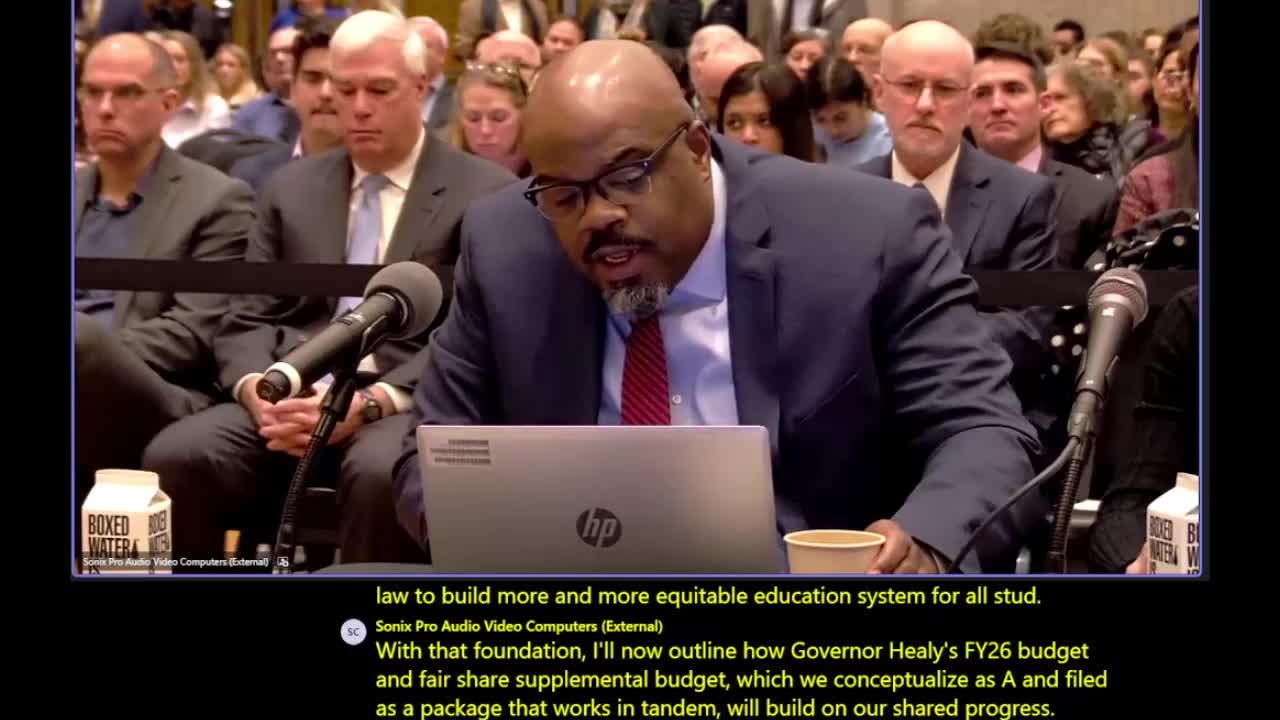
Nut graf: At a March hearing of the Joint Committee on Ways and Means in Amherst, Secretary of Education Pat Tutwiler and Early Education and Care Commissioner Amy Kershaw described gains since 2023—more seats, higher early‑educator pay and new preschool partnerships—while also warning the committee that roughly 30,000 children remain on the state’s child‑care waiting list and current proposals prioritize children in state‑entitlement categories.
Body: Secretary Tutwiler and Commissioner Kershaw told lawmakers that the governor’s FY26 package would maintain the C3 stabilization program at $475 million, sustain a $1.1 billion child‑care financial assistance line and add roughly $67 million for the Commonwealth Preschool Partnership Initiative (CPPI) to expand preschool seats in targeted communities. Kershaw said C3 helped add 17,000 seats over two years, reduced vacancies and raised average early‑educator wages, and that the program “has been a game changer for our field.”
But the department said the $1.1 billion child‑care financial assistance amount was calibrated to preserve access for current enrollees and to absorb expected caseload growth from Department of Children and Families (DCF) and Department of Transitional Assistance (DTA) referrals. Kershaw told the committee she expects the program to serve roughly 65,000 families next fiscal year but said the funding level would not be sufficient to open the income‑eligible wait list to new families outside those entitlement groups.
Kershaw and Tutwiler urged lawmakers to consider supplemental fair‑share dollars the governor proposed for workforce development, capital grants and capacity building across early education and care, including $100 million in fair‑share funding for implementation of task‑force recommendations. The administration also seeks $17.7 million to expand CPPI and $50 million proposed over three years to add preschool seats in gateway and rural cities.
Commissioners highlighted a 31‑recommendation report from a whole‑of‑government early‑education task force and said the supplemental funding would allow some early implementation of those recommendations, including workforce pathways, a new educator credential and a family access initiative. Kershaw said the department is enhancing the child‑care financial assistance portal and will continue higher rates established in the past two years.
Ending: Lawmakers pressed for geographic detail and short‑term options to reduce the waiting list; Kershaw offered to provide district‑level caseload and wait‑list data. The hearing closed with appeals from local providers and advocates for more immediate money to expand low‑income access while the state continues to revise long‑term policy.