Get Full Government Meeting Transcripts, Videos, & Alerts Forever!
Get email alerts on the Cannabis Regulation topic
No spam. Unsubscribe anytime.
Cannabis Control Commission seeks $30.08 million in FY2026 to expand testing, equity and IT systems
Summary
The Cannabis Control Commission told the Joint Committee on Ways and Means it needs $30,080,000 for FY2026 — mostly to maintain operations but including $3.96 million for a proposed state run standards laboratory, expanded social equity support and IT upgrades — and warned underfunding threatens inspections, licensing and public safety work.
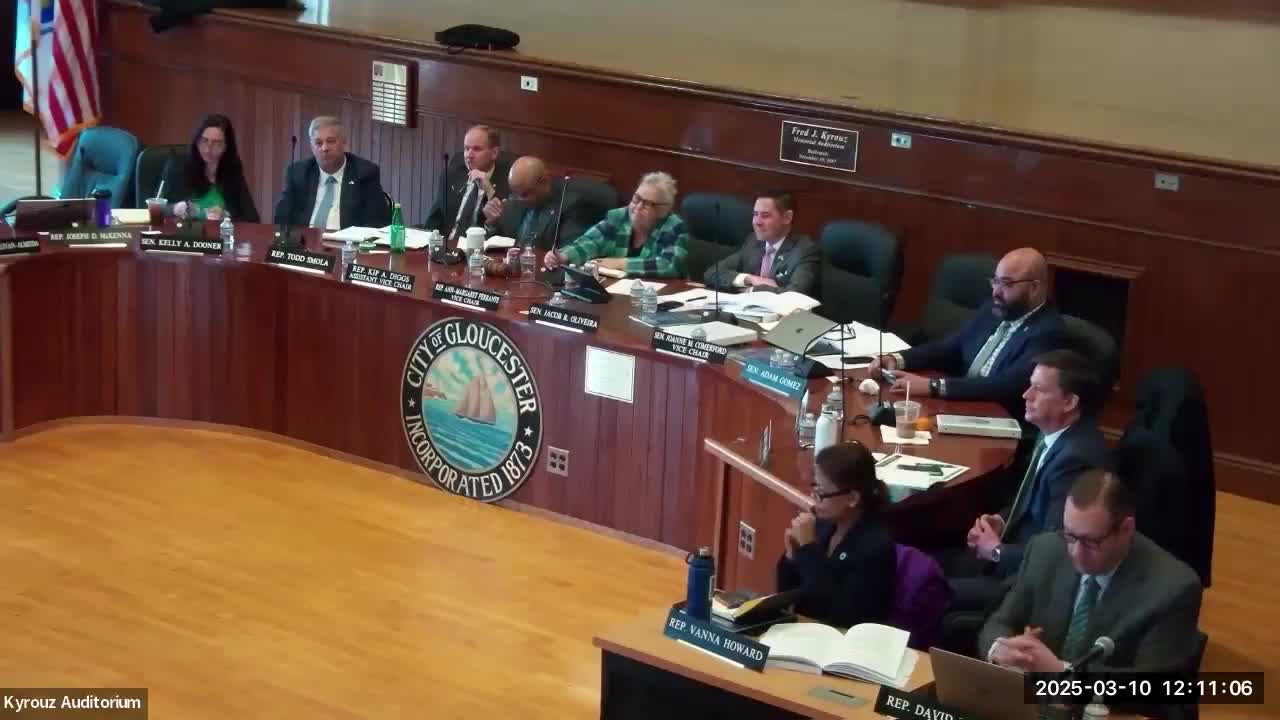
Acting Chair Bruce Stebbins and new Executive Director Travis Ahearn told the Joint Committee on Ways and Means in Gloucester on March 10 that the Cannabis Control Commission (CCC) seeks $30,080,000 in FY2026 to preserve regulatory oversight and to fund several expansionary initiatives the agency says are necessary to ensure consumer safety and to support a maturing industry.
The request: Stebbins said $26,120,000 is required to maintain operations and $3,960,000 is sought for critical expansions, including a state run standards laboratory, expanded social equity programming, IT infrastructure improvements and additional staff. “Without full funding in FY2026,” Executive Director Ahearn told the committee, “the commission's ability to effectively regulate the industry will be jeopardized.”
Why it matters: The commission emphasized the regulated cannabis market contributes substantial tax revenue — the industry generated $272 million in tax revenue in FY2024, the CCC said — and supports more than 17,000 employees and over 1,000 licensees. Commissioners said delays in inspections, licensing and equity support could threaten public safety and market stability.
Key priorities in testimony - State standards laboratory: CCC officials described inconsistent test results among private labs and cited sample confirmatory testing costs; they said a state lab would provide confirmatory testing, support post‑market testing and reduce long‑term costs. - Social equity and technical assistance: Commissioners said social equity funding fell from $400,000 in FY2024 to $100,000 in FY2025 and requested restoration to expand training and technical assistance to participants. - IT and licensing modernization: The CCC requested funds to modernize patient registration and licensing systems, digitize badging and improve data transparency; the agency reported $20,000,000 in non‑tax revenue collection through licensing systems.
Questions and committee concerns Committee members asked about youth exposure, driving impairment education, market competition from neighboring states, testing integrity, and the state’s ability to help social equity participants compete. Commissioner Kimberly Roy (public health seat) described a new driver‑education curriculum, “Shifting Gears: The Blunt Truth about Marijuana and Driving,” mandated in Massachusetts driving schools, and discussed efforts to pursue a state lab because current independent testing can produce inconsistent potency and contamination results.
Ending: The commission said its requested FY2026 funding would preserve core functions and support new initiatives that aim to protect consumers and expand equitable industry participation, and invited legislative support for both ongoing and one‑time appropriations (including laboratory startup costs).