Get Full Government Meeting Transcripts, Videos, & Alerts Forever!
Get email alerts on the West Greeley Cascadia topic
No spam. Unsubscribe anytime.
Residents press council to slow, voter-review Cascadia West Greeley plan amid cost, water and jobs concerns
Summary
Multiple Greeley residents urged the City Council to pause or put the West Greeley “Cascadia” development to a public vote, citing a reported $1.1 billion price tag, uncertain long-term jobs for locals, water availability and competing neighborhood needs.
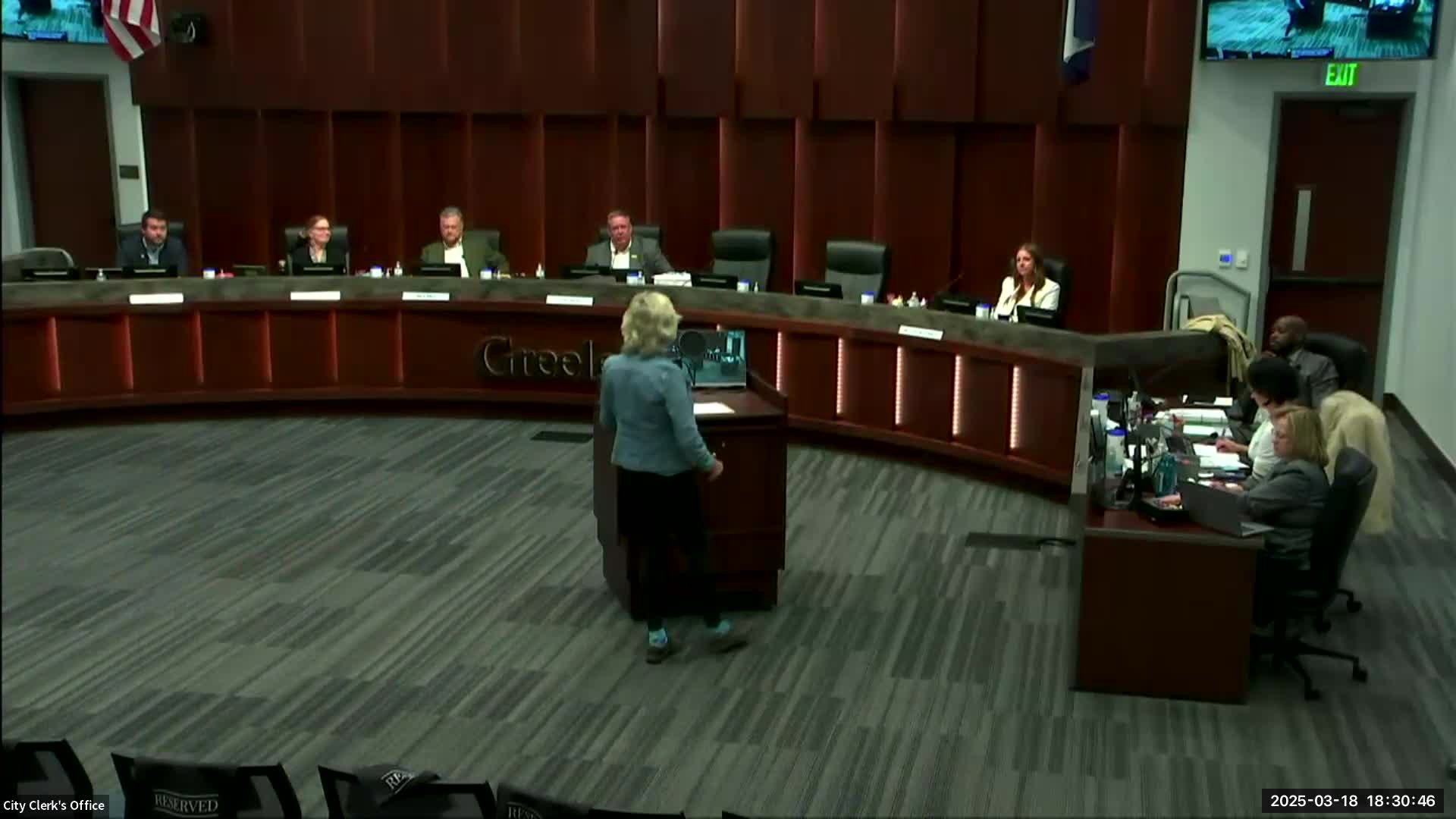
Several residents urged the Greeley City Council on March evening to delay moving ahead with the proposed Cascadia West Greeley development and to submit the project to a public vote.
Speakers raised similar concerns: the project’s reported $1.1 billion cost, whether permanent jobs would pay enough for local households, the durability of water supplies for a large resort-style development, and whether the city should prioritize repair and upgrades in older neighborhoods before backing a major new development.
"I understand it's gonna cost the city of Greeley $1,100,000,000," said Dan Gansko, a longtime Greeley resident, summarizing a core concern about the scale of public financial exposure. Bernie Kendall, another longtime resident, said the city would be on the hook if the nonprofit borrowing vehicle that would issue project debt failed, and he asked whether taxpayers would ultimately repay the $1.1 billion.
Several commenters questioned whether the development would deliver local, well‑paying jobs. Mary Monahan said the bulk of permanent positions promised—work in hotels, dining and attractions—are low‑paying service jobs. "The permanent jobs, for the most part, are the kind of jobs that don't pay enough for Greeley citizens to rent or buy a home here," she said, urging the council to require local hiring or other protections.
Water supply and climate risks were raised by Michael Willis, who asked whether planners accounted for drought risk and reduced Colorado River flows when sizing an amenity‑heavy development with water features. "If you don't have water, you're not gonna have ice," Willis said, asking the council to consider a public vote.
Other speakers raised neighborhood and equity issues. Uli Limbadlaw, who owns a long‑standing business on Ninth Street, criticized the city for deferred street and sidewalk repairs in older neighborhoods and said those local needs should not be overshadowed by a large west‑side development. Kathy Ents urged caution about who would benefit from the project, calling some promotional messages "propaganda" and warning it could cater to wealthier visitors rather than address downtown needs.
Some speakers also asked for greater transparency on financing and on the developer's commitments. Bernie Kendall said the project would require the city or a city‑backed nonprofit to borrow large sums and questioned whether the city had precedent for taking on debt of that magnitude.
No formal action on the Cascadia project occurred during the public comment period. Council members acknowledged the concerns and cited ongoing processes for public outreach and planning work. Councilor Butler, responding to a related land use item, asked staff to explore incentives that might convert development units to for‑sale housing during a separate zoning discussion.
The public debate over Cascadia illustrated a division among residents about the city's development priorities and appetite for large, debt‑financed projects.