Get Full Government Meeting Transcripts, Videos, & Alerts Forever!
Get email alerts on the Fleet Electrification topic
No spam. Unsubscribe anytime.
Advocates press for public‑fleet and school‑bus electrification timelines and support programs
Summary
Nonprofit and industry witnesses urged the committee to adopt House Bill 3448, which sets deadlines and interim targets for electrifying public fleets and school buses, citing health, cost‑savings, and equity benefits and available state programs to support fleet transitions.
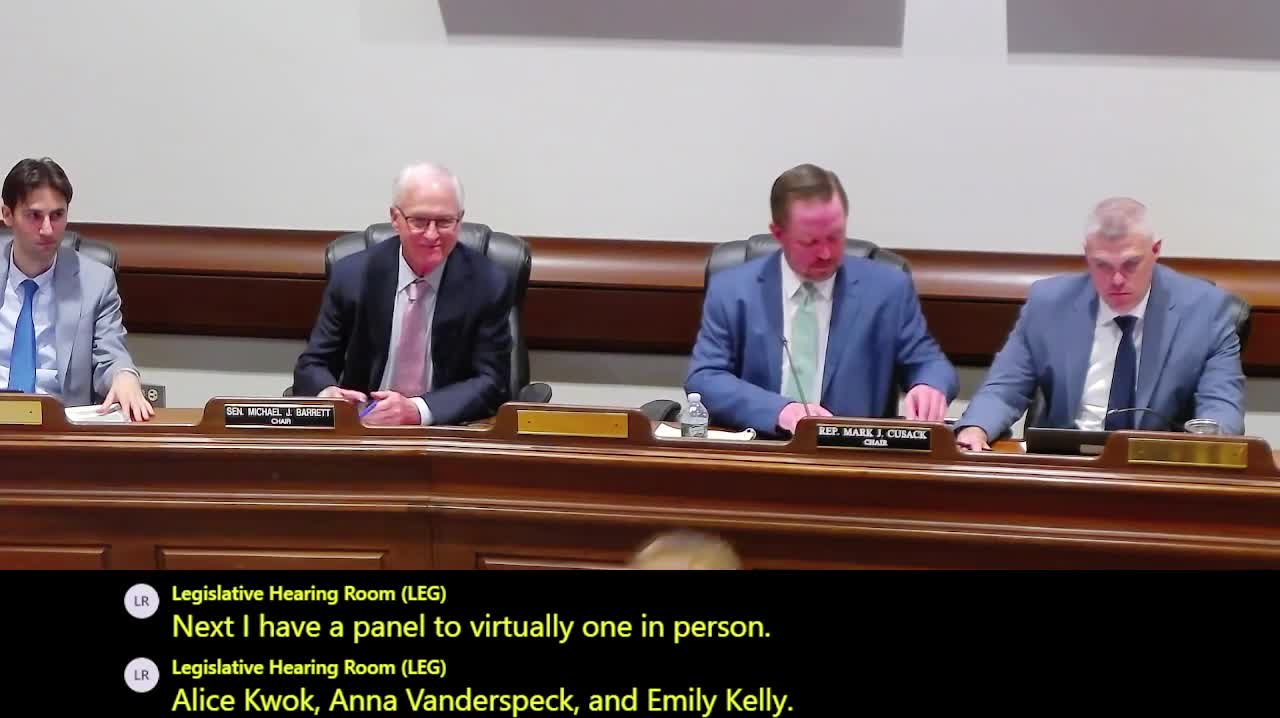
Advocates and vendors told the committee H.3448 would accelerate public‑fleet and school‑bus electrification and help the Commonwealth meet transport‑sector emission targets. Anna Vanderspeck of Green Energy Consumers Alliance said: "Massachusetts public fleets must lead by example. This bill sets electrification deadlines for public fleets and fleets serving public purposes." She noted existing programs — MassEVIP, ACT school bus grants, and state incentives — that can support the transition.
Alice Kwok of the World Resources Institute's Electric School Bus Initiative described health and equity benefits of replacing diesel buses: "Electric school buses eliminate tailpipe emissions entirely including nitrous nitrogen oxides and particulate matter which essentially means healthier air not just for students but also for school staff, drivers, and surrounding communities." Emily Kelly of ChargePoint described available charging hardware and fleet management software and said many fleet use cases (overnight depot charging, en‑route charging and managed charging schedules) are already supported by market solutions.
Proponents stressed interim targets and prioritization for environmental justice communities to ensure early benefits go to the most impacted students and neighborhoods. Witnesses also pointed to federal rebate programs (EPA Clean School Bus Program) and state rebate/grant programs already in place; they asked the committee to preserve and bolster timelines so districts and public agencies can plan investments and charging infrastructure.
No vote was taken at the hearing; several witnesses pledged written follow‑up with implementation details, cost‑estimates and examples of municipal pilots.